

Royal Pains & Mane Attractions: Medusa & Gorgon Review
In the grand hierarchy of Marvel Comics teams, the Inhumans have always occupied a strange, nebulous space. They are the cool, aloof cousins of the X-Men who live on the moon and don’t really want to talk to you. They are regal, bizarre, and occasionally frustratingly obscure. For action figure collectors, the Royal Family of Attilan has been a “Grail” team—a group we desperately wanted to complete but feared Hasbro would never fully commit to.
Then came the Walgreens exclusives. And lo, the Terrigen Mists parted, and we received the Marvel Legends Series Inhumans: Marvel’s Medusa & Marvel’s Gorgon 2-pack.

This set is not just a toy purchase; it is a commitment. It is a commitment to shelf space, a commitment to gravity management, and a commitment to the very specific aesthetic of Jack Kirby’s wildest 1960s fever dreams. Today, we are breaking down the Queen of the Inhumans and her stomping bodyguard to see if this plastic royalty deserves a throne on your display or if they should be banished to the bargain bin of the Negative Zone.
The Context: A Royal Resurrection
To understand why this set matters, you have to look at the bleak history of Inhumans merchandise. For years, Black Bolt stood alone on our shelves, screaming silently into the void (or at least, looking like he wanted to). We had a Black Bolt from the dark ages of the Nemesis wave, and a newer, sleeker version from the Black Panther wave. But a King without a Queen is just a guy in a tuning-fork mask standing around looking brooding.
Releasing Medusa and Gorgon as a 2-pack was a mercy. It saved us from hunting them down individually in scalper-heavy waves and allowed us to instantly add significant bulk to the Attilan lineup. But does the execution match the anticipation? Let’s dissect the monarchs.
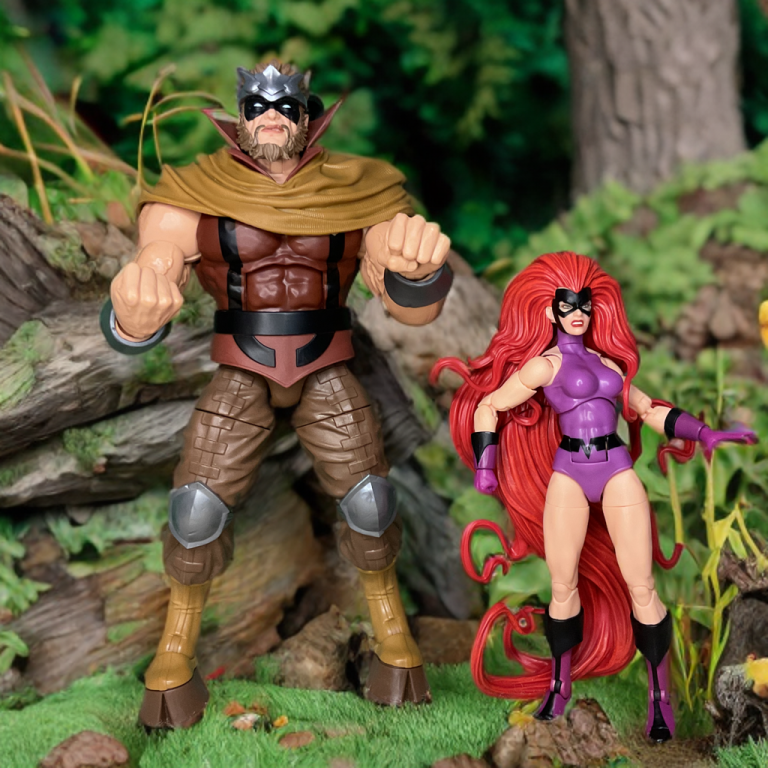
Marvel’s Medusa: The Mane Event
Let’s address the elephant in the room. Or, more accurately, the giant, red, plastic octopus on Medusa’s head.
Medusa represents one of the most difficult engineering challenges in action figure history. Her power is trichokinesis—the ability to psychokinetically control her hair. In the comics, her locks are prehensile tendrils of destruction, capable of picking locks, strangling Doombots, or whipping up a martini. In the medium of ink and paper, hair has zero mass. It flows where the artist wants it.
In the medium of PVC plastic, however, hair weighs a ton.
The Sculpt
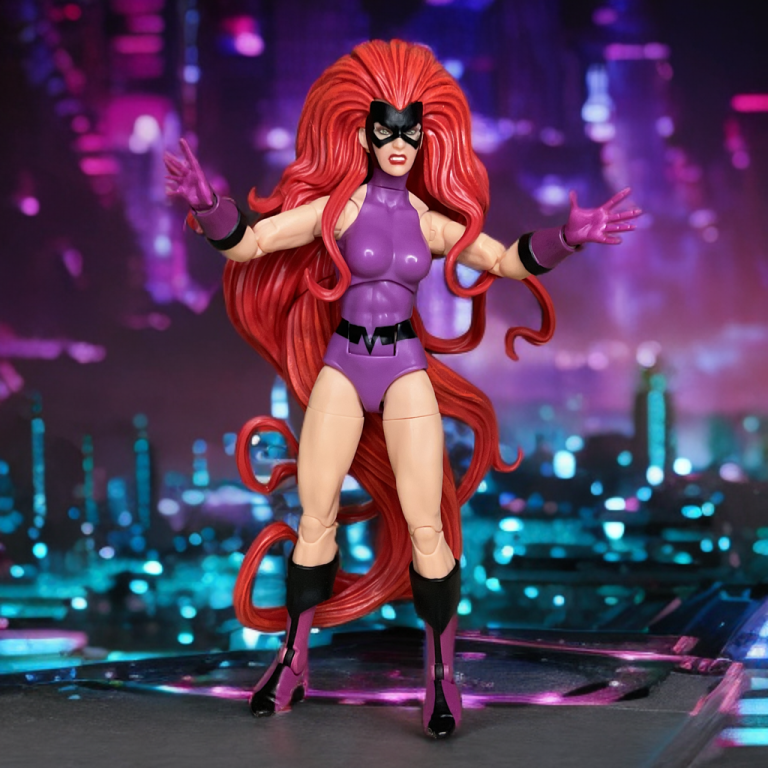
Hasbro made a brave choice here. They didn’t give Medusa a “neutral” hair sculpt. They didn’t give her hair that hangs flat against her back. No, they gave her active hair. The sculpt is dynamic, flowing outward and upward like a crimson wave crashing against the laws of physics. It is a spectacular piece of molding. The strands are detailed, the volume is impressive, and it captures the regal, intimidating aura of Medusalith Amaquelin perfectly.
However, this comes with a price. The hair piece is solid plastic. It is heavy. It is so heavy that Medusa is less of an action figure and more of a counter-weight system that you happen to display on a shelf. If you turn her head slightly to the left, she falls over. If you look at her sternly, she falls over. The hair dictates the pose. You do not pose Medusa; Medusa’s hair poses you.
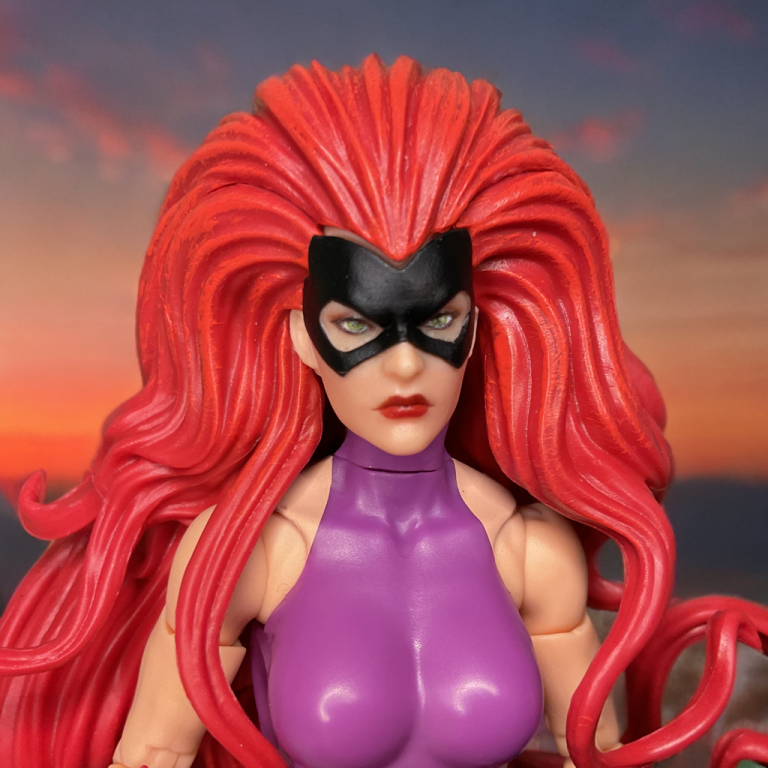
The Body and Paint
beneath the majestic mane, Medusa utilizes a fairly standard female body buck (reminiscent of the Scarlet Witch or Captain Marvel molds of the era). It’s slender, functional, and completely overshadowed by the headpiece. The paint application is minimal but effective. The royal purple of her bodysuit is a deep, flat tone that contrasts beautifully with the vibrant, slightly glossy red of the hair.
The face sculpt, however, is where the figure shines—if you can see it. She has an expression of imperious boredom, which is exactly how the Queen of the Inhumans should look. She isn’t angry; she’s just better than you, and she knows it. The purple mask is painted crisply, with no bleed into the eyes or skin tone, a relief for anyone who has suffered through the “lazy eye” era of Marvel Legends.
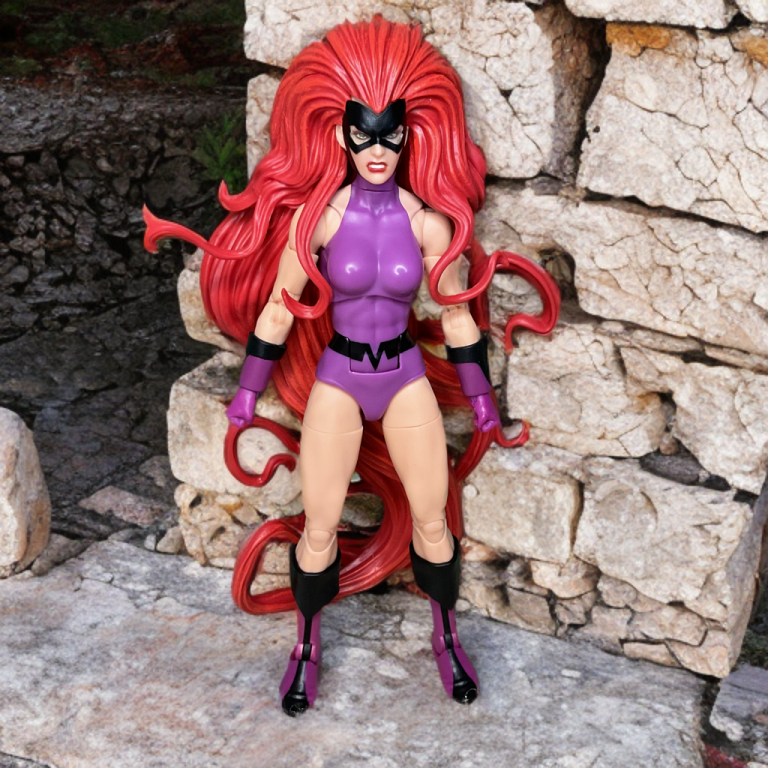
Articulation (Or Lack Thereof)
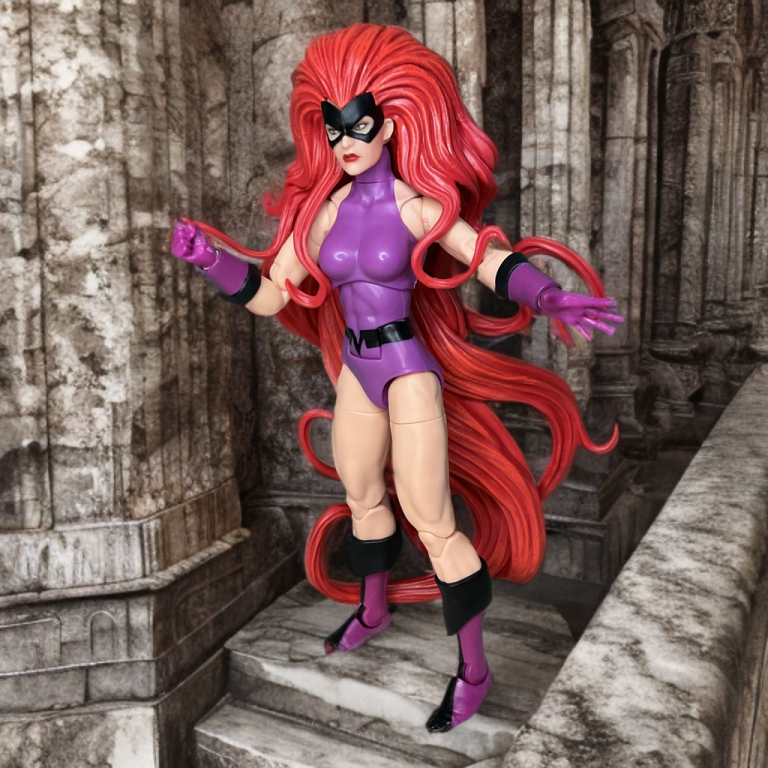
Technically, Medusa has all the standard points of articulation: double-jointed knees, ball-jointed hips, shoulders, elbows, and wrists. Practically? She is a statue. The head is on a ball joint, but the hair restricts movement to a “slightly left” or “slightly right” tilt. The weight of the hair pulls her center of gravity so far back that you are forced to hunch her forward or use the hair as a tripod.
Actually, that’s the secret. The hair is the stand. If you lean her back against her own locks, she stands securely. It’s a cheat, sure, but it works. It creates a specific silhouette where she looks anchored and immovable, which fits her character canon perfectly. She is the wife of Black Bolt; she is the voice of the King. She doesn’t need to do backflips; she stands her ground and lets the hair do the talking.
Marvel’s Gorgon: The Stomping Ground
If Medusa is the beauty and the headache, Gorgon is the brawn and the surprise hit of this set.
Gorgon Petragon is the cousin of Black Bolt and the personal bodyguard to the King. His power is kinetic energy generation via his hooves. He stomps, and the world shakes. For years, customizers tried to make Gorgon figures using standard legs, but it never looked right. A Gorgon without hooves is just a guy named Gorgon.
The Anatomy of a Hoof
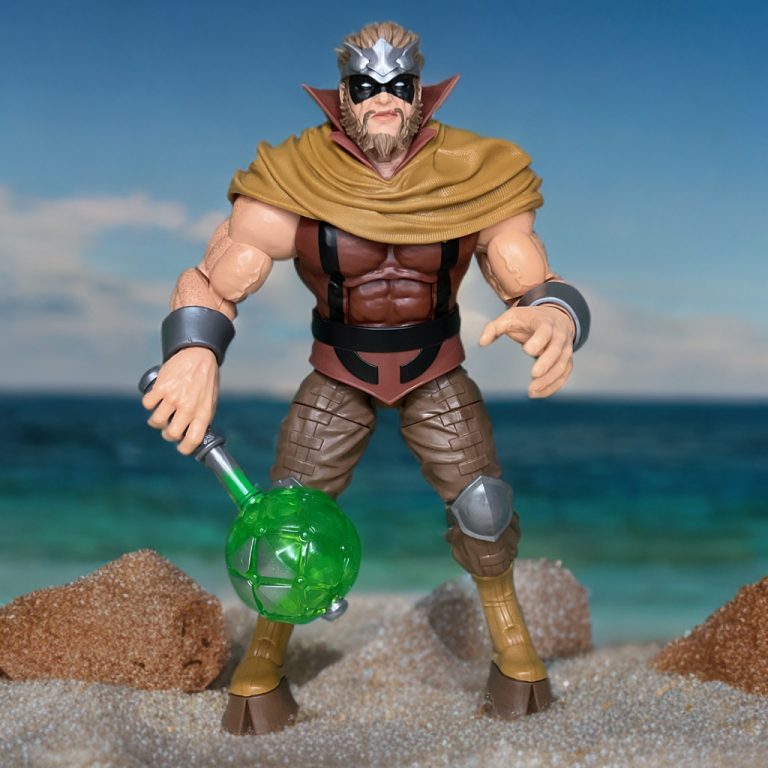
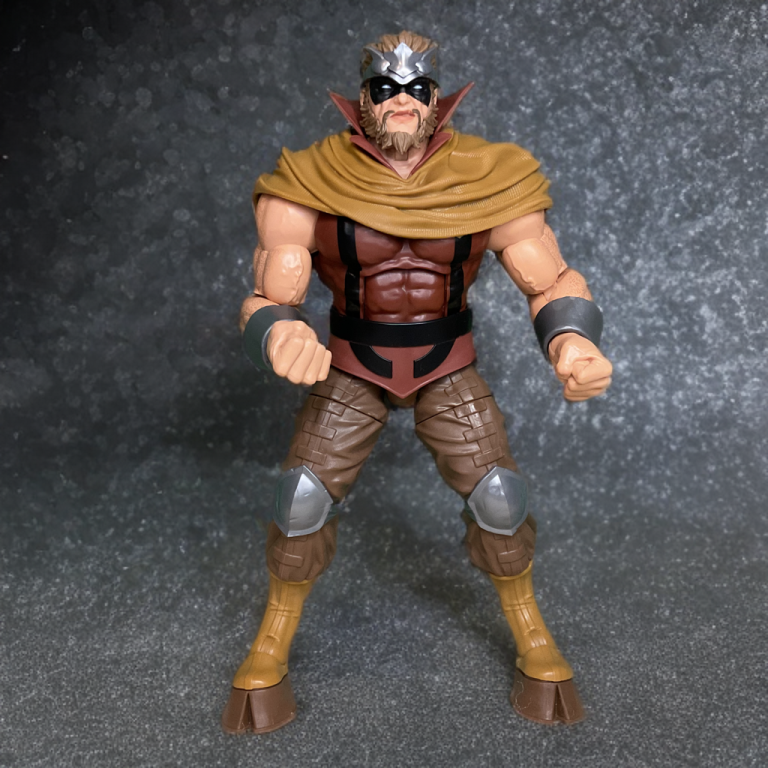
Hasbro finally gave us the goods. Gorgon features entirely new sculpting from the knees down. The legs are digitigrade, bending backward like an animal’s, ending in massive, cloven hooves. This is a massive win for anatomical diversity in the Legends line.
The sculpt on the hooves is fantastic, with a rough, keratin-like texture that distinguishes them from his boots. But the real genius is in the balance. Digitigrade legs are notoriously difficult to balance (ask anyone who owns a movie-verse werewolf figure), yet Gorgon stands incredibly well. The surface area of the hooves is large and flat, providing a solid base for the bulky upper body.
The Upper Body Reuse
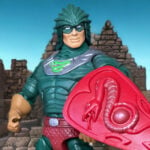
Speaking of bulk, Gorgon borrows heavily from the Hercules/Odinson mold. It’s a thick, muscular buck that screams “powerhouse.” It suits Gorgon perfectly. He is meant to be a tank, a physical wall that stands between the King and his enemies. The chest strap and shoulder armor are separate overlay pieces, adding depth and dimension to the figure.
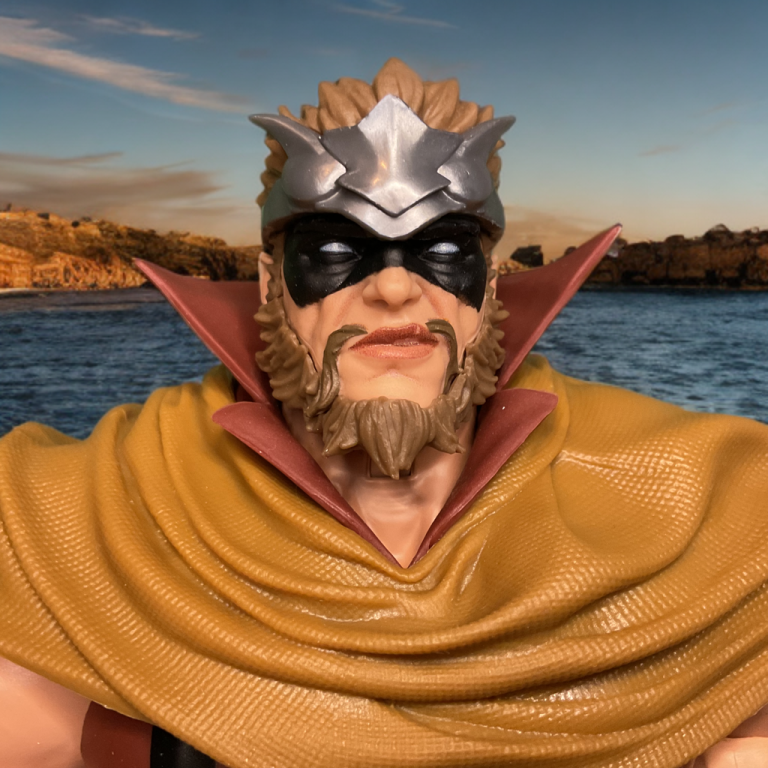
The head sculpt is pure Jack Kirby. He has the wide face, the thick headband, and the intense, grimacing expression that suggests he’s about to level a city block because someone looked at Crystal the wrong way. The beard is sculpted with a thick, coarse texture that matches the wild nature of the character.
Articulation and Posing
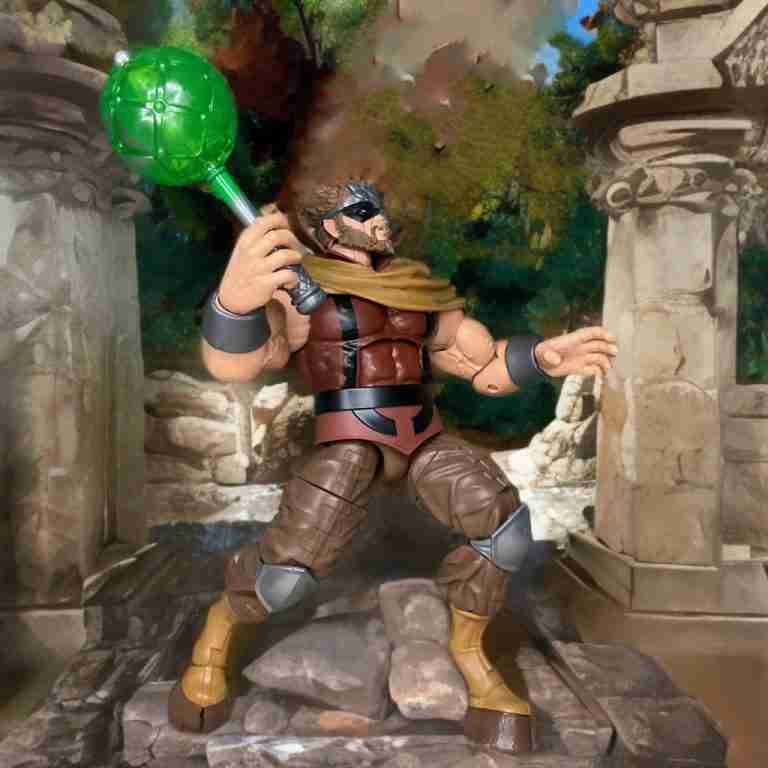
Unlike his Queen, Gorgon is a joy to pose. The unique leg structure actually allows for some dynamic “stomping” poses. You can get him into a deep crouch, preparing to unleash a seismic wave. The upper body articulation is standard for the Hercules buck—good range of motion in the arms, a solid ab crunch, and a waist swivel.
Because his center of gravity is lower and his feet are massive, he doesn’t suffer from the “toppling tower” syndrome that plagues Medusa. He feels substantial in hand, a chunky, durable toy that feels like it could survive a fall from the shelf (which is good, because Medusa is definitely going to knock him over eventually).
The Royal Synergy: Canon and Display
The true value of this set isn’t in the individual figures, but in the tableau they create. The Inhumans are defined by their weirdness and their unity. They are a family that looks like a circus troupe but carries the political weight of a nuclear superpower.
When you stand Medusa and Gorgon next to the Walgreens exclusive Black Bolt and the classic Karnak, the aesthetic clicks into place. You see the design philosophy of the Silver Age come alive. You have the silent, sleek King in black; the vibrant, flowing Queen in purple; the hulking, animalistic bodyguard in browns and oranges. The color theory is chaotic but distinct.
This set also highlights the tragedy of the Inhumans’ recent media history. These designs are timeless. They are weird in the best possible way. Seeing them in plastic form reminds us of the potential this property has when it embraces the Kirby-esque grandiosity rather than trying to be a grounded TV drama in Hawaii.
A Note on Accessories
Here is the one area where the set feels a bit parsimonious. We get… hands. That’s it. Just hands.
Medusa comes with open gesture hands (essential for spell-casting poses) and fists. Gorgon comes with fists and gripping hands. But what is he gripping? He has no weapon. In the comics, Gorgon rarely uses weapons, relying on his feet, but a piece of debris or a “seismic effect” piece for his feet would have been a welcome addition. Medusa, likewise, could have benefited from an effect piece that clipped onto her hair to simulate motion or impact.
It feels like the budget for this set went entirely into the plastic volume of Medusa’s hair and the new tooling for Gorgon’s legs. While understandable, a little extra plastic love wouldn’t have gone amiss.
The Verdict: Worth the Hunt?
The Marvel Legends Series Inhumans: Medusa & Gorgon set is a study in contrasts. Medusa is a visual triumph but a tactile failure, a figure that looks stunning but refuses to be played with. Gorgon is a masterclass in functional reuse and smart re-tooling, a figure that is fun to handle and looks great doing it.
However, if you are building a Marvel Universe display, this set is mandatory. You cannot have the Marvel Universe without the Inhumans (no matter how hard the X-Men editorial office might try to make you forget them). Medusa is a cornerstone character, a woman who has led the Fantastic Four and the Future Foundation. Gorgon is the heart of the Royal Guard.
Despite the frustration of Medusa’s weight distribution, there is a undeniable charm to this set. It captures the “Gods among men” vibe of the Inhumans. It is bold, colorful, and unapologetically comic-booky. It rejects the “tactical realism” of the MCU figures in favor of bright spandex and impossible anatomy.
The Pros:
Gorgon’s Legs: The digitigrade sculpt is executed perfectly, offering stability and unique visuals.
Medusa’s Presence: The hair, while annoying, looks magnificent. She commands attention on the shelf.
The Face Sculpts: Both figures feature character-perfect expressions that capture their personalities.
Team Building: Essential pieces for completing the Royal Family.
Final Score: 4 out of 5 Terrigen Crystals
If you can find this set on the secondary market for a decent price, grab it. Just make sure you buy a heavy-duty flight stand for the Queen, or she’ll be nose-diving off your shelf faster than the ratings for the Inhumans TV show.
The Cons:
Medusa’s Gravity Issues: She will fall. It is not a matter of if, but when. Get some museum putty.
Lack of Accessories: Effect parts would have elevated this set from “Good” to “Legendary.”
Articulation Limitations: Medusa is effectively a statuette from the neck up.
 English
  Deutsch
  Français
  Português do Brasil
  日本語
日本語  Español
  English (Australia)