

MOTU Origins Megatron Armor Skeletor Figure Review
Picture this: the 1980s, a golden era of action figures where muscle-bound heroes clashed with skull-faced villains on bedroom floors across the globe, while robotic warriors from distant planets transformed into vehicles and waged epic battles for Energon. Now, fast-forward to 2025, and two titans of that toybox universe have collided in a spectacular mashup that’s equal parts genius and chaos. Enter the Masters of the Universe Origins Megatron Armor Skeletor, a figure that fuses the bone-chilling menace of Eternia’s Lord of Destruction with the cold, calculating tyranny of Cybertron’s Decepticon leader. This isn’t just a toy; it’s a portal back to Saturday mornings spent with cereal bowls and cartoon marathons, a reminder of how those plastic warriors shaped our imaginations.
In this review, we’ll dive deep into the factual roots of this crossover creation, exploring the storied pasts of both franchises before breaking down the figure itself. From its design quirks to its play potential, we’ll examine what makes this Skeletor variant a standout in the Origins line. Whether you’re a lifelong collector dusting off your Castle Grayskull or a newcomer curious about these retro revivals, this piece aims to capture the thrill of unearthing a forgotten gem from the toy aisle. Let’s transform and roll out into the history and hands-on assessment of this armored abomination.
The Legacy of Masters of the Universe
The Masters of the Universe franchise burst onto the scene in 1982, courtesy of Mattel, who sought to dominate the boys’ action figure market after passing on the Star Wars license years earlier. Determined to craft an original property, Mattel developed a line of 5.5-inch figures that blended barbaric fantasy with sci-fi elements, set on the planet Eternia. The central conflict pitted the heroic He-Man against the villainous Skeletor, a blue-skinned sorcerer obsessed with conquering Castle Grayskull and harnessing its ancient power.
The toy line’s inception traced back to 1981, when Mattel assembled a team to create a self-sustaining brand free from external licensing ties. Early prototypes drew from Conan the Barbarian aesthetics, but legal concerns prompted a shift to a more family-friendly heroic fantasy. The first wave included core characters like He-Man, Skeletor, Man-At-Arms, and Beast Man, each packaged with minicomics that fleshed out the lore. These small booklets, illustrated by artists like Alfredo Alcala, introduced Eternia’s mythology, including the Power Sword and the eternal struggle between good and evil.
By 1983, the franchise exploded with the debut of the animated series “He-Man and the Masters of the Universe,” produced by Filmation. Running for 130 episodes over two seasons, it emphasized moral lessons alongside action-packed adventures, boosting toy sales immensely. Vehicles like Battle Cat and the Wind Raider, along with playsets such as Castle Grayskull, expanded the play possibilities. The line evolved through waves, introducing factions like the Evil Horde and Snake Men, with innovations like spinning waists for punching action and scented figures like Moss Man.
Mattel extended the universe with a spin-off, Princess of Power, in 1985, featuring She-Ra as He-Man’s twin sister. The original run concluded around 1987-1988, hampered by market saturation and competition from lines like Transformers. Yet, its impact endured, spawning reboots like the 2002 series and the current Origins line, which recreates the vintage feel with modern engineering. Skeletor, with his iconic Havoc Staff and skeletal visage, remains a cornerstone villain, embodying cunning and dark magic. This legacy of imaginative play and heroic tales set the stage for crossovers that blend worlds in unexpected ways.
The Transformers Phenomenon
Transformers rolled into the toy world in 1984, a collaborative effort between Hasbro and Japanese toymaker Takara. The line repurposed Takara’s existing Diaclone and Micro Change toys—robots that transformed into vehicles, gadgets, and weapons—for the American market. Hasbro rebranded them as warring factions: the heroic Autobots and the villainous Decepticons, locked in a civil war spilling over to Earth.
The concept originated from Takara’s innovative mecha designs in the early 1980s. Diaclone featured piloted robots transforming into cars and aircraft, while Micro Change included smaller bots disguised as everyday objects like cameras and guns. Hasbro, spotting the potential after the success of GoBots, acquired the rights and unified the lines under a cohesive narrative. Marvel Comics developed the backstory: ancient robots from Cybertron, with leaders Optimus Prime and Megatron, crash-landing on Earth after millions of years in stasis.
The inaugural wave dazzled with figures like Optimus Prime (a semi-truck), Bumblebee (a Volkswagen Beetle), and Megatron (a Walther P38 pistol, these days a tank). Each came with tech specs and rubsigns to verify authenticity. The animated series, also launching in 1984, ran for 98 episodes, chronicling the robots’ battles and human alliances. Comics from Marvel further enriched the lore, introducing concepts like the Matrix of Leadership.
Transformers innovated with size classes—Minibots, cassettes, and city-sized bases like Metroplex—encouraging collection and play. Sub-lines like Headmasters (1987), where smaller bots became heads, added layers. The 1986 animated movie shifted the narrative, killing off characters to introduce new toys, a controversial move that scarred many young fans.
The original Generation 1 line ended around 1990, but its modular, transformative nature influenced countless reboots, including Beast Wars (1996) with animal alt-modes. Megatron, the ruthless Decepticon leader, symbolized ambition and power, often transforming into weapons or tanks in later iterations. Hasbro’s licensing prowess kept the brand alive through films, games, and ongoing toy releases, making Transformers a benchmark for action figure engineering and storytelling.
The Unlikely Alliance: MOTU x Transformers Crossover
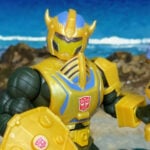
In a move that surprised fans of both franchises, Mattel and Hasbro announced their first official toy collaboration at San Diego Comic-Con 2025. This partnership birthed the Masters of the Universe x Transformers line, starting with figures like Megatron Armor Skeletor and Bumblebee Armor Man-At-Arms. Priced at $32.99 each, these exclusives hit Target and Mattel Creations in Fall 2025, marking a historic team-up between rival toymakers.
The crossover draws from the shared 1980s heritage, where MOTU’s sword-and-sorcery clashed with Transformers’ sci-fi robotics, yet both emphasized epic conflicts and collectible figures. Official statements highlight the fusion as a “powerful collaboration,” with Skeletor donning Megatron’s armor to harness Grayskull’s power alongside Energon. A included mini-comic outlines the storyline: a dimensional rift merges Eternia and Cybertron, allowing villains to upgrade with alien tech.
This isn’t the first MOTU mashup—previous crossovers included Teenage Mutant Ninja Turtles—but partnering with Hasbro breaks new ground. Hasbro’s Transformers team licensed elements like Megatron’s iconic helmet and cannon, while Mattel adapted them to the Origins 5.5-inch scale. The result? A figure that respects both brands’ designs without full transformation, focusing on modular armor for mix-and-match play.
Released amid a wave of nostalgia-driven toys, this line taps into adult collectors’ fondness for 80s icons. Official bios describe Skeletor as an “Evil Decepticon Lord of Destruction,” blending his sorcery with Megatron’s tyranny. The collaboration underscores how former competitors can unite for innovative products, potentially paving the way for more shared universes.
Unboxing Megatron Armor Skeletor
Cracking open the package of Megatron Armor Skeletor feels like rediscovering a long-lost treasure from the back of your childhood closet. The window box packaging echoes the classic Origins style, with vibrant artwork depicting Skeletor in his upgraded form, purple energy crackling around him as he looms over a fractured Eternia-Cybertron landscape. The back panel teases the crossover lore, showing compatibility with other figures for custom builds.
Inside, the figure is secured in a plastic tray, accessories neatly blister-packed beside it. No frustrating twist ties here—just a quick snap to free Skeletor from his confines. The mini-comic slips out easily, a colorful pamphlet that narrates how Skeletor stumbles upon Megatron’s defeated form and absorbs his essence, forging the armor. It’s a nod to those vintage minicomics that sparked endless play scenarios.
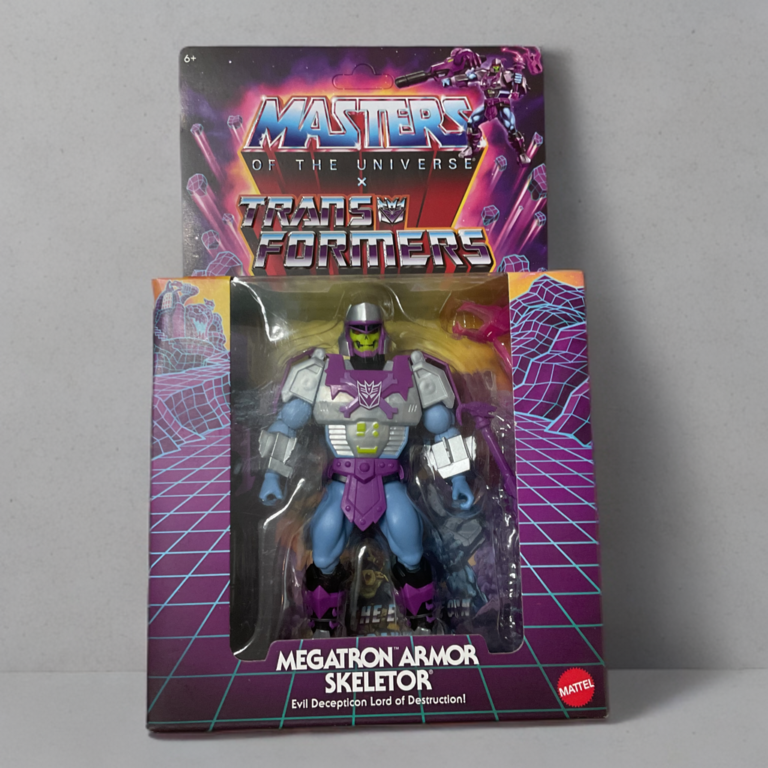
The figure itself emerges with that satisfying new-toy smell, a mix of plastic and possibility. At 5.5 inches, it fits perfectly in hand, evoking memories of battling with original MOTU toys. Modular pieces click into place smoothly, and the accessories feel weighty without being cumbersome. Unboxing reveals no surprises—just pure, unadulterated fun, ready for display or diorama domination.
Design and Aesthetics
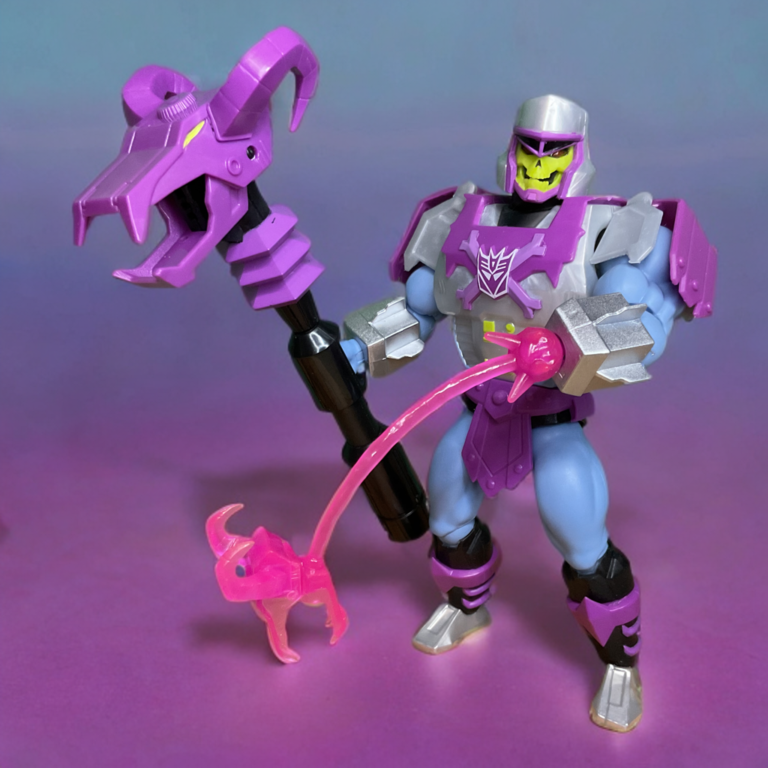
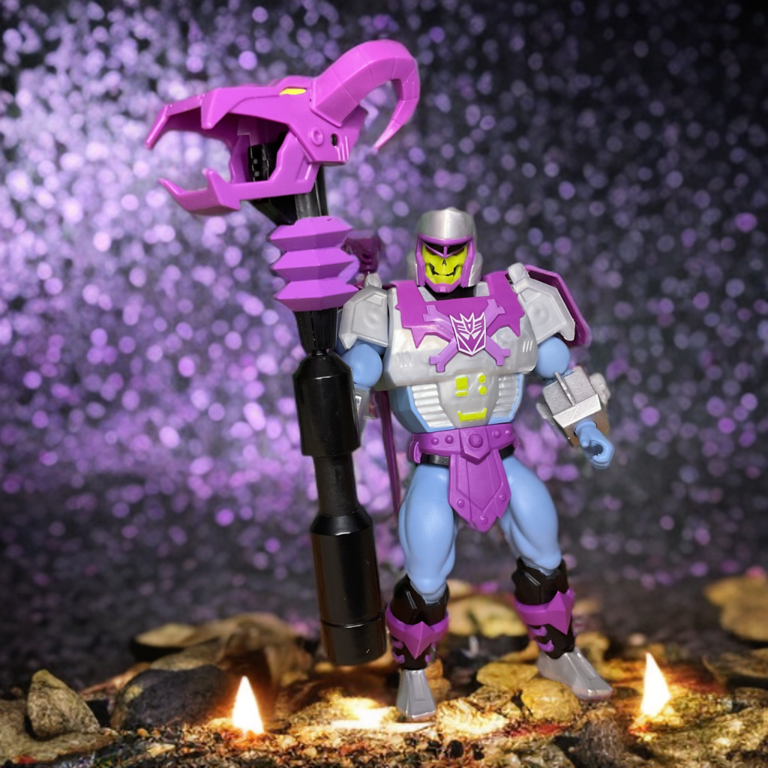
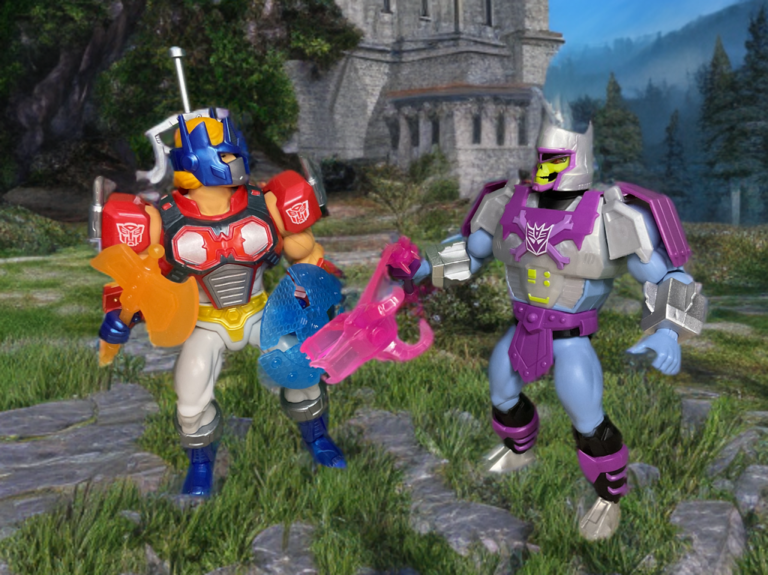
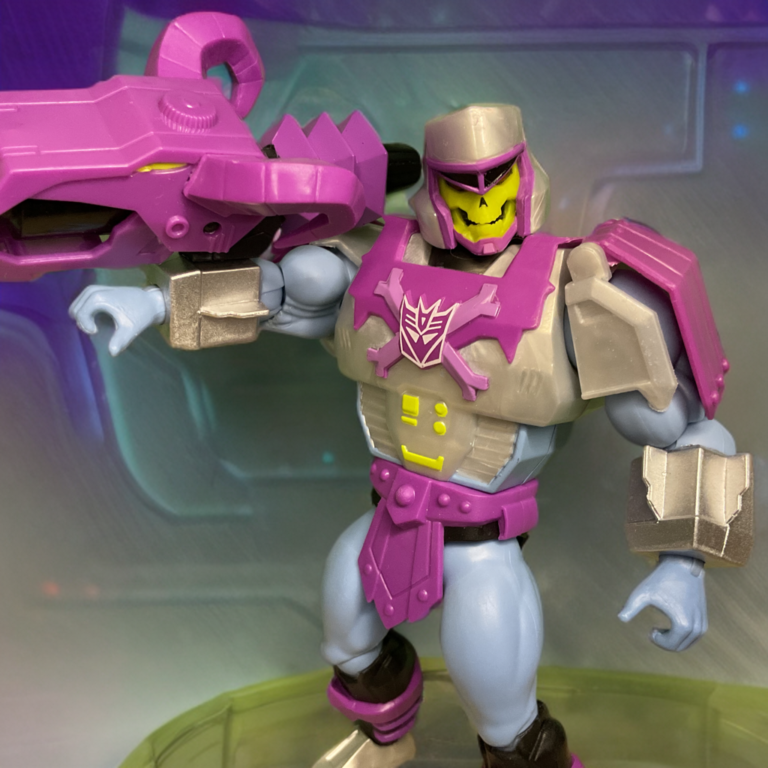
Visually, Megatron Armor Skeletor is a masterclass in fusion design, seamlessly blending Skeletor’s gothic horror with Megatron’s militaristic menace. The base body retains Skeletor’s lithe, blue-skinned physique, complete with his signature yellow skull face and hooded eyes that scream eternal grudge-holding. But the armor overlays transform him into a cybernetic nightmare: the helmet mimics Megatron’s bucket-head with angular vents and a stern visor, while the chestplate incorporates the Decepticon leader’s fused cannon aesthetic, painted in gunmetal grays and purples.
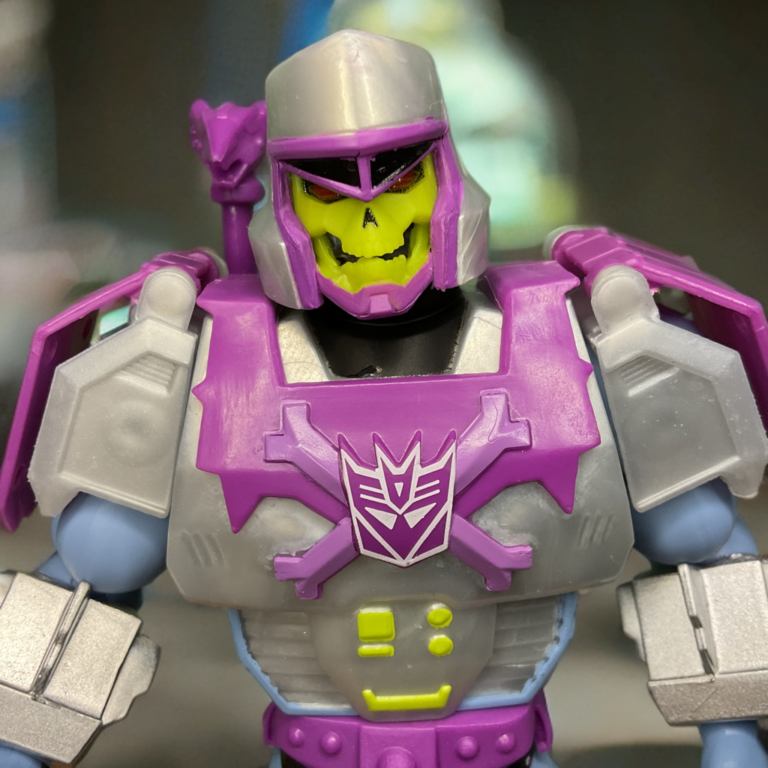
Shoulders and forearms bulk up with plated guards, evoking Megatron’s broad silhouette, and the boots feature treads like tank tracks, grounding the figure in Transformers’ vehicular roots. The color palette strikes a balance—Skeletor’s purples and blues dominate, accented by Megatron’s silvers and reds, creating a cohesive yet contrasting look. Detailing is sharp: etched circuits on the armor suggest Energon flow, and the ram horns on the helmet add a demonic flair.
Sculpt-wise, it’s vintage-inspired but refined, with no soft edges or cheap feels. The modular nature allows swapping parts, like removing the chestplate to reveal Skeletor’s bare torso, enhancing customization. It’s not a full transformer, but subtle nods—like the cannon barrel hinting at alt-mode elements—pay homage without overcomplicating. Overall, the aesthetics nail that 80s mashup vibe, making it a standout piece that looks equally at home on a shelf or in a battle lineup.
Articulation and Poseability
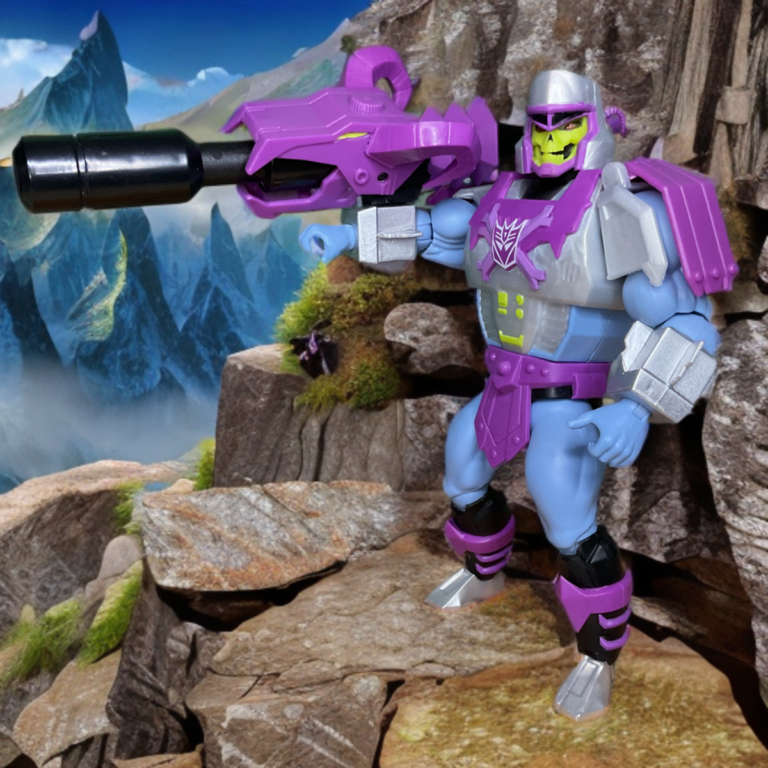
With 16 points of articulation, Megatron Armor Skeletor punches above its weight in the pose department, offering flexibility that rivals modern figures while staying true to Origins’ retro roots. Ball-jointed shoulders and hips allow for wide swings and dynamic stances, perfect for recreating Skeletor’s dramatic staff-raising or Megatron’s imperious pointing. Elbows and knees bend deeply, enabling crouched ambushes or mid-transformation-like poses, though the armor slightly restricts extreme angles.
The head swivels fully, with a bit of tilt for expressive glares, and the waist twist adds torque for action shots. Wrists rotate for weapon grips, and ankles provide stability on uneven surfaces. It’s not hyper-articulated like some high-end lines, but for a 5.5-inch figure, it delivers solid play value—hold a sword aloft, attach the mace mid-swing, or position the cannon for a blast.
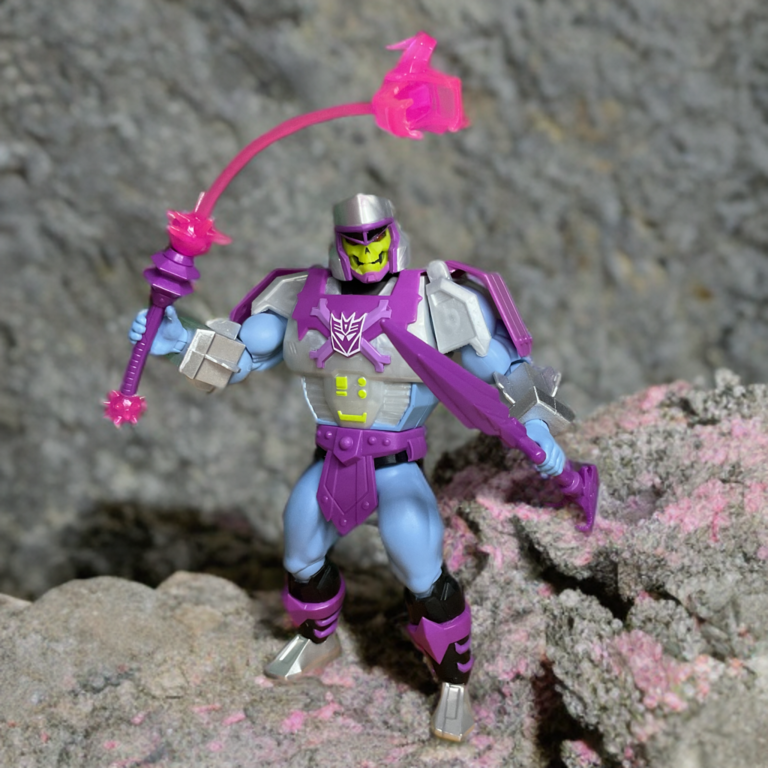
In practice, poses hold well without flopping, thanks to tight joints. Mix in the modular armor, and you can tweak configurations for unique displays, like a half-armored Skeletor mid-upgrade. Compared to vintage MOTU, it’s a leap forward, banishing stiff limbs for fluid battles. Whether staging a showdown with He-Man or a Decepticon alliance, the articulation ensures endless storytelling potential.
Accessories and Features
Megatron Armor Skeletor comes loaded with gear that amplifies his hybrid threat level. The Energon Mace plugs securely into his wrist, a glowing purple orb atop a chain that swings with satisfying heft, ideal for bashing heroic foes. The Ram-Headed Sword, with its curved blade and horned guard, fits snugly in hand, blending Skeletor’s medieval menace with Cybertronian edges.
The standout is the Decepticon-style cannon barrel, which converts into an extended Havoc Staff—snap it on for a ranged attack or elongate for melee dominance. No made-up extras here; these are the official inclusions, each designed for interchangeability. The mini-comic adds narrative depth, a staple of MOTU packaging that invites kids (and adults) to dive into the lore.
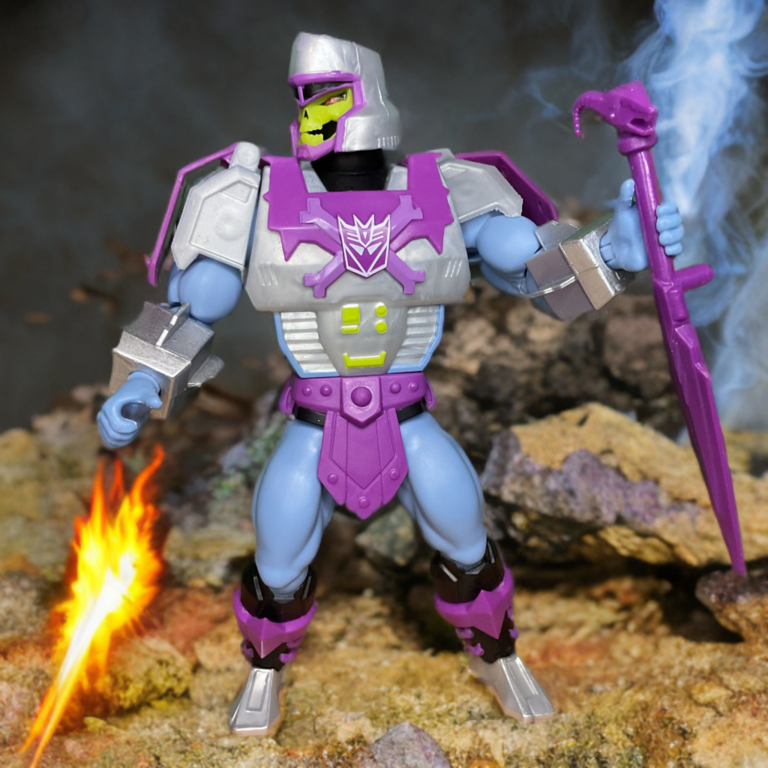
Features-wise, the modular armor shines: pieces detach and reattach easily, encouraging swaps with other Origins figures. No electronic sounds or lights, but the tactile click of assembly evokes that old-school satisfaction. Everything stores neatly in the box for collectors, making this a well-rounded set that enhances play without overwhelming simplicity.
Playability and Fun Factor
This figure begs to be played with, channeling the raw energy of 80s toy sessions where imagination ruled. Its size makes it backpack-friendly for on-the-go adventures, while the sturdy build withstands drops and clashes. Mix it into a MOTU battle, and Skeletor becomes an unstoppable force, his Megatron upgrades turning the tide against He-Man’s crew. Or pit him against Transformers bots for interdimensional skirmishes—imagine him allying with Starscream or challenging Optimus.
The modular system boosts replayability: strip the armor for a classic Skeletor vibe or kitbash with other figures for custom hybrids. Accessories encourage creative combat—fling the mace like a wrecking ball or use the staff for sweeping attacks. For younger fans, it’s accessible; no complex transformations, just plug-and-play fun. Adults will appreciate the nostalgic tactile feedback, from the joint clicks to the weapon grips.
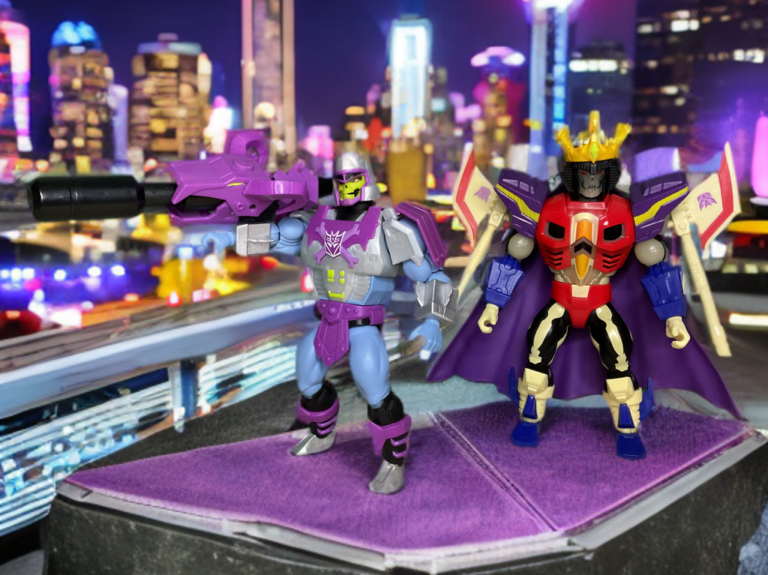
In group play, it sparks stories: How did Skeletor claim Megatron’s power? What alliances form? The fun factor lies in its versatility, bridging generations with simple yet engaging mechanics that echo the era’s best toys.
Collector’s Perspective
For collectors, Megatron Armor Skeletor is a must-have gem in the Origins lineup, blending rarity with crossover appeal. As a 2025 exclusive, its limited availability at Target and Mattel Creations adds hunt thrill, with resale values likely climbing for mint-in-box specimens. The packaging’s display-friendly design, complete with crossover art, makes it shelf-ready, while the figure’s quality ensures longevity.
It slots seamlessly into MOTU collections, enhancing Skeletor variants like Snake Armor or Battle Armor editions. Transformers enthusiasts will dig the Megatron homages, potentially sparking hybrid displays. The mini-comic is a collector’s treat, extending the official canon. Drawbacks? No chase variants yet, but the modular parts open doors for customizers.
Value-wise, at $32.99, it’s a steal compared to vintage pieces fetching hundreds. It represents a pivotal moment in toy history, uniting Mattel and Hasbro, so snag one before it becomes a grail item.
Official Release Checklist & Market Value
To understand where these figures sit in the current market, here is the official roster as of early 2026.
| Figure Name | Release Date | Retail Price (MSRP) | Secondary Market Value |
| Megatron Armor Skeletor | October 2025 | $32.99 | $45 – $55 |
| Bumblebee Armor Man-At-Arms | October 2025 | $32.99 | $35 – $40 |
| Optimus Prime Armor He-Man | January 2026 | $29.99 | $60 – $75 (Current Surge) |
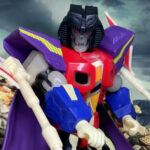
| Starscream Armor Scare Glow | January 2026 | $32.99 | $50 – $65 |
Note: Values are based on recent completed auctions. Figures sold through Mattel Creations or Target exclusives tend to see a higher initial spike in the secondary market due to regional availability and the sheer fervor of the “FOMO” (Fear Of Missing Out) culture.
Nostalgic Vibes
Holding Megatron Armor Skeletor transports you straight back to the 80s, when toys were portals to infinite worlds. The bulky armor recalls clunky yet charming vintage figures, while the color pops evoke faded comic panels and grainy TV episodes. It’s like Skeletor raided Megatron’s closet after a interdimensional yard sale, blending the raw power fantasies of He-Man’s battles with the tech-twist of Transformers’ wars.
Memories flood in: arranging epic dioramas on carpeted floors, narrating clashes with friends, or begging parents for “just one more” at the store. This figure captures that essence, updating it without losing soul— no apps or batteries, just pure, hands-on magic. For those who grew up with these lines, it’s a bridge to youth, reminding us why these plastic icons endure.
Conclusion
Megatron Armor Skeletor stands as a triumphant testament to the enduring magic of 80s toy legacies, merging Masters of the Universe’s fantastical heroism with Transformers’ robotic spectacle in a package that’s both innovative and reverent. From its historical roots in Mattel’s bold originality and Hasbro’s clever repurposing to the figure’s detailed design, versatile articulation, and thematic accessories, it delivers on every front. Whether fueling imaginative play or enhancing a collection, this crossover captures the spirit of what made those franchises timeless.
In an age of digital distractions, toys like this remind us of simpler joys: the clack of plastic, the spark of story, the thrill of creation. If you’re chasing that nostalgic high or introducing a new generation to Eternia’s echoes, grab this figure—it’s more than meets the skull.
 English
  Deutsch
  Français
  Português do Brasil
  日本語
日本語  Español
  English (Australia)