

Road Demons: Ultimate Guide to the Stunticons and Menasor
In the vast saga of mechanical beings locked in eternal conflict, few groups embody sheer vehicular mayhem quite like the Stunticons. These Decepticon road warriors burst onto the scene as a direct counter to the Autobots’ dominance on Earth’s highways, turning every stretch of asphalt into a potential demolition derby. Formed from stolen human vehicles brought to life through cunning Decepticon engineering, the Stunticons represent a blend of speed, aggression, and internal discord that makes them as dangerous to themselves as to their enemies. Their story begins in the mid-1980s era of the Transformers narrative, where Megatron sought to level the playing field—or rather, pave over it—by creating a team capable of outrunning and outgunning the Autobots on the ground.
The Stunticons’ debut marked a shift in Decepticon tactics, emphasizing mobility and combined power. Led by the domineering Motormaster, the team includes Dead End, Breakdown, Drag Strip, and Wildrider, each transforming into high-performance Earth vehicles. Together, they merge into the colossal Menasor, a gestalt warrior whose raw strength is matched only by his fractured psyche. Over the years, their exploits have spanned animated episodes, comic panels, and various media adaptations, always leaving a trail of twisted metal in their wake. But beneath the chrome and chaos lies a group plagued by personality clashes, making their history one of turbulent triumphs and spectacular failures.
Stunticon Guide Directory
Sparks from Scrap: The Creation of the Stunticons
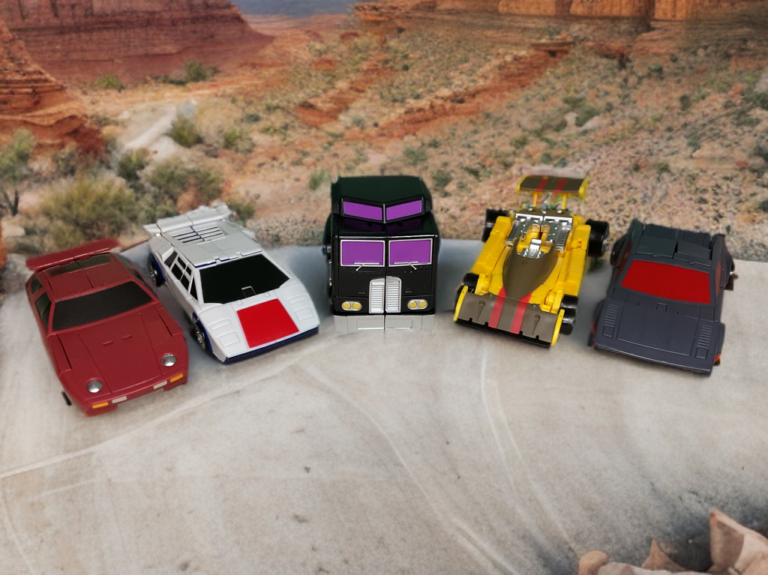
The Stunticons’ origins trace back to a desperate ploy by Megatron during a period when the Autobots held a clear advantage in ground-based warfare. In the Generation 1 animated series, specifically in the episode “The Key to Vector Sigma, Part 1,” Megatron orchestrated the theft of several Earth vehicles—a semi-truck, a Porsche, a Lamborghini, a Formula One racer, and a Ferrari. These weren’t random choices; each was selected for its speed and style, perfect for blending into human traffic while packing a punch.
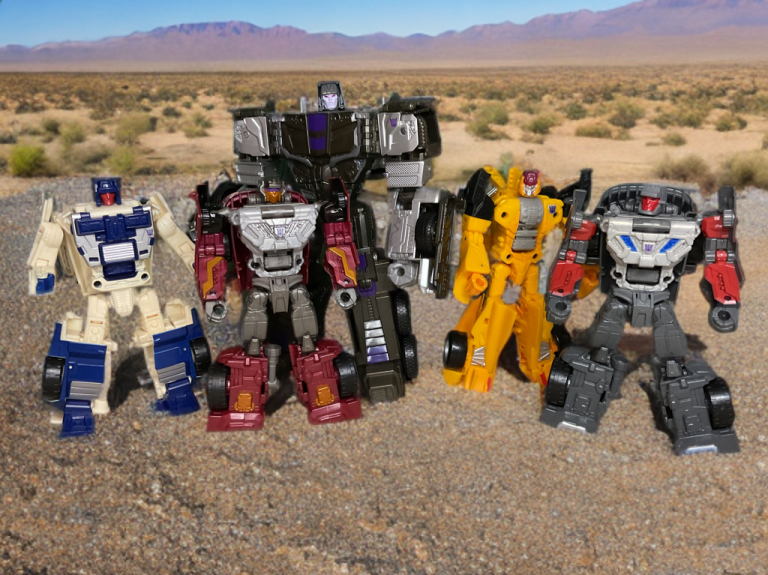
With the vehicles in tow, Megatron transported them to Cybertron, where he used stolen personality components and the ancient supercomputer Vector Sigma to infuse them with life. Vector Sigma, the life-giving force of Cybertron, required a key that Megatron extracted from Alpha Trion, an ancient Autobot sage. In “The Key to Vector Sigma, Part 2,” the newly awakened Stunticons pledged loyalty to Megatron, immediately proving their worth by rampaging through Cybertron’s defenses and returning to Earth. Their first major clash came against the newly formed Aerialbots, culminating in a combiner showdown where Menasor faced off against Superion, only to be buried under rubble with the help of Omega Supreme.
In the Marvel Comics continuity, the creation differed slightly. Here, the Stunticons were brought to life using the Creation Matrix, stolen by Megatron and used to animate the vehicles in a bid to smear the Autobots’ reputation among humans. Their initial mission involved a staged demolition derby on a highway, framing the Autobots for the destruction. This comic version emphasized propaganda and psychological warfare, with the Stunticons causing chaos to turn public opinion against their foes.
Across Japanese continuities, such as Fight! Super Robot Lifeform Transformers, the Stunticons appeared in story pages clashing with Superion and teaming with other Decepticons like Devastator. Their creation mirrored the U.S. cartoon, but with added flair in battles, including Scramble Power reconfiguration during fights. In TV Magazine comics, they tore up a Tokyo baseball stadium and raided the planet Feminia, showcasing their destructive prowess in global settings.
This birth from stolen tech and forced animation set the tone for the Stunticons: a team engineered for dominance but riddled with flaws. Their vehicle modes allowed seamless infiltration of Earth’s roads, but their personalities—imbued with Decepticon aggression—ensured constant friction, especially under Motormaster’s iron-fisted rule.
Motormaster: The Highway Despot
At the helm of the Stunticons stands Motormaster, a brute whose truck mode—a Kenworth semi—belies his ambition to be the undisputed “King of the Road.” His bio paints him as a merciless tyrant who rams anything in his path, boasting superhuman strength that lets him pulverize concrete at full speed without a scratch. Armed with an Cyclone Sabre and cyclone gun, Motormaster’s robot form is a towering enforcer, but his true obsession is defeating Optimus Prime to claim supremacy over all vehicular Transformers.
Personality-wise, Motormaster is cold and brutal, bullying his teammates by exploiting their insecurities—Dead End’s nihilism, Breakdown’s paranoia, Drag Strip’s ego, and Wildrider’s recklessness. He rules through fear, often for his own amusement, which sows seeds of resentment that undermine their combined form. In the cartoon, he leads attacks on military bases, crushes Optimus in a head-on collision (though he fares worse), and participates in schemes like stealing the Pearl of Bahoudin during the Trans-Europe Express race. In “Starscream’s Brigade,” he helps disable Bruticus, and in “The Ultimate Weapon,” he’s part of the assault on Metroplex.
Comics portray him similarly: In Marvel, he demolishes highways to frame Autobots and fights Dinobots. In Dreamwave, as Starscream’s enforcer, he threatens Scrapper and battles Ultra Magnus. IDW’s 2005 continuity shows him joining Megatron’s rebellion, deserting to become a highwayman, and ramming Optimus during invasions. In games like Transformers: Earth Wars, he overcharges allies for bursts of damage, reflecting his domineering style.
Motormaster’s leadership is a double-edged blade: effective in short bursts but corrosive over time, making him a perfect foil for more unified Autobot leaders.
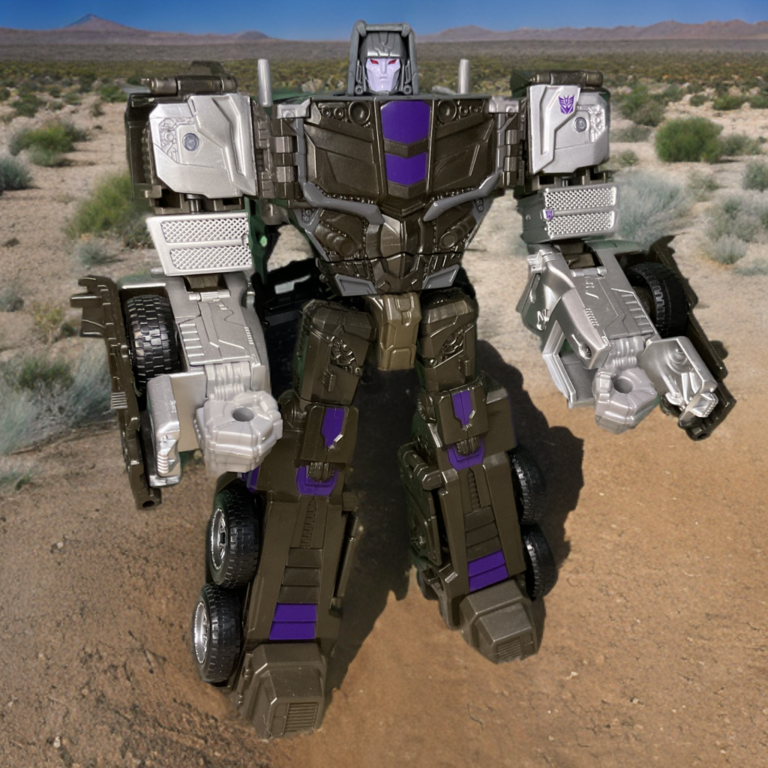
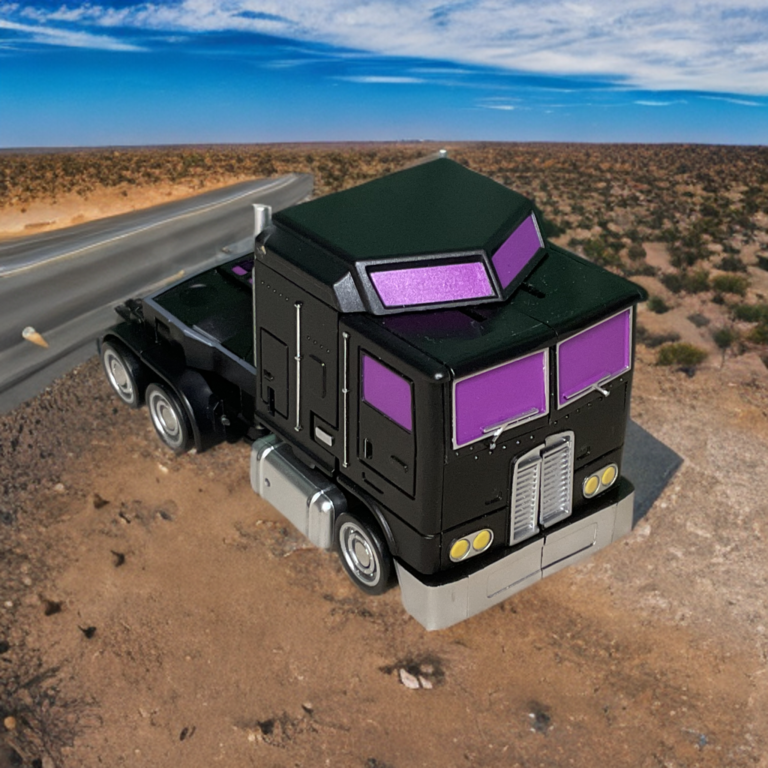
Motormaster’s Leadership: The Iron Fist on the Highway
Motormaster’s role as the leader of the Stunticons is a study in authoritarian control, where brute force and psychological manipulation forge a fragile alliance out of disparate personalities. As the central component of Menasor—forming the torso and head—his dominance extends beyond the physical merger, shaping the team’s dynamics in ways that amplify their destructive potential while sowing seeds of dysfunction. Official bios and media portray him as the self-proclaimed “King of the Road,” obsessed with vehicular supremacy, particularly over Optimus Prime. This leadership style, rooted in Decepticon ideology, prioritizes intimidation and results over loyalty or morale, making him effective in short-term assaults but a long-term liability for sustained operations.
Core Traits of His Command
At the heart of Motormaster’s approach is unyielding tyranny. His Generation 1 tech spec profile describes him as cold and cruel, deriving amusement from ramming weaker vehicles off the road and exploiting his subordinates’ flaws. He bullies Dead End by mocking his fatalism, preys on Breakdown’s paranoia with constant surveillance threats, undermines Drag Strip’s ego through belittling comparisons, and reins in Wildrider’s recklessness with threats of disassembly. This isn’t mere tough love; it’s calculated sadism that keeps the team off-balance and dependent on him. In interviews with Transformers creators and official guidebooks, such as the Transformers Universe profiles, he’s noted for his “despotic” rule, where fear is the primary motivator. Unlike more strategic Decepticon leaders like Onslaught of the Combaticons, who foster unity through military discipline, Motormaster thrives on division, ensuring no one challenges his authority.
This style stems from his own insecurities and ambitions. Motormaster’s fixation on defeating Optimus Prime—viewing him as the ultimate road rival—drives many decisions, often at the expense of broader Decepticon goals. In episodes like “The Key to Vector Sigma,” he charges headlong into battles, prioritizing personal glory over tactical retreats. His ionizer sword and cyclone gun symbolize this: tools for direct, overwhelming confrontation rather than subtle strategy.
Impact on Team Dynamics and Performance
Motormaster’s leadership creates a toxic environment that undermines the Stunticons’ effectiveness. The resentment he breeds manifests in Menasor’s fractured psyche, where suppressed personalities cause rage fits or paralysis mid-battle. Official lore, including the Marvel Transformers comics, highlights how this discord leads to operational failures—such as in “Heavy Traffic!,” where internal bickering delays their highway ambush, allowing Autobots to counter. In contrast, when Motormaster’s control slips, the team occasionally shows glimmers of independence, but it rarely lasts.
Positive aspects exist, though sparse. His brute enforcement ensures rapid mobilization; the Stunticons respond quickly to orders out of fear, making them ideal for hit-and-run ops like fuel thefts or races in “Trans-Europe Express.” In Japanese continuities like The Headmasters, he coordinates with other Decepticons effectively during sieges, using the team’s speed to outflank enemies. However, this comes at a cost: the Stunticons’ bios note their mutual hatred, with Motormaster as the focal point, leading to sabotage risks or desertions in extended campaigns.
In IDW’s 2005 continuity, his leadership evolves slightly post-rebellion. As a highwayman after deserting Megatron, he rebuilds the Stunticons through sheer intimidation, raiding convoys and joining invasions. Yet, arcs like “Things Fall Apart” show his methods backfiring—team members like Wildrider abandon him after losses, forcing reliance on upgrades like the Enigma of Combination to enforce unity artificially.
Examples from Key Media
- Animated Series: In “Starscream’s Brigade,” Motormaster leads the charge against Bruticus, forming Menasor to dismantle the rogue combiner. His quick decision-making saves Megatron, but only after bullying the team into compliance. In “The Ultimate Weapon,” he orchestrates an assault on Metroplex, but the Stunticons’ reluctance—fueled by his abuse—delays fusion, nearly costing the mission.
- Comics: Marvel’s runs depict him as Starscream’s enforcer in some timelines, using fear to maintain order during Enclave battles. Dreamwave’s “Passive Aggression” has him awakening the team from stasis, immediately asserting dominance to crush Defensor, though his overconfidence leads to a humiliating defeat by Ultra Magnus.
- Games and Expanded Lore: In Transformers: Earth Wars, his “Overcharge” ability buffs allies temporarily, reflecting motivational spikes through threats. However, flavor text notes his paranoia about betrayal, mirroring how his leadership invites the very disloyalty he fears.
Comparisons to Other Leaders
Compared to Megatron, Motormaster lacks charisma, relying on physical dominance rather than inspiration. Against Autobot counterparts like Silverbolt (Aerialbots), who leads through encouragement despite personal fears, Motormaster’s style highlights Decepticon flaws—power without purpose. In combiner contexts, his approach contrasts Bruticus’ disciplined unity or Devastator’s methodical cohesion, explaining why Menasor often underperforms despite comparable raw power.
Legacy and Evolution
Over decades, Motormaster’s leadership has been reinterpreted in toy lines and media. Legacy figures (2022-2023) emphasize his trailer as a command base, symbolizing control, while IDW stories explore redemption arcs—post-war, he grapples with isolation from his alienated team. Ultimately, his rule exemplifies the Decepticon ethos: strength through subjugation, but at the risk of internal collapse. It’s a leadership that roars down the highway, crushing obstacles, yet forever one mutiny away from a total wreck.
Dead End: The Pessimist's Porsche
Dead End transforms into a deep maroon Porsche 928S, a luxurious grand tourer from the late 1970s and early 1980s renowned for its sleek, aerodynamic lines, powerful V8 engine, and innovative pop-up headlights. This alt mode provides him with impressive speed—officially rated at up to 140 mph in Generation 1 tech specs—along with a radar scan covering a 200-mile radius for detecting vehicles or robots, making him an effective scout despite his reluctance. In robot mode, he wields a black double-barreled plasma-energy blaster (sometimes called a compressor-air gun in toy descriptions, capable of firing 40,000 psi blasts of compressed air) that attaches to his back in vehicle mode for seamless integration. His design emphasizes elegance with a blocky, angular robot form that contrasts the smooth curves of his car mode, and his violet optics often convey a weary, distant gaze. The 1986 G1 toy was a faithful, stylized recreation of the Porsche 928, a luxury grand tourer defined by its unique “pop-up” round headlights and sleek, rounded hatchback silhouette. While the toy was cast in a deep maroon plastic, it featured a distinctive yellow racing stripe that was centered on the hood and roof, along with silver vacuum-metallized wheels that captured the high-end aesthetic of the era. plastic riveted wheels mimicking hubcaps, and simple transformation mechanics where the hood flips back for the head, legs invert from the rear, and thighs shorten into the body—optimized for Scramble City-style limb swapping in Menasor formations.
His personality is one of the most layered and ironically tragic among the Stunticons. Dead End is a profound nihilist and fatalist, convinced that existence is an inexorable march toward oblivion: computers will fail, species will go extinct, the sun will die, and the universe itself will implode into nothingness. He views the Autobot-Decepticon war as ultimately pointless—every Transformer is doomed to deactivation regardless of victory or defeat—so why bother exerting effort? Yet, in a striking contradiction, he’s obsessively vain, spending far more time than any teammate polishing his chassis to a mirror shine, buffing out scratches, and ensuring his exterior remains pristine. Official bios explain this as a coping mechanism: if his end is inevitable, he’ll meet it looking impeccable, a small act of defiance against cosmic futility.
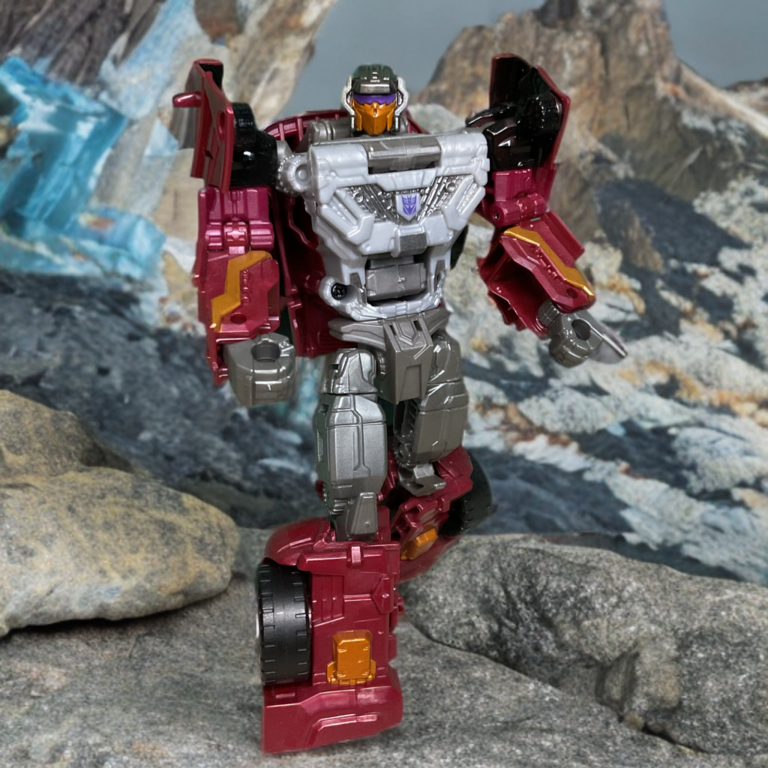
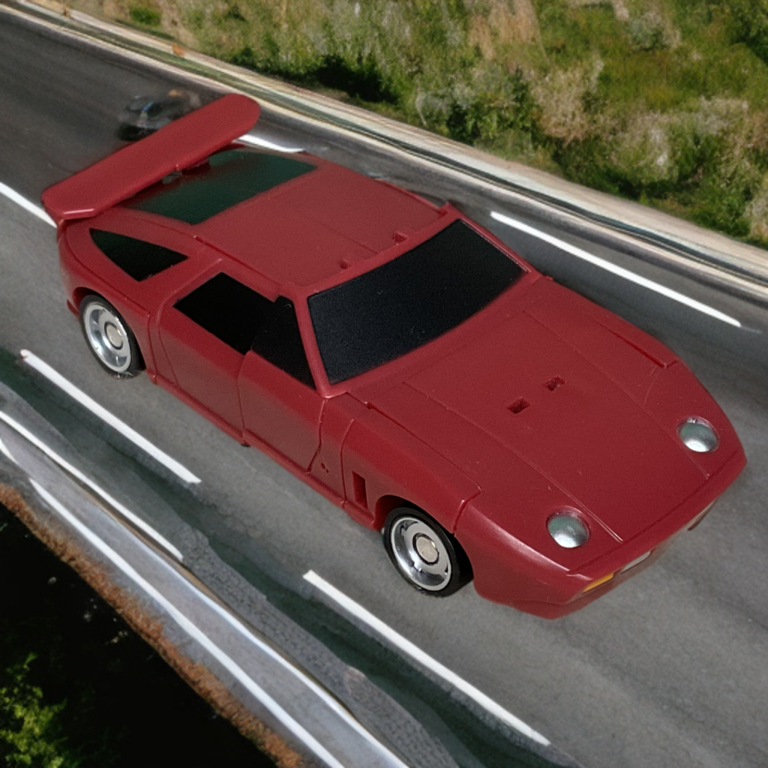
This vanity invites teasing from the other Stunticons, which only deepens his gloom. Combat, however, offers rare respite—once motivated (often through fear of immediate destruction or Motormaster’s bullying), he becomes a fearless, focused warrior, his fatalism momentarily sidelined by the primal drive to preserve his “brief and pointless” existence. The challenge lies in sparking that motivation; without it, he’s sullen, withdrawn, and barely participatory, adding ironic depth to the team’s already fractured dynamics. His reluctance makes him the philosophical counterpoint to more aggressive members, turning Menasor’s mental instability into a chorus of existential dread amid the rage and paranoia.
In the original animated series (The Transformers, 1984-1987), Dead End’s vehicle was originally a bank robbers’ getaway car stolen by Rumble for Vector Sigma activation in the two-part “The Key to Vector Sigma.” Post-awakening, he joins the Stunticons in wreaking havoc to tarnish the Autobots’ reputation, blasting foes during high-speed pursuits and participating in military base raids. In “Trans-Europe Express,” he contributes to disrupting the charity race for the Pearl of Bahoudin, his gloomy commentary cutting through the chaos. “Cosmic Rust” features him attacking landmarks like the Statue of Liberty with the Antillan Lightning Bug heat ray, zapping structures while Perceptor succumbs to rust. The episode “Masquerade” gives him a spotlight: captured by Autobots after a clash with Tracks, he’s impersonated by Jazz (complete with advanced paint and mannerisms), leading to the team’s escape and Menasor formation once the ruse unravels. On the barren world of Chaar in “Five Faces of Darkness, Part 1,” he voices pragmatic warnings against allying with the Quintessons—predicting betrayal and futility—but joins anyway out of grim resignation, later succumbing to the Hate Plague that amplifies his already bleak outlook into manic despair. He appears in additional episodes like “Starscream’s Brigade” (clashing in combiner battles) and various Japanese dubs/extensions, including Scramble City: Mobilization (limb swaps and environmental fights) and The Headmasters (sieges under Galvatron’s command).
Comic continuities deepen his depressive themes. In Marvel’s Generation 1 run (starting with “Heavy Traffic!”), Dead End participates in highway ambushes to frame Autobots, defeats Skids in staged demolition derbies, and fights at the Enclave alongside other Decepticons. Dreamwave’s stories release him from stasis for rampages, where he bickers internally during Menasor formations before Ultra Magnus defeats the team. The 2005 IDW continuity provides richer backstory: Dead End joins Megatron’s early rebellion in Kaon, pit-fighting in underground rings with unnerving optimism about his chances despite his gloom. He survives purges, appears in street battles against Sentinel Prime’s forces, and engages in highway robberies, Caminus riots, and planetary heists. In arcs like “Things Fall Apart,” his questioning of purpose leads to reluctant participation in combiner ops, often highlighting the futility of their efforts. Later stories involve post-war reconstruction or factional conflicts, where his fatalism makes him a detached observer amid chaos.
Video games portray him as a nihilistic but capable combatant. In Transformers: Earth Wars, he deploys rapid-fire lasers and grenades while muttering doom-laden quips like “We’re all just rust waiting to happen,” his abilities focusing on area denial and sustained fire. Transformers Online equips him with Prism Blades for slashing combos, his voice lines reinforcing existential apathy even in victory. Earlier titles like Transformers: Devastation feature him in Menasor formations during artifact heists, using precise shots before chaotic retreats. Mobile games such as Transformers: Battle Tactics emphasize his reluctant aggression, with movesets that reward defensive playstyles—mirroring how survival instincts override his philosophy in battle.
Toy lines have kept Dead End’s essence consistent. The 1986 G1 Deluxe came with his plasma-energy blaster, designed for easy Menasor integration. European 1990 Classics reissues maintained the maroon scheme, while modern updates like Combiner Wars (2015) and Legacy Deluxe (2022-2023) refine the sculpt with better articulation, accurate Porsche 928 proportions (burgundy body, yellow-gold stripe with black and silver accents), and enhanced combiner ports for stable arm/leg roles. These figures capture his duality: a gleaming, elegant machine housing a soul convinced of inevitable decay.
Dead End’s personality makes him the most reluctant participant in the Stunticons’ mayhem—his vanity a fragile shield against overwhelming existential dread, his combat prowess emerging only when self-preservation briefly pierces the fog. In a team defined by aggression and discord, he adds profound ironic depth: the one who sees the pointlessness of it all, yet persists in shining brightly, a tragic mirror to the Decepticons’ futile pursuit of dominance.
Breakdown: The Paranoid Lamborghini
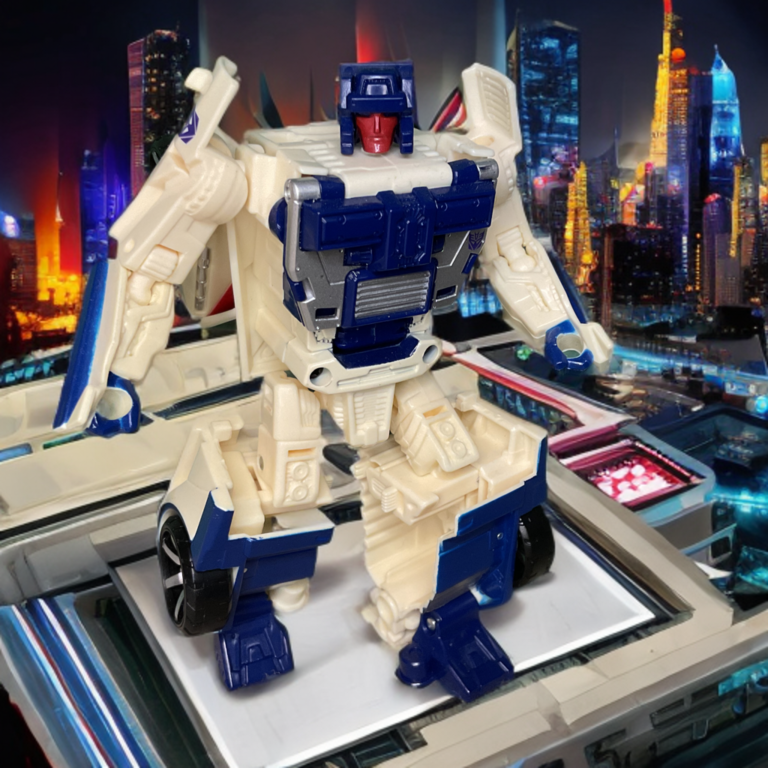
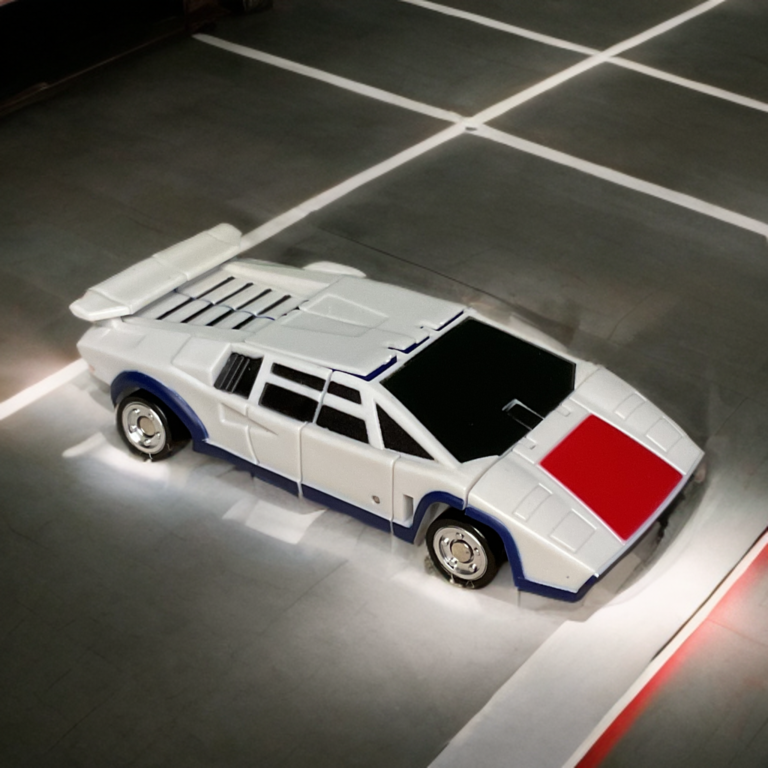
In Menasor, as the right leg, his instability contributes to the gestalt’s frequent rages or freezes—his suppressed paranoia bubbling up as doubt that the other components are “out to get him.” Megatron values his scouting abilities and vibration weapon for infiltration ops, but even the Decepticon leader finds his edginess exhausting.
In the original animated series (The Transformers, 1984-1987), Breakdown debuts in the two-part “The Key to Vector Sigma,” where Rumble steals a white Lamborghini Countach for his activation via Vector Sigma. He immediately uses his vibrations to disable pursuing Autobots during high-speed chases and joins lab robberies for tech components. In “Masquerade,” after Autobots impersonate the Stunticons, Breakdown escapes custody by vibrating the energy bars of his cell until they fail, allowing the team to break free and form Menasor. “Cosmic Rust” sees him participating in landmark attacks, zapping structures while his paranoia spikes under Perceptor’s rust ray. On Chaar in “Five Faces of Darkness, Part 1,” he scavenges energon scraps, allies temporarily with the Quintessons for survival, and gets infected by the Hate Plague, amplifying his already jittery suspicions into full-blown frenzy. Japanese continuities like Scramble City: Mobilization show him fighting Dinobots in desert skirmishes, swapping limbs mid-battle, and guarding outposts in The Headmasters episodes, including Arctic sieges and fortress assaults under Galvatron’s command.
Comic runs flesh out his anxious nature. In Marvel’s Generation 1, Breakdown joins highway raids to frame Autobots, raids power plants, and becomes a lone highwayman after team fractures. Dreamwave stories release him from stasis for rampages against Ultra Magnus and the Wreckers. In IDW’s 2005 continuity, he appears early in Megatron Origin among gladiatorial recruits, fights in Kaon battles, and survives purges. Later arcs show him abandoned on Earth post-Megatron’s fall, desperately attacking solar power facilities for energon. In some stories, he’s captured by Skywatch (human forces monitoring Transformers), repurposed humiliatingly as a “pimpmobile” for covert ops before escaping. Post-war tales involve him in reconstruction efforts or riots, his paranoia making him a reluctant participant who constantly scans for threats.
Video games highlight his tactical but panicky style. In Transformers: Earth Wars, his paranoia triggers panic modes during battles, but he deploys concussion rifles and EMP rockets for crowd control or vehicle shutdowns. Transformers: Devastation features him in Menasor formations to grab artifacts, using vibrations for area denial before chaotic retreats. Mobile titles like Transformers: Battle Tactics give him sneaky flank attacks, with voice lines muttering about “eyes everywhere” while unleashing EMP bursts.
Toy evolution keeps Breakdown’s legacy intact. The 1986 G1 Deluxe figure featured his white/red Countach mode with blue concussion rifle, designed for Scramble City limb interchange as Menasor’s right leg. European 1990 Classics reissues and cancelled G2 variants (like black redecos) followed. Combiner Wars (2015) updated him as a Deluxe Class with a Diablo-inspired redesign, better articulation, and stable combiner ports. Legacy Deluxe (2023) brought a cartoon-accurate white scheme with enhanced details, G1-inspired proportions, and retooled parts shared with the team for the Evolution Menasor giftset—making him a standout for display as the jittery scout who just wants to disappear into traffic.
Breakdown’s fears render him a master of evasion and subtle sabotage, but they also chain him to constant dread. Sneaky enough to scout unseen when calm, unreliable when paranoia peaks, he remains the weak link Motormaster exploits and Menasor suffers— a trembling engine in a team built for thunderous speed.
Drag Strip: The Ruthless Racer
Drag Strip transforms into a sleek, yellow Tyrrell P34 six-wheeled Formula One race car, a design that perfectly mirrors his obsessive drive for supremacy on any track or battlefield. This real-world-inspired alt mode—based on the innovative 1976-1977 Tyrrell F1 car known for its four small front wheels—gives him exceptional cornering speed and acceleration, making him the fastest pure racer among the Stunticons. In robot mode, he stands tall and lean, armed with a double-barreled purple plasma-energy blaster (often mounted on his back in vehicle mode) and a gravity-enhancing gravito-gun that can disorient foes by amplifying gravitational forces. His official Generation 1 tech spec profile sums him up bluntly: “The first one to cross the finish line lives!” Nasty, underhanded, and prone to overheating from pushing his engines too hard, Drag Strip is the epitome of a win-at-all-costs competitor who views every encounter as a race he must dominate.
His personality is defined by ruthless opportunism and pathological ego. Drag Strip is a backstabbing schemer who cheats without remorse, sabotages rivals mid-contest, flatters superiors like Megatron or Motormaster when it suits him, and gloats incessantly over any victory. He would rather be reduced to scrap than finish last or lose face—bragging rights are his ultimate fuel. This makes him a formidable individual fighter, as his desperation turns him into a vicious, unpredictable opponent.
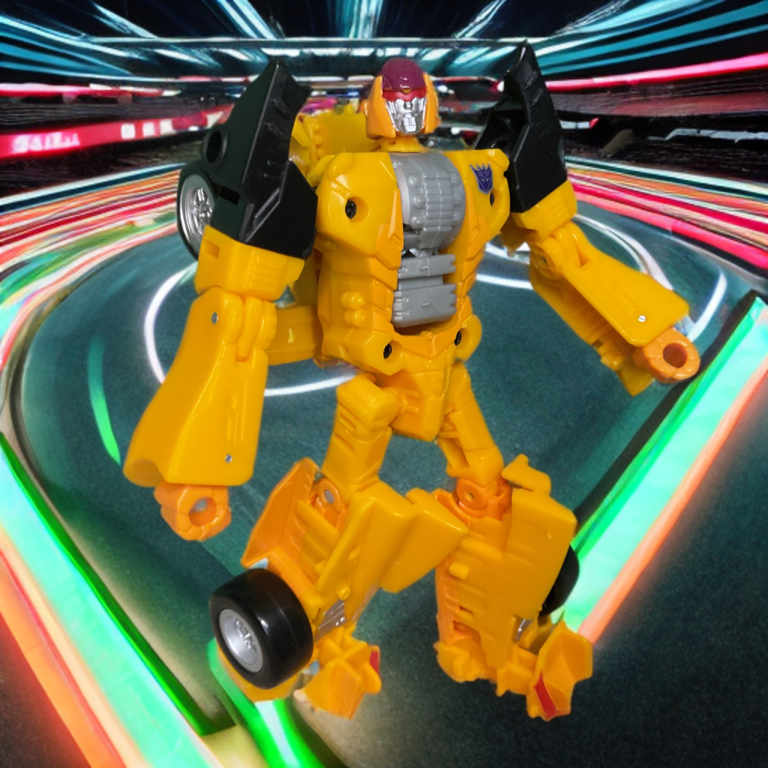
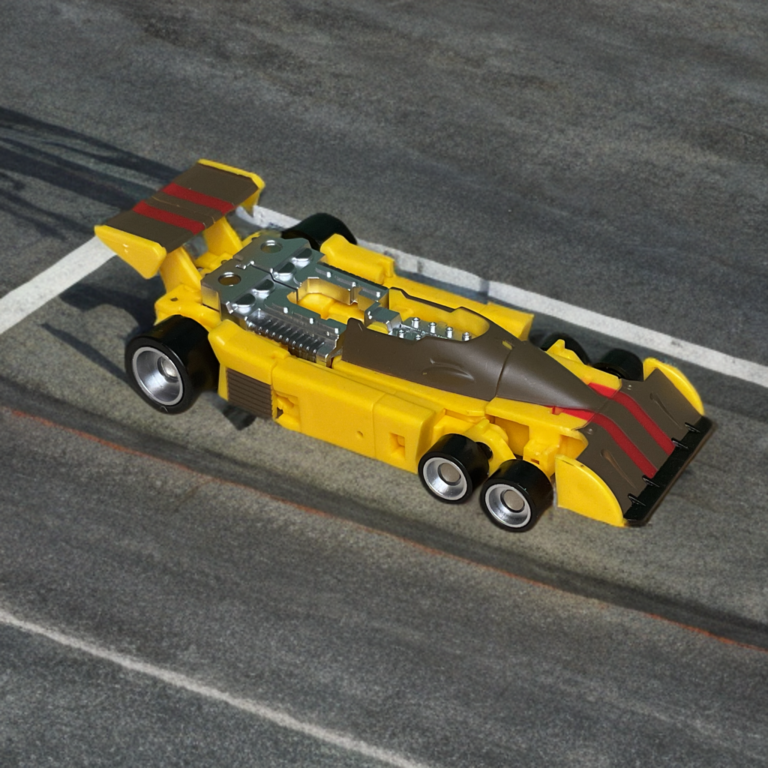
Yet within the Stunticons, his treachery is a poison: he constantly undermines team cohesion, eyeing promotions or solo glory, which fuels rivalries and makes Motormaster’s bullying leadership feel almost necessary to keep him in line. The other Stunticons tolerate him only because his speed and aggression serve their missions, but they all quietly despise his obnoxious self-aggrandizement. Megatron himself recognizes this flaw as an asset—Drag Strip’s insatiable hunger for victory makes him reliable against Autobots, even if it alienates everyone else.
In the original animated series (The Transformers, 1984-1987), Drag Strip debuts alongside his team in the two-part “The Key to Vector Sigma.” Rumble steals a Formula One winner’s car specifically for him, highlighting his prestige as a racer. He participates in early rampages, such as blasting Autobots during high-speed pursuits and joining the lab robberies for experimental tech. One memorable moment comes during chaotic attacks where he water-skis behind Wildrider’s erratic Ferrari mode, using the slipstream for dramatic flair while firing on pursuers. In “Trans-Europe Express,” he helps disrupt the charity race to steal the Pearl of Bahoudin, weaving through competitors with cutthroat maneuvers. “Masquerade” sees him escape Autobot custody after impersonators fool the team, quickly forming Menasor for a counterattack. Later episodes like “Five Faces of Darkness” show him scavenging energon on Chaar, bickering over scraps, and getting infected by the Hate Plague, amplifying his already explosive temper.
Comic continuities expand his scheming nature. In Marvel’s Generation 1 run, Drag Strip joins highway ambushes to frame Autobots, pursues experimental rockets in high-stakes chases, and kidnaps human reporters to silence witnesses during Decepticon ops. He appears in moon-based assaults under Ratbat’s command, fighting Grimlock and Fortress Maximus’ forces. Dreamwave’s stories place him in post-stasis rampages, clashing with Ultra Magnus and the Wreckers. The 2005 IDW continuity gives him deeper backstory: Drag Strip starts as a famous Cybertronian racer known for underhanded tricks, getting involved in Megatron’s early rebellion. He fights in the Battle of Kaon alongside Dead End against Sentinel Prime’s forces, survives purges, and participates in later arcs involving ghetto riots on Cybertron, planetary heists, and combiner skirmishes. In some IDW stories, his opportunism leads him to temporary alliances or betrayals, always calculating how to come out on top.
Video games portray him as a competitive brawler with a flair for showmanship. In “Transformers: Devastation,” he and the Stunticons form Menasor to seize a Plasma Core from the Proudstar, using agile strikes before tumbling off in defeat. Transformers: Battle Tactics features him in one-on-one tournaments, taunting opponents with lines like “This game is pointless. You know I’m going to win every time, right?” while unleashing rapid combos. Earlier titles like Transformers: Fall of Cybertron (multiplayer) and War for Cybertron DS versions give him vicious, opportunistic movesets, often with nitro boosts for quick escapes or charges. In mobile games like Transformers Online, his dialogue reinforces his survivalist racing mantra: “Only those who crossed the finish line first survive.”
Across modern toy lines, Drag Strip has evolved while staying true to his roots. The 1986 G1 figure came with his gravito-gun and plasma blaster, designed for Scramble City-style limb swapping in Menasor. Later reissues (e.g., 1990 European Classics) and unreleased G2 redecos (black with blue accents) teased alternate color schemes. Combiner Wars (2015) and Legacy (2022) versions update him with better articulation, a more screen-accurate yellow/black scheme, and enhanced combiner ports, making him a fan-favorite for dynamic posing as Menasor’s right arm.
Drag Strip’s ego is both his greatest weapon and his fatal flaw. It drives him to outperform everyone—Autobots, fellow Decepticons, even his own team—but that same arrogance sows distrust and invites comeuppance. In a group already fractured by clashing personalities, his constant scheming for personal victory makes him the spark plug of internal conflict, ensuring the Stunticons’ unity remains as fragile as a blown tire at full throttle.
Wildrider: The Reckless Ferrari
Wildrider transforms into a sleek, dark gray Ferrari 308 GTB sports car with red racing stripes, a mid-engine Italian icon from the late 1970s and early 1980s that perfectly captures his essence as a high-speed agent of chaos. This alt mode grants him blistering acceleration—up to 250 mph in official Generation 1 tech specs—with exceptional maneuverability on twisting roads or open highways. In robot mode, he wields a large double-barreled plasma-energy scattershot gun (sometimes depicted as a black cannon) capable of spraying destructive energy over a 50-square-yard area, turning crowds or convoys into flaming wreckage. His design emphasizes aggression: red-tinted windows that evoke a manic glare, sharp angles, and a posture that screams barely contained frenzy. Official bios describe him as a “terrorist” whose very presence on the road is a hazard—erratic swerving, sudden lane changes, and deliberate collisions make him a nightmare for any driver, Autobot or human alike.
Personality-wise, Wildrider is unhinged and thrill-seeking to an extreme. He craves destruction and noise, terrified of silence because he interprets quiet as the prelude to an ambush. This paranoia drives him to fill every moment with reckless action—crashing through barriers, revving engines at deafening levels, or provoking fights just to drown out the stillness. His bio notes that he “really is as crazy as they come,” a genuine danger even to his fellow Stunticons, who give him wide berth on the road to avoid being sideswiped in one of his manic episodes.
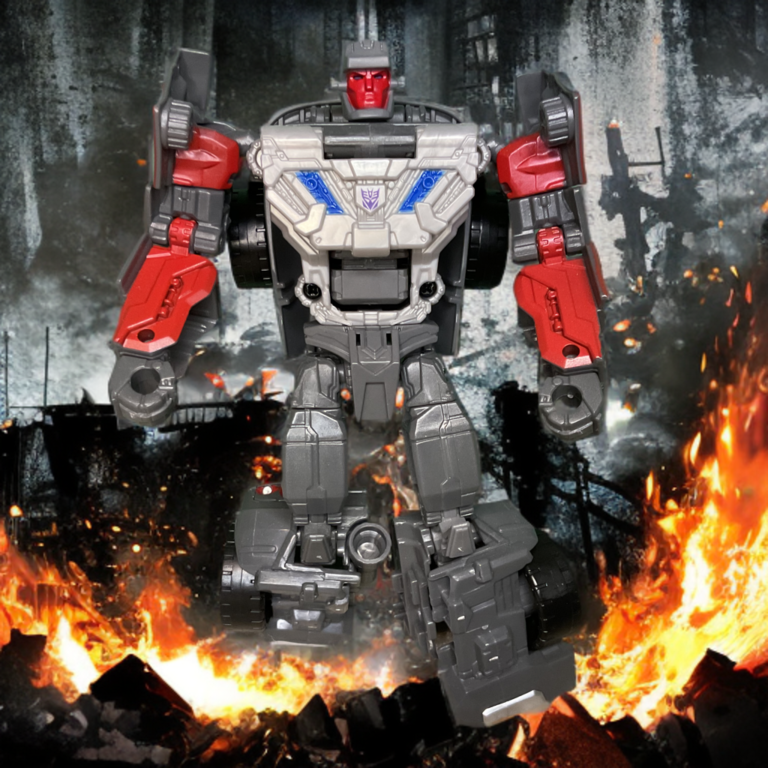
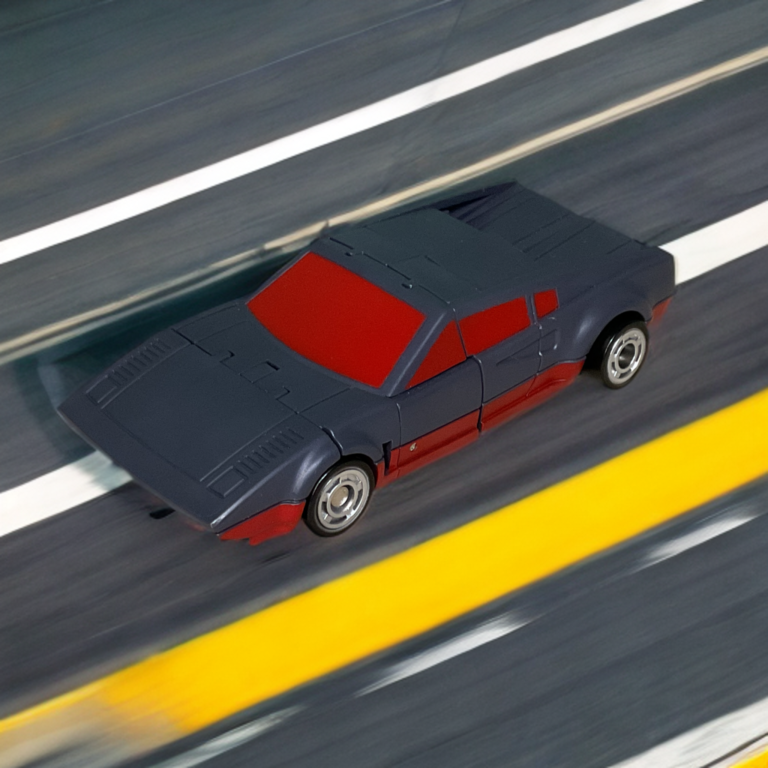
Within the team, Wildrider’s insanity adds layers of unpredictability: his crashes aren’t always accidents, and his disregard for self-preservation or team strategy often leaves Motormaster fuming. Yet this very madness makes him effective in short, explosive bursts—when the Stunticons need someone to charge headlong into enemy lines or create diversions through sheer vehicular mayhem, Wildrider delivers without hesitation. His questionable sanity raises constant questions: is he truly deranged, or is this calculated terror tactics amplified by Decepticon programming? Either way, it ensures no one can predict his next move, turning him into the wildcard of the group.
In the original animated series (The Transformers, 1984-1987), Wildrider debuts with the Stunticons in the two-part “The Key to Vector Sigma,” where his Ferrari mode is stolen and animated via Vector Sigma. He immediately embodies chaos, weaving erratically through traffic, crashing into obstacles, and laughing maniacally while blasting at Autobots. In “Trans-Europe Express,” he contributes to the race disruption, using his speed to cause pile-ups and environmental havoc while the team pursues the Pearl of Bahoudin. One standout moment involves him careening wildly to evade pursuers, deliberately smashing through mountainous terrain or roadside barriers to create rockslides and block paths. On Chaar in “Five Faces of Darkness, Part 1,” he participates in the energon scrambles, “donating” scavenged fuel to the cause (often with begrudging reluctance) before the Hate Plague infection turns his already volatile temper nuclear. He appears in episodes like “Masquerade” (escaping after the impostor ploy and forming Menasor), “Starscream’s Brigade” (clashing in combiner battles), and various Japanese extensions such as Scramble City: Mobilization (where he swaps limbs mid-fight) and The Headmasters (fighting under Sixshot’s command in Earth sieges, including Arctic ambushes and fortress assaults).
Comic continuities amplify his destructive flair. In Marvel’s Generation 1 run (starting with issue #22, “Heavy Traffic!”), Wildrider joins freeway carnage, ramming vehicles off roads and ambushing Autobots in high-speed pursuits. He features in moon-based operations under Ratbat, where his erratic driving translates to zero-gravity chaos during ambushes. Dreamwave’s stories place him in stasis release arcs, rampaging alongside the team against Ultra Magnus and the Wreckers. In the 2005 IDW continuity, Wildrider appears in Megatron’s early rebellion (from Megatron Origin), fights in Kaon battles, and participates in planetary heists and riots. His opportunism shines in later arcs: after heavy losses (including combiner defeats), he abandons the Stunticons temporarily—sometimes joining other factions or going rogue—before returning when the odds improve. In some stories tied to Combiner Wars, he leaves the team entirely due to internal fractures, with Offroad and Blackjack taking his place in Menasor formations, reflecting his unreliable nature.
Video games cast him as a chaotic brawler. In “Transformers: Devastation”, he helps form Menasor to seize artifacts, using wild charges and scattershot barrages before dramatic defeats. Transformers: Battle Tactics and mobile titles feature him in tournaments, taunting foes with manic laughter while unleashing unpredictable combos. Earlier games like “War for Cybertron“ variants and “Bot Shots Battle Game” give him fist, sword, or gun-based one-on-one matches, emphasizing his reckless style.
Toy history keeps his legacy alive. The 1986 G1 figure came with his signature scattershot gun, designed for Scramble City limb interchange in Menasor. European reissues (1990 Classics) and cancelled G2 redecos (as Brake-Neck in black/blue) teased variants. Combiner Wars (2015) updated him with modern engineering for stable combinations, while Legacy Deluxe Class (2022, TakaraTomy TL-07) brought back the “Wild Rider” name with G1-inspired gray/red accents, enhanced articulation, and retooled parts shared with Breakdown. These releases capture his essence: a figure that looks ready to spin out of control at any moment.
Wildrider’s insanity is the spark that ignites the Stunticons’ most explosive moments. His fear of quiet fuels endless destruction, his crashes blur the line between madness and method, and his unpredictability keeps enemies—and allies—on edge. In a team already teetering on discord, Wildrider is the loose cannon whose reckless energy can win battles in a blaze of glory or doom them in a spectacular wreck, making him the ultimate embodiment of vehicular terror.
The Forging of Menasor: Combining Chaos
Menasor stands as the hulking embodiment of Decepticon engineering gone wildly right—and disastrously wrong. This colossal combiner emerges from the fusion of the five Stunticons: Motormaster forming the central torso and head, Dead End as the left arm, Breakdown as the right leg, Drag Strip as the right arm, and Wildrider as the left leg. In certain continuities, variations creep in—Offroad or Brake-Neck might swap in for Wildrider, and occasionally a sixth element like a roller car or the diminutive Blackjack adds a chestplate for extra armor. The process isn’t a seamless blend; it’s a forced merger powered by Decepticon tech, often amplified in later eras by artifacts like the Enigma of Combination, which attempts to stitch their minds together more cohesively.
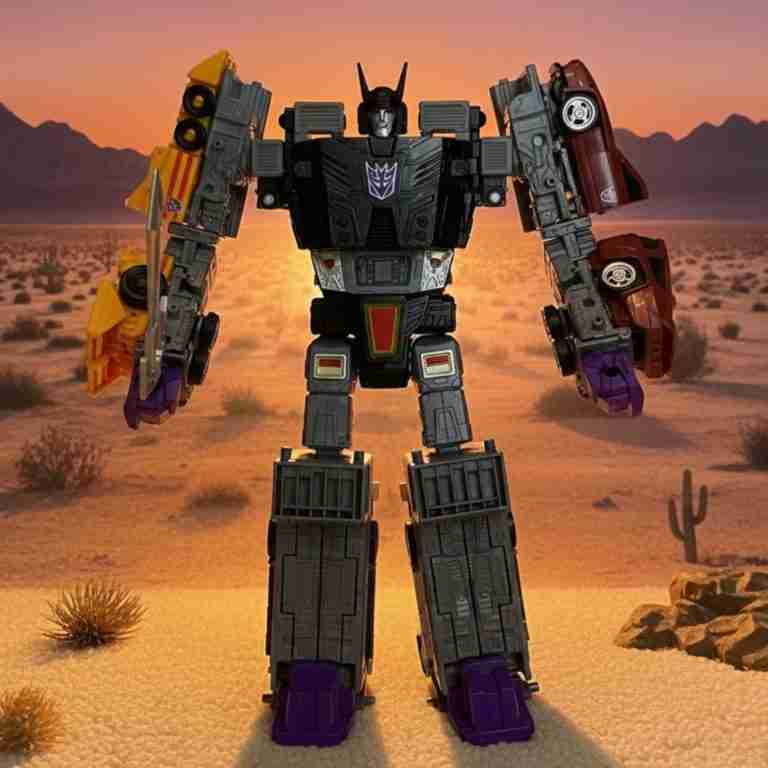
His official profile underscores a warrior of staggering physical might, capable of crumpling mountainsides with a single swing or unleashing barrages from weapons like the Double Graviton Gun. Yet, this raw power comes at a steep price: profound mental instability. Motormaster’s domineering will clamps down on the others, but the suppressed psyches of Dead End’s brooding fatalism, Breakdown’s jittery suspicions, Drag Strip’s cutthroat ambition, and Wildrider’s unbridled mania bubble up as internal conflicts. These clashes manifest as sudden rages, where Menasor lashes out indiscriminately, or moments of paralysis when the components’ bickering overrides his actions. It’s like a high-stakes board meeting where everyone hates the chairman, turning strategic decisions into shouting matches. In toy bios and extended lore, this psychological warfare is described as a constant assault on his unified mind, preventing him from ever reaching his full potential as a tactical juggernaut. Instead, he’s a berserker on wheels, more likely to demolish allies in a fit than execute a precise strike.
In the Generation 1 animated series, Menasor’s rampages are spectacle-driven highlights. He first assembles in “The Key to Vector Sigma, Part 2,” clashing with the freshly minted Superion in a Cybertronian showdown that ends with Omega Supreme tipping the scales, forcing a retreat. During the “Trans-Europe Express,” he forms to snatch the Pearl of Bahoudin, whipping up storms and ripping free from a glacial trap, only to be comically felled by a race car smacking his faceplate. “Cosmic Rust” sees him brandishing the Antillan Lightning Bug heat ray against the Statue of Liberty, grappling Superion mid-air before splintering apart under Aerialbot assault. In “Masquerade,” he coalesces after the Stunticons bust free from Autobot custody, trading blows with disguised foes before heavy fire sends him packing. “Starscream’s Brigade” has him pummeling Bruticus to thwart Starscream’s rebellion, while “Five Faces of Darkness, Part 1” shows him scrapping with Devastator over scraps on Chaar. Finally, in “The Ultimate Weapon,” he tangles with Defensor but gets blasted into submission by Rodimus Prime and Ultra Magnus.
Japanese extensions add flair: In “Scramble City: Mobilization,” Menasor showcases “Scramble Power,” swapping limbs mid-battle to hobble Superion, though Metroplex intervenes. The Headmasters series features him in “The Mystery of Planet Master,” using Hot Rod as a human shield against Superion in the Arctic, and in “Head On!! Fortress Maximus,” aiding Bruticus with a carnivorous plant trap before clashing with Computron. “The Emperor of Destruction Vanishes on an Iceberg” places him in desert outposts, and “The Final Showdown on Earth (Part 2)” has him overseeing crysmagnetal ops in Lemuria, nearly squashing Daniel Witwicky at the North Pole until Sixshot topples him, leading to a spaceward escape.
Comic continuities amplify the chaos. In Marvel’s “Heavy Traffic!” and “The Special Teams Have Arrived,” Menasor forms to demolish the Pullen Power Plant, battling Defensor and Superion but fleeing after personality glitches cause friendly fire mishaps. UK timelines like “The Legacy of Unicron!” summon him to breach defenses for Scourge and Cyclonus. Dreamwave’s “Passive Aggression” has him released from stasis to crush Defensor and the Wreckers, only for his fractured mind to freeze him mid-rampage, allowing Ultra Magnus to ram him apart. In IDW’s 2005 run, “Things Fall Apart, Part 4” sees him reformed by Swindle for a ship heist, but uncoordination lets Autobots pick him off component by component. Upgraded with the Enigma in “First Contact,” he stomps foes on Caminus but spirals into rage via Blackjack’s influence, ultimately falling to Superion. Later arcs like “The Sum and Its Parts” involve prison breaks and space tumbles, while “You, Me, and the Universe” pits him against Devastator and Defensor in zero-gravity brawls.
Games portray him as a boss-level threat with exploitable flaws. In Transformers: Mystery of Convoy, he’s an end-level guardian with invulnerable armor save for a forehead weak spot. Transformers: Earth Wars emphasizes his combiner class, with abilities like Blade Dash and Kinetic Barrier, but Internal Conflict mechanics make him self-damage while disabling foes, mirroring his canon discord. In Transformers: Devastation, he forms to snag a Plasma Core, later tumbling off the Proudstar in defeat. Transformers Legends events recreate his debut battles, and in Battle Tactics, he’s unlocked via maxed components for tournament scraps.
Ultimately, Menasor’s discord transforms him from a potential game-changer into a volatile liability—a raging colossus whose internal storms often eclipse his external destruction, leaving him as much a cautionary tale as a terror.
Menasor’s Combiner Flaws: The Cracks in the Colossus
Menasor, the hulking Decepticon combiner formed by the fusion of the five Stunticons—Motormaster as the torso and head, Dead End as the left arm, Drag Strip as the right arm, Breakdown as the right leg, and Wildrider as the left leg—stands as a testament to raw power marred by profound imperfections. While his physical might is undeniable, capable of shattering mountainsides and unleashing devastating barrages from weapons like the double graviton gun or ionizer sword, Menasor’s flaws stem primarily from the combiner process itself. Unlike more stable gestalts such as Bruticus or Superion, Menasor’s merger is a volatile cocktail of conflicting psyches, engineered hastily by Megatron using Vector Sigma and stolen personality components. This results in a warrior whose internal discord often overrides his external threats, turning him into a liability as much as an asset. Official Generation 1 bios and extended lore emphasize this: immense strength undercut by mental fragility, where the suppressed wills of the components erupt in unpredictable ways.
The core flaw lies in the psychological fragmentation inherent to the Stunticons’ personalities. Motormaster’s tyrannical dominance clamps down on the others, but their individual traits—Dead End’s nihilistic gloom, Breakdown’s crippling paranoia, Drag Strip’s cutthroat opportunism, and Wildrider’s unbridled mania—refuse to fully submerge. This creates a gestalt mind plagued by constant internal warfare, manifesting as sudden rages where Menasor lashes out indiscriminately, or debilitating paralysis when conflicting impulses freeze his actions. In tech specs and profiles from the Transformers Universe guidebooks, this is described as a “war within his mind,” preventing strategic thinking and reducing him to a berserker state. For instance, Motormaster’s obsession with road supremacy might push for a head-on charge, only for Breakdown’s suspicions to inject doubt, causing hesitation, or Wildrider’s recklessness to trigger an overcommitment that exposes vulnerabilities. This discord isn’t just narrative flavor; it’s a mechanical flaw from the combiner tech, amplified in later continuities by the absence of stabilizing artifacts like the Enigma of Combination.
Manifestations in Animated Media
In the Generation 1 animated series, Menasor’s flaws are on full display during high-stakes battles, often turning potential victories into comedic or catastrophic failures. His debut in “The Key to Vector Sigma, Part 2” showcases this: after forming to clash with Superion on Cybertron, internal bickering causes sluggish responses, allowing the Aerialbots to gain the upper hand before Omega Supreme buries him under rubble. The episode highlights how the Stunticons’ resentment bubbles up, with Menasor hesitating mid-swing as if arguing with himself. In “Trans-Europe Express,” during the pursuit of the Pearl of Bahoudin, Menasor forms amid a glacial trap but freezes momentarily—attributed to personality clashes—before whipping up a storm in a fit of rage, only to be felled by a mere race car striking his faceplate. “Cosmic Rust” amplifies the issue: wielding the Antillan Lightning Bug heat ray against the Statue of Liberty, he grapples Superion in mid-air, but a sudden rage blackout leads to wild flailing, scattering his own allies and enabling the Aerialbots to dismantle him component by component.
Japanese extensions like “Scramble City: Mobilization” introduce “Scramble Power” limb reconfiguration as a partial workaround, allowing mid-battle swaps to mitigate flaws (e.g., switching Wildrider’s chaotic leg for a more stable one), but even this fails when core discord persists, as seen when Metroplex intervenes. In The Headmasters series, episodes such as “The Mystery of Planet Master” depict Menasor using Hot Rod as a shield in Arctic battles, but paralysis strikes during a crucial charge against Superion, nearly costing the Decepticons the engagement. “The Final Showdown on Earth (Part 2)” shows him overseeing crysmagnetal operations in Lemuria, where internal conflicts cause him to crush his own energon supplies in a tantrum, forcing a retreat into space after Sixshot’s intervention. These portrayals underscore how Menasor’s flaws escalate in prolonged fights, where sustained focus is impossible.
Depictions in Comics and Printed Lore
Comic continuities delve deeper into the psychological toll, often portraying Menasor’s instability as a narrative device for Decepticon hubris. In Marvel’s “Heavy Traffic!” and “The Special Teams Have Arrived,” Menasor forms to demolish the Pullen Power Plant but suffers from disorganization against Defensor and Superion—personality glitches lead to friendly fire, such as accidentally blasting Decepticon reinforcements, forcing a retreat. UK-exclusive stories like “The Legacy of Unicron!” summon him for defensive breaches, but his rage mode turns him against Cyclonus mid-mission, highlighting the risk of uncontrolled outbursts. Dreamwave’s “Passive Aggression” arc has him released from stasis to overpower the Wreckers, yet a mental freeze—triggered by Dead End’s suppressed fatalism—leaves him statue-like, allowing Ultra Magnus to ram him apart with ease.
IDW’s 2005 run provides the most nuanced exploration. In “Things Fall Apart, Part 4,” Swindle reforms the team for a starship heist, but Menasor’s uncoordination—stemming from Breakdown’s paranoia injecting false threats—allows Autobots to exploit weak points and pick him off. Upgraded with the Enigma of Combination in “First Contact,” he gains temporary stability for stomping foes on Caminus, but Blackjack’s influence (as a sixth component) amplifies the flaws, spiraling into a rage that blinds him to Superion’s counterattack. Later arcs like “The Sum and Its Parts” involve prison breaks where internal dissent causes Menasor to self-sabotage, tumbling into space during zero-gravity brawls. Printed materials, such as the Transformers: More Than Meets the Eye profile books, quantify this: Menasor’s intelligence rating is a low 3/10, endurance high at 10/10, but skill drops due to “mental conflicts rendering him ineffective in complex scenarios.”
Flaws in Games and Expanded Media
Video games mechanize these flaws into gameplay elements, making them exploitable for players. In “Transformers: Mystery of Convoy“, Menasor appears as a boss with invulnerable armor except for a forehead weak spot, symbolizing his mental vulnerability—attacks there trigger “rage phases” where he damages himself. Transformers: Earth Wars classifies him as a combiner with abilities like Blade Dash, but “Internal Conflict” mechanics cause self-damage while disabling foes, directly tying to canon discord; players must manage cooldowns to simulate stabilizing his mind. In Transformers: Devastation, he forms to seize a Plasma Core but suffers from split/reform glitches, leading to predictable patterns where his paralysis opens windows for strikes. Transformers Legends events recreate debut battles with “instability debuffs,” reducing accuracy after prolonged fusion.
Expanded media, like role-playing game sourcebooks (e.g., Transformers RPG by Renegade Game Studios), stat these flaws: Menasor gains bonuses to strength but penalties to agility and willpower saves, with random “discord events” forcing uncontrolled actions. This reinforces his portrayal as a high-risk weapon—powerful but prone to backfiring.
Broader Implications and Comparisons
Menasor’s combiner flaws serve as a metaphor for Decepticon engineering: rushed, aggressive, and self-destructive. Compared to Superion’s simplified focus (low intelligence but unified purpose) or Bruticus’ disciplined cohesion, Menasor’s discord explains his middling win rate in canon clashes. Artifacts like the Enigma offer partial fixes in modern stories, but core issues persist, ensuring he’s never the “perfect” combiner. In a franchise about transformation, Menasor’s flaws highlight the dangers of forced unity—immense power forever fractured by the sparks that fuel it.
Tire Tracks of Terror: Major Exploits
The Stunticons’ legacy is a skid-marked chronicle of high-speed heists, brutal invasions, and botched alliances, where their vehicular prowess turns every mission into a potential pile-up. Born from Megatron’s theft of Earth vehicles and Vector Sigma’s spark, their early exploits focused on ground dominance, starting with fuel raids that crippled Autobot supply lines. In the animated series, they debuted by swiping experimental jet fuel in “The Key to Vector Sigma, Part 1,” using hit-and-run tactics to outmaneuver pursuers before merging into Menasor for the finale.
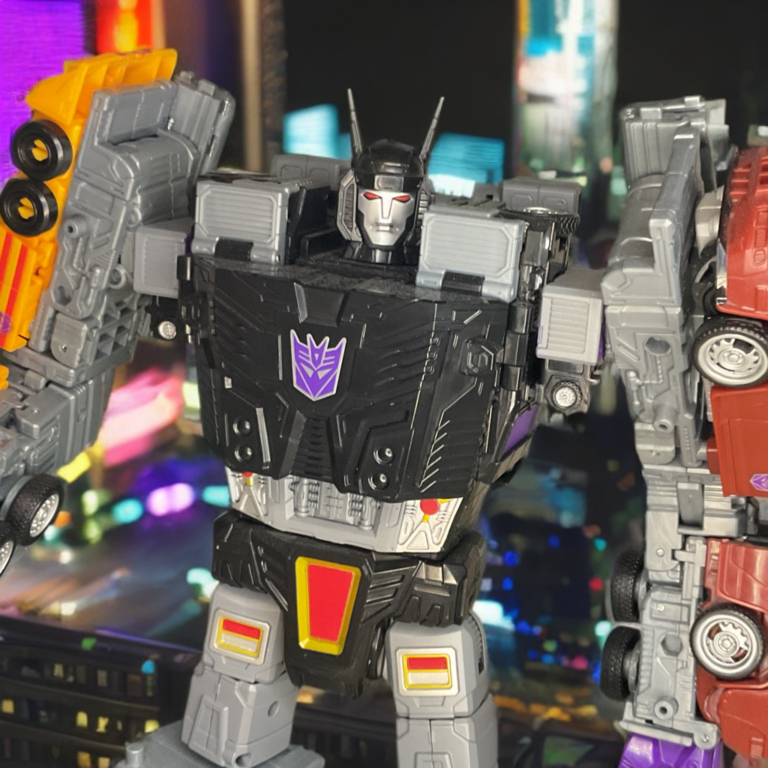
Racing became their signature mayhem. The “Trans-Europe Express” episode turned a charity event into a Decepticon demolition, with the team weaving through competitors to seize the Pearl of Bahoudin, causing massive wrecks and environmental havoc like storm-summoning before a humiliating defeat. Invasions escalated their threat: “Cosmic Rust” had them assaulting global landmarks, zapping the Statue of Liberty with a heat ray and rusting Perceptor, only for the Aerialbots to scatter them. On Chaar in “Five Faces of Darkness,” they scrapped with fellow Decepticons over dwindling energon, highlighting their opportunistic nature.
Comic panels broaden the destruction. Marvel’s “Heavy Traffic!” frames them in a highway ambush framing the Autobots, leading to a combiner free-for-all at the Pullen Power Plant where they trash infrastructure but retreat under superior coordination. Planetary raids define their Dreamwave arcs; released from stasis in “Passive Aggression,” they divert forces by pulverizing Defensor and the Wreckers on Cybertron, creating chaos for Shockwave’s schemes. IDW’s continuity adds grim layers: In “Things Fall Apart,” Swindle reassembles them on Earth for a starship theft, but their disunity leads to capture and dissection for combiner tech research. Later, in “First Contact,” an Enigma-upgraded team raids Caminus, stomping colonial forces in a rampage that ends in defeat but showcases their potential as interstellar marauders. Reconstruction efforts in “Aftermath and Rebirth” see them aiding post-war builds, only for “Volcanicus” to deliver deaths—Overlord crushes Menasor’s neck, extinguishing his spark in a brutal finale.
Japanese media piles on the exploits. In “Zone,” as part of the Nine Great Demon Generals, they conquer worlds, obliterating Feminia alongside Overlord and Abominus, then smashing Zone Bases with armored upgrades. Headmasters episodes like “The Emperor of Destruction Vanishes on an Iceberg” involve multi-pronged sieges on Decepticon outposts, blending vehicular assaults with combiner firepower. Their adventures often intersect with larger Decepticon plots, like guarding planets in Transformers: The Headmasters game or tournament brawls in Battle Circuit.
Through it all, the Stunticons’ exploits reveal a team forever revving on the edge—fuel thefts fueling their engines, races revving their egos, and invasions igniting their fury, but always one internal misfire from total breakdown.
Menasor Compared with Devastator
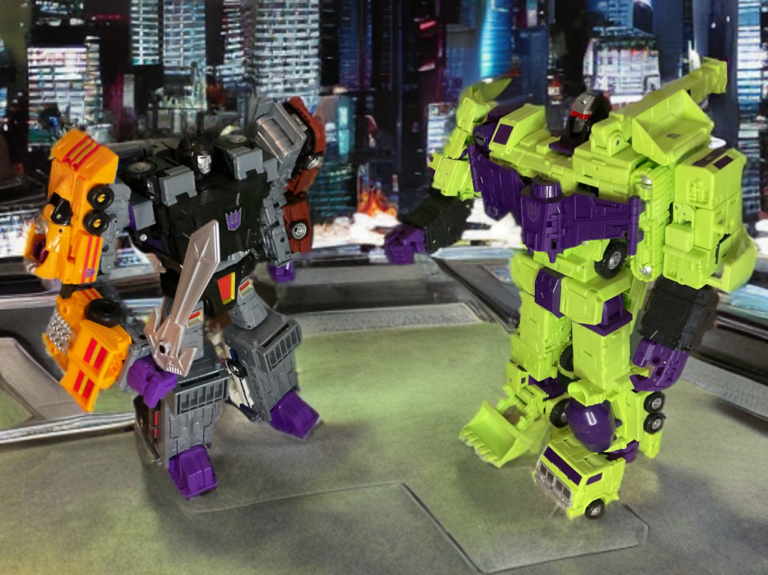
Menasor and Devastator stand as two of the most iconic Decepticon combiner teams in Transformers history, both originating from the Generation 1 era as massive gestalt warriors designed to overpower Autobots through sheer size and brute force. While they share the core concept of five (or six) components merging into a single towering robot, their designs, personalities, strengths, weaknesses, and battlefield roles diverge significantly, making them distinct threats in different ways.
Origins and Composition
Devastator emerged first as the prototype combiner, formed by the six Constructicons: Scrapper (torso/head), Hook (upper torso/back), Bonecrusher (left arm), Long Haul (right leg), Mixmaster (left leg), and Scavenger (right arm). Their construction vehicle alt modes reflect a heavy-industrial theme—bulldozers, cranes, excavators, concrete mixers—optimized for building and demolition. This six-member structure gives Devastator a broader base of mass and power, often depicted as the tallest and heaviest of the classic combiners.
Menasor, introduced shortly after, consists of five Stunticons: Motormaster (torso/head), Dead End (left arm), Drag Strip (right arm), Breakdown (right leg), and Wildrider (left leg). Their high-performance sports car and truck modes emphasize speed and road-based aggression, making them more agile infiltrators on Earth’s highways. The five-bot setup results in a slightly slimmer, more athletic silhouette compared to Devastator’s bulkier frame.
In canon lore, Devastator served as the template for later combiners like Menasor, with the Stunticons viewing him as outdated after seeing Bruticus dominate him in episodes like “Starscream’s Brigade.”
Physical Attributes and Power
Devastator embodies raw, overwhelming might. Official tech specs and bios describe him with exceptional strength (often rated at 10/10 in various continuities), endurance, and destructive capability—he can shatter bridges, crush buildings, and deliver punches with immense force. His size advantage (frequently portrayed as over 60 feet tall) allows him to tower over most opponents, and his construction-themed weapons include drills, cranes, and devastator cannons for area-denial firepower. In animated episodes, he demolishes landscapes and overpowers multiple Autobots at once.
Menasor counters with explosive striking power and speed. His bio highlights a punch force of around 140 tons (far exceeding many contemporaries), cyclone guns, ionizer swords, and heat rays for versatile offense. While not as towering as Devastator, Menasor is faster and more mobile, capable of quick charges, aerial grapples (as seen against Superion), and limb-swapping tactics in Japanese media like Scramble City. Modern toy lines, such as Legacy, emphasize his stability and articulation over older, clunkier designs.
In direct size comparisons from recent figures (e.g., Studio Series Devastator vs. Legacy Menasor), Devastator often edges out in height and mass, but Menasor feels more proportionate and poseable in play.
Mental Stability and Team Dynamics
This is where the biggest contrast emerges.
Devastator’s mind is a relatively unified gestalt, though limited by low intelligence and clunky coordination—his components argue occasionally, but the Constructicons’ shared engineering focus creates a more cohesive whole. He’s predictable: a slow, methodical destroyer who plows forward without much internal dissent.
Menasor, by contrast, is notoriously unstable. The Stunticons’ clashing personalities—Motormaster’s tyranny clashing with Dead End’s nihilism, Breakdown’s paranoia, Drag Strip’s ego, and Wildrider’s recklessness—create constant psychological friction. Motormaster dominates the mind, but suppressed voices lead to rage fits, paralysis, or indiscriminate attacks on allies and enemies alike. Bios describe him as a “raging monster” rather than a strategist, prone to tantrums that sabotage his own effectiveness.
Battlefield Performance and Canon Encounters
In animated clashes, Devastator often requires multiple Autobots or heavy hitters like Omega Supreme to stop him, but he gets bested by other combiners—Bruticus overpowers him in “Starscream’s Brigade,” and Menasor later dismantles a weakened Devastator in “Five Faces of Darkness” over energon scraps.
Menasor frequently tangles with Aerialbots’ Superion (needing Omega Supreme’s aid to win in some cases) and holds his own against Defensor, but his instability often costs him victories—mid-battle freezes or friendly fire turn potential wins into retreats.
Games like Transformers: Devastation pit both against players in intense boss fights, with Devastator as a tanky powerhouse and Menasor using agile splits/reforms for dynamic attacks. Fan discussions and tech spec debates often rank Devastator higher in pure physical dominance (due to size and endurance), while Menasor edges out in striking power and versatility when his mind cooperates.
Overall Comparison
| Aspect | Devastator | Menasor |
|---|---|---|
| Components | 6 Constructicons (construction vehicles) | 5 Stunticons (sports cars/truck) |
| Primary Strength | Overwhelming raw power, size, endurance | Explosive striking force, speed, mobility |
| Weakness | Low intelligence, clunky coordination | Severe mental instability, internal discord |
| Personality | Methodical destroyer, somewhat unified | Chaotic berserker, fractured psyche |
| Typical Role | Siege engine, demolition expert | Highway terror, fast assault |
| Canon Edge | Prototype status, sheer mass | More advanced design, but self-sabotaging |
Devastator represents brute, unstoppable force—the original “big bad” combiner whose presence alone shifts battlefields through sheer intimidation and durability. Menasor, built on that foundation, trades some stability for greater aggression and flair, becoming a high-risk, high-reward weapon that can dominate when synced but often implodes under its own chaos.
In the end, Devastator might win a prolonged slugfest through attrition, but Menasor could end it quicker with a devastating, unpredictable blitz—if his components don’t turn on each other first. Both cement the Decepticons’ combiner legacy as terrifying engines of destruction.
Menaor Compared to Bruticus
Menasor and Bruticus represent two pillars of Decepticon combiner might in the Transformers universe, both debuting in the Generation 1 era as massive gestalt warriors built for overwhelming force. While Menasor draws from the high-speed chaos of the Stunticons, Bruticus channels disciplined military precision from the Combaticons. They share the combiner archetype—five components merging into a towering robot—but differ sharply in design philosophy, mental cohesion, combat style, and canon performance.
Origins and Composition
Bruticus forms from the five Combaticons: Onslaught (torso and head), Vortex (left arm), Brawl (left leg), Swindle (right leg), and Blast Off (right arm). Their alt modes are military vehicles—a jeep-like assault vehicle for Onslaught, helicopter for Vortex, tank for Brawl, jeep for Swindle, and space shuttle for Blast Off—reflecting a coordinated war machine theme. Bruticus was Shockwave’s experimental creation, the first true combiner in some continuities (like War for Cybertron/Fall of Cybertron games and comics), designed as a perfect soldier.
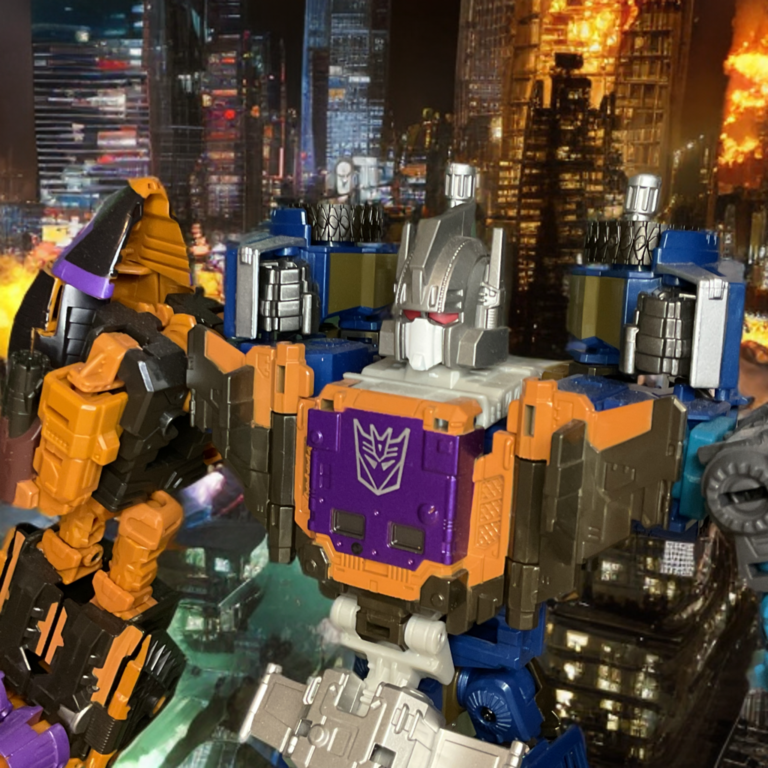
Menasor, as detailed earlier, merges the five Stunticons: Motormaster (torso/head), Dead End (left arm), Drag Strip (right arm), Breakdown (right leg), and Wildrider (left leg). Their sports car and semi-truck modes prioritize speed and vehicular terror on Earth’s roads. Introduced later in the animated series, Menasor built on the combiner concept pioneered by teams like Devastator and Bruticus.
Bruticus often edges out in perceived “prototype” status in extended lore, while Menasor represents a more aggressive, Earth-adapted evolution.
Physical Attributes and Power
Bruticus excels in raw durability and firepower. His bio highlights armor impervious to most artillery and radiation, the ability to smash metal bridges with a single 14,000 psi punch, and lifting up to 500,000 pounds (around 250 tons). Weapons include a sonic stun gun, missile cannon, and ultrasonic waves for crowd control or structural damage. In animated depictions, he’s a methodical destroyer who pulverizes obstacles and overpowers foes through sustained assault.
Menasor counters with explosive close-range power—his punch rated at around 140 tons in bios, plus ionizer swords, cyclone guns, heat rays, and double graviton guns for versatile offense. He’s faster and more mobile than Bruticus, capable of charges, aerial grapples, and limb reconfiguration in Scramble City-style battles. However, his lumbering gait makes him a bigger target when not in motion.
In toy comparisons (e.g., Combiner Wars vs. Legacy lines), Bruticus figures often appear bulkier with tank/helicopter influences, while Menasor feels sleeker and more articulated in modern releases like Legacy Evolution.
Mental Stability and Team Dynamics
Here lies the starkest contrast.
Bruticus boasts exceptional mental unity. The Combaticons function like a well-oiled military unit—Onslaught’s tactical leadership syncs with the others’ discipline, resulting in a gestalt with rudimentary but focused intelligence. He’s described as cold-blooded, unstoppable once unleashed, and simple-minded in the best way: point him at the enemy, and he destroys without hesitation or internal debate. This makes him reliable and terrifyingly efficient.
Menasor, conversely, suffers from severe fragmentation. The Stunticons’ mismatched psyches—Motormaster’s dominance clashing with paranoia, nihilism, ego, and mania—create constant discord, leading to rage blackouts, paralysis, or attacks on allies. Bios call him a “raging monster” rather than a thinker, his power undermined by self-sabotage.
Fan discussions often praise Bruticus as the “best” combiner for lacking Menasor’s mental flaws or Devastator’s clumsiness.
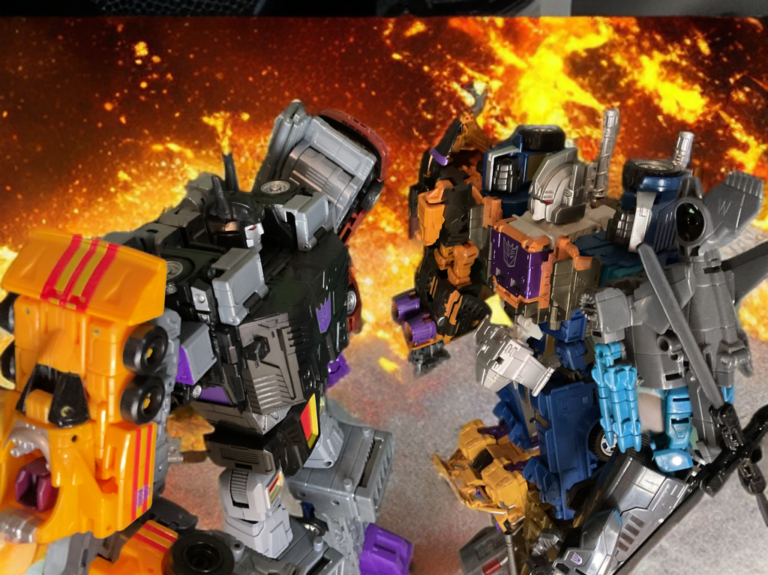
Recommended reading: Bruticus, Menasor, or Devastator: Who Is Strongest?
Battlefield Performance and Canon Encounters
In the animated series, Starscream’s creation Bruticus debuts in “Starscream’s Brigade,” where he effortlessly defeats Devastator in a one-sided beatdown, scattering Megatron’s loyalists before Menasor intervenes. Menasor then charges Bruticus with momentum from a cliff jump, separating the Combaticons and ending the fight decisively—though this is more a surprise attack than a prolonged duel.
Bruticus rarely gets extended showcase fights afterward, but his dominance over Devastator cements his raw power. Menasor frequently battles Superion and Defensor, winning or stalemating when synced but often faltering due to instability.
In comics and games (e.g., War for Cybertron), Bruticus appears as Shockwave’s engineered superweapon, excelling in sieges and direct assaults. Modern lines like Combiner Wars and Legacy give both updated sculpts, with Bruticus emphasizing stability and Menasor focusing on dynamic posing.
Fan debates rank Bruticus higher for reliability—many argue he’d outlast Menasor in a drawn-out fight due to better coordination—while Menasor could win with a quick, overwhelming blitz if his mind holds together.
Overall Comparison
| Aspect | Bruticus | Menasor |
|---|---|---|
| Components | 5 Combaticons (military vehicles) | 5 Stunticons (sports cars/truck) |
| Primary Strength | Durability, sustained firepower, lifting power (250 tons) | Explosive striking (140 tons punch), speed, versatility |
| Weakness | Low speed, rudimentary mind (but unified) | Severe mental instability, internal conflict |
| Personality | Cold, disciplined soldier; unstoppable destroyer | Chaotic berserker; fractured and unpredictable |
| Typical Role | Frontline siege engine, perfect obedience | Highway assault, high-risk blitz attacker |
| Canon Edge | Beat Devastator easily; reliable unity | Defeated Bruticus via surprise; raw aggression |
Bruticus embodies the ideal military combiner: strong, durable, coordinated, and obedient—a weapon Megatron could point and forget. Menasor brings flashier, more volatile power, capable of devastating strikes but prone to self-destruction. In a head-to-head, Bruticus likely prevails in endurance and tactics, while Menasor shines in short, explosive bursts. Both highlight why combiners remain fan-favorite threats: unstoppable when united, but always one glitch away from collapse.
Road Rivals: Menasor vs. The Aerialbots
Menasor and Superion are the quintessential arch-rivals in Transformers lore, embodying the classic Decepticon vs. Autobot combiner matchup. Introduced in the Generation 1 animated series as direct countermeasures to each other, Menasor (the Stunticons’ fused form) represents chaotic ground-based vehicular aggression, while Superion (the Aerialbots’ combined form) counters with disciplined aerial supremacy. Their rivalry defines early combiner battles, pitting raw, unstable fury against focused, sky-dominant power.
Origins and Composition
Superion forms from the five Aerialbots: Silverbolt (torso and head), Air Raid (left leg), Fireflight (right leg), Skydive (left arm), and Slingshot (right arm). Their alt modes are high-performance fighter jets and a Concorde-like supersonic jet for Silverbolt, emphasizing speed, altitude, and air superiority. Created by Optimus Prime and the Autobots using Vector Sigma (mirroring the Stunticons’ activation), Superion was engineered specifically to counter the Decepticons’ new ground threat, debuting in “The Key to Vector Sigma, Part 2” as the first Autobot combiner.
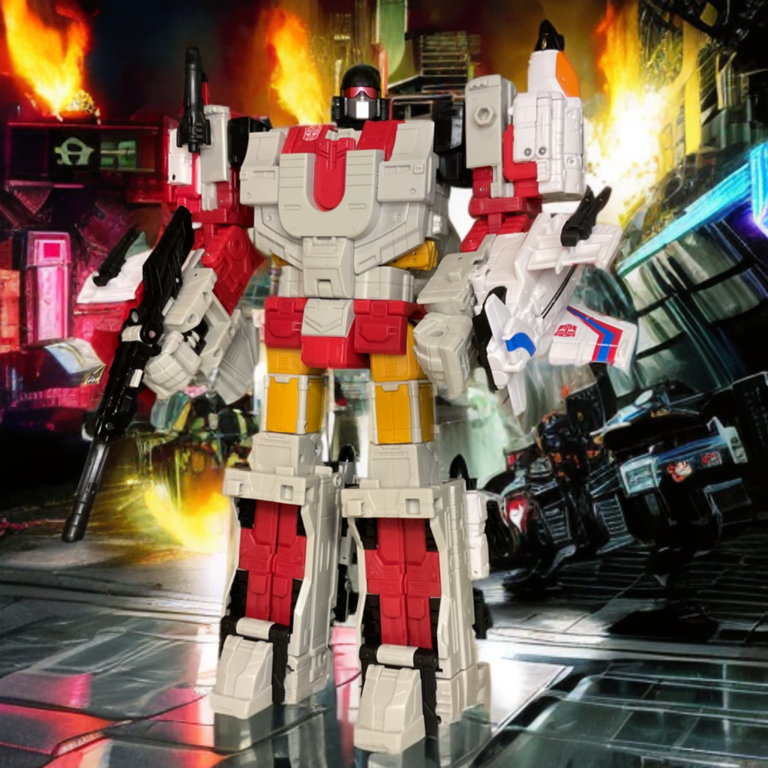
Menasor, as previously covered, merges the five Stunticons: Motormaster (torso/head), Dead End (left arm), Drag Strip (right arm), Breakdown (right leg), and Wildrider (left leg). Their sports cars and semi-truck modes focus on highway dominance and high-speed terror. Megatron activated them first to challenge Autobot ground control, forcing the Autobots to respond with Superion.
Both are five-component “Scramble City”-style combiners, allowing limb swaps in some media (e.g., Japanese continuities), and modern toy lines like Age of the Primes and Legacy make them cross-compatible for mix-and-match play.
Physical Attributes and Power
Superion is built for aerial agility and endurance. His bio notes flight speeds up to 800 mph with a 5,800-mile range, an electrostatic discharger rifle for ranged energy attacks, and the strength to demolish a battleship with one blow. He’s depicted as a tall, sleek warrior with wings for enhanced mobility, excelling in mid-air grapples, dives, and long-distance strikes.
Menasor prioritizes explosive ground power: his punch delivers around 140 tons of force, backed by ionizer swords, cyclone guns, heat rays, and graviton weapons for devastating close-quarters combat. While not as fast in sustained flight, he charges with terrifying momentum and uses his mass for crushing blows.
In toy scale comparisons (e.g., Legacy Menasor vs. Age of the Primes Superion), both stand similarly tall, but Superion often appears more proportionate and stable, while Menasor feels bulkier and more aggressive in stance.
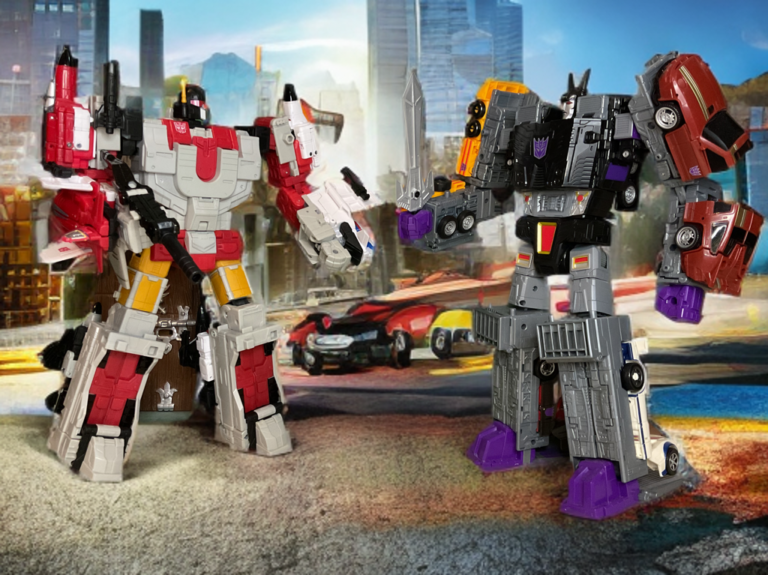
Mental Stability and Team Dynamics
Superion’s mind is deliberately simplified for effectiveness. Silverbolt suppresses the Aerialbots’ conflicting personalities (fear of heights, recklessness, etc.), focusing solely on one directive: destroy Decepticons. This creates a cold, aloof gestalt with limited adaptability or innovation—his intelligence is low, but his single-minded focus makes him reliable and unflinching in battle.
Menasor suffers the opposite extreme: profound instability from clashing psyches. Motormaster dominates, but the Stunticons’ resentment, paranoia, nihilism, ego, and mania cause rage blackouts, paralysis, or indiscriminate attacks. He’s a berserker whose power is often self-sabotaged.
This contrast is key—Superion is a unified weapon, while Menasor is a volatile monster.
Battlefield Performance and Canon Encounters
Their rivalry kicks off in “The Key to Vector Sigma, Part 2”: Menasor rampages on Cybertron, but Superion forms to meet him. The battle rages until Omega Supreme intervenes, tipping rubble onto Menasor for the win. Later clashes include “Cosmic Rust” (Superion scatters Menasor mid-air) and Japanese media like Scramble City (limb swaps and environmental tactics). In “Masquerade,” Menasor briefly gains an edge by corrupting Superion’s formation with swapped limbs, but Autobots prevail.
Superion often needs backup (like Omega Supreme) to seal victories, while Menasor’s aggression pushes him ahead temporarily—yet his instability costs him consistency. Fan analyses and tech spec debates frequently give Superion a slight edge in pure specs due to better unity, though Menasor’s rage makes him “slightly stronger” in short bursts.
Overall Comparison
| Aspect | Superion | Menasor |
|---|---|---|
| Components | 5 Aerialbots (jets/fighter aircraft) | 5 Stunticons (sports cars/truck) |
| Primary Strength | Aerial speed (800 mph), range, focused power (battleship-destroying blows) | Explosive striking (140-ton punch), ground momentum, versatility |
| Weakness | Low intelligence, poor adaptability | Severe mental instability, self-sabotage |
| Personality | Cold, single-minded destroyer; unified focus | Chaotic berserker; fractured and rage-driven |
| Typical Role | Air superiority, defensive interceptor | Ground assault, high-risk highway terror |
| Canon Edge | Reliable unity; often wins with support | Raw aggression; temporary dominance but frequent collapses |
Superion represents the Autobot ideal: disciplined, purpose-driven power that counters Decepticon chaos with steady resolve. Menasor is the Decepticon nightmare: unpredictable fury that can overwhelm if it syncs, but usually implodes under its own discord. Their battles highlight the combiner arms race—Superion’s stability often outlasts Menasor’s volatility, making him the perfect foil and eternal rival in Transformers history. In a pure one-on-one without interference, Superion’s focus likely prevails in the long run, but Menasor’s explosive potential keeps the matchup thrilling and evenly matched in fan lore.
Beyond the Blacktop: Expansions in Media
As the Transformers franchise accelerated into new eras, the Stunticons and Menasor skidded beyond their 1980s roots, adapting to fresh narratives while retaining their core chaos. In The Headmasters anime, they siege Arctic bases in “The Mystery of Planet Master,” using environmental hazards like blizzards for cover, and assist in fortress assaults in “Head On!! Fortress Maximus,” deploying traps that ensnare Computron. “The Final Showdown on Earth (Part 2)” escalates to global stakes, with Menasor processing crysmagnetal in ancient ruins and battling at the poles, narrowly escaping into space after a Sixshot takedown.
Games thrust them into interactive mayhem. Transformers Battle Circuit turns them into tournament contenders, pitting individual Stunticons against Autobots in one-on-one duels for Cybertronian supremacy. In Transformers: Earth Wars, they form Menasor for real-time strategy clashes, with self-damaging abilities underscoring their instability amid Rust Renegade campaigns. Transformers Legends mobile events recreate origin stories, like Vector Sigma heists leading to Superion showdowns, while Angry Birds Transformers reimagines Menasor as a pig-headed unlockable for crossover absurdity.
Toy lines trace their evolution from the 1986 G1 scramble combiners—interchangeable limbs for mix-and-match fun—to modern reinterpretations. Combiner Wars in 2015 retooled them with Offroad and Blackjack additions, emphasizing stable mergers via new engineering. Unite Warriors Japanese exclusives refined Wildrider’s sculpt for better poseability. The Legacy line by 2022 split Motormaster’s trailer for enhanced combination, adding G2 redecos like vibrant Breakdown variants, ensuring collectors could relive the road rage in ever-updating forms.
These expansions keep the Stunticons burning rubber across screens, pages, and shelves, proving their fractured fury adapts as relentlessly as they pursue the horizon.
Collecting the Demons: A Buyer's Checklist
Here’s a comprehensive chart of Stunticon and Menasor releases:
| Figure Name | Release Year | Line | Original Retail Price | Current Secondary Market Price (approx) |
|---|---|---|---|---|
| Motormaster (Individual) | 1986 | G1 | $9.99 | $50-150 (loose), $200-500 (MIB) |
| Dead End (Individual) | 1986 | G1 | $5.99 | $30-100 (loose), $150-400 (MIB) |
| Breakdown (Individual) | 1986 | G1 | $5.99 | $30-100 (loose), $150-400 (MIB) |
| Drag Strip (Individual) | 1986 | G1 | $5.99 | $30-100 (loose), $150-400 (MIB) |
| Wildrider (Individual) | 1986 | G1 | $5.99 | $30-100 (loose), $150-400 (MIB) |
| Menasor (Giftset) | 1986 | G1 | $24.99 | $200-500 (complete loose), $1000+ (MISB) |
| Stunticons (European Reissue) | 1990 | Classics | ~$30 (giftset equiv.) | $150-400 |
| Breakdown (G2 BotCon Exclusive) | 1994 | G2 | N/A (exclusive) | $500-1000+ |
| Menasor (Unreleased G2 Redeco) | 1994 | G2 | N/A | $2000+ (prototypes) |
| Motormaster (Classics) | 2007 | Classics | $10.99 | $20-50 |
| Menasor (Titanium) | 2007 | Titanium | $19.99 | $50-100 |
| Stunticons (Universe) | 2008 | Universe | $15-25 each | $30-80 each |
| Menasor (Combiner Wars Giftset) | 2015 | Combiner Wars | $99.99 | $150-300 |
| Motormaster (Combiner Wars) | 2015 | Combiner Wars | $24.99 | $40-80 |
| Dead End/Offroad/Brake-Neck (CW Limbs) | 2015 | Combiner Wars | $15.99 each | $20-50 each |
| Menasor (Unite Warriors) | 2015 | Unite Warriors | ¥10,800 (~$90) | $200-400 |
| Menasor (Platinum Edition Reissue) | 2016 | Platinum | $99.99 | $150-250 |
| Menasor (RID Combiner Force) | 2017 | RID | $29.99 | $40-80 |
| Motormaster (Legacy) | 2022 | Legacy | $54.99 | $60-100 |
| Dead End (Legacy) | 2022 | Legacy | $24.99 | $25-50 |
| Drag Strip (Legacy) | 2022 | Legacy | $24.99 | $25-50 |
| Wild Rider (Legacy) | 2022 | Legacy | $24.99 | $25-50 |
| Breakdown (Legacy) | 2022 | Legacy | $24.99 | $100-200 (scarce) |
| Menasor Multipack (Legacy Evolution) | 2023 | Legacy Evolution | $189.99 | $200-350 |
| G2 Breakdown (Legacy) | 2023 | Legacy | $24.99 | $30-60 |
| G2 Dead End (Legacy) | 2023 | Legacy | $24.99 | $30-60 |
| Menasor (Chinese Reissue Giftset) | 2000s-2010s | Reissues | $50-80 | $80-150 |
| Motormaster (Alternators) | 2005 | Alternators | $19.99 | $30-70 |
Note: Prices on the secondary market can fluctuate based on condition, rarity, market demand, and other factors. Always research current listings for the most accurate values.
Conclusion
From their explosive debut as Megatron’s desperate answer to Autobot ground superiority in the mid-1980s to their enduring legacy across animated episodes, comic runs, and multiple toy generations, the Stunticons remain one of the most memorable Decepticon combiner teams. Engineered for speed, destruction, and highway dominance, Motormaster, Dead End, Breakdown, Drag Strip, and Wildrider each brought distinct flaws—brutality, nihilism, paranoia, ego, and reckless chaos—that fused into Menasor’s terrifying yet unstable might. Their combined form delivered devastating power in clashes against Superion, Defensor, and others, yet the very personalities that made them dangerous also prevented true unity, turning every merger into a volatile powder keg.
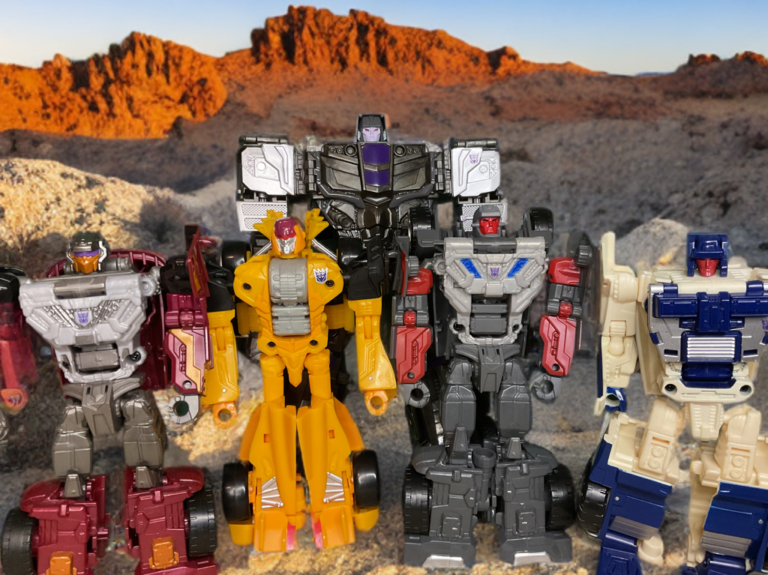
Decades later, the Stunticons continue to roar across collector shelves and fan discussions. From the iconic 1986 G1 giftset to the detailed Legacy Evolution multipack, their toys capture the essence of high-octane villainy while reflecting evolving design standards and nostalgia-driven reissues. Whether tearing up Cybertron’s battlefields in vintage cartoons, causing mayhem in IDW comics, or standing tall in modern combiner displays, Menasor and his component Stunticons embody the raw, unpolished aggression that defines classic Decepticon engineering.
In a franchise built on transformation and evolution, few teams so perfectly illustrate the double-edged sword of power through combination. The Stunticons may never achieve flawless harmony, but their thunderous presence on roads, screens, and display cases ensures they will always leave tire marks on Transformers history.
 English
  Deutsch
  Français
  Português do Brasil
  日本語
日本語  Español
  English (Australia)