

The Transformers: The Movie Studio Series 86-31 Leader Class Galvatron
The 1986 animated masterpiece The Transformers: The Movie completely redefined my expectations for the franchise, forever cementing Galvatron as the ultimate upgraded tyrant. Yet, for years, my shelf has lacked a definitive version that genuinely captures his animation-cel presence. When Hasbro dropped the Studio Series 86-31 Leader Class Galvatron, I immediately wanted to see if it finally delivered on that screen-accurate promise or if it was just another repackaged cash grab. After unboxing and putting this $54.99 figure through its paces, I’m breaking down exactly how the retooled colors, accessories, and engineering stack up against previous molds—and whether it deserves a spot in your Decepticon display.
G1 Breakdown: How Galvatron Compares to Megatron
To really understand why the design shifts in Studio Series 86 are such a big deal for collectors, you have to look at the massive evolutionary leap between the original Decepticon commander and his reformatted successor. The 1986 movie wasn’t just a shift in leadership—it completely re-engineered the aesthetic framework of the entire franchise. We went from the blocky, real-world military constraints of Earth modes straight into high-concept, cosmic sci-fi designs.
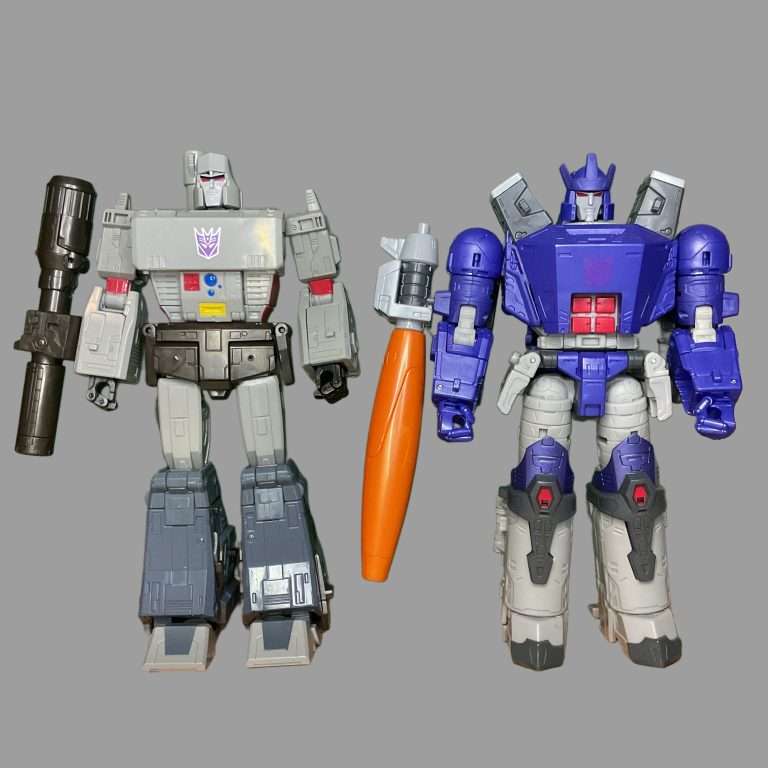
If you are trying to decide how to space out your display shelves or just want to see exactly how Unicron’s upgrade modified his physical footprint, weaponry, and psychological profile, here is a quick, side-by-side structural breakdown of the major differences between classic Megatron and Galvatron.
| Design Feature | Megatron (Pre-1986) | Galvatron (Post-Reformatting) |
|---|---|---|
| Alternate Mode | Realistic Walther P38 handgun (complete with silencer and stock extensions). | Futuristic, cybernetic mobile artillery tracking cannon / tank mode. |
| Primary Weapon | Arm-mounted high-yield fusion cannon (fed by black hole energy links). | Forearm-mounted orange plasma particle beam cannon (amplified by Unicron's matrix). |
| Color Scheme | Industrial stark silver, gunmetal grey, red interior panel accents, black helmet trim. | Rich animation-accurate lavender purple, crown-like helm piece, bone-white boots/treads. |
| Power Level | Standard top-tier Cybertronian frame; relies heavily on raw battlefield tactics. | Cosmically upgraded by Unicron; significantly increased structural mass and density. |
| Leadership Style | Coldly logical, calculating, arrogant, operates with structured military pragmatism. | Erratic, prone to severe psychological rage-bouts, unpredictable, hyper-ruthless. |
| Toy Engineering Legacy | Highly restricted or banned in modern lines due to realistic firearm replica safety laws. | Universally easier to produce in modern collector lines (like Studio Series 86) as a sci-fi vehicle. |
Galvatron: Origins and Role in the 1986 Transformers Movie
Galvatron debuted as a major character in The Transformers: The Movie (1986), serving as the new primary antagonist following significant changes to the Decepticon leadership. In the film, set in the year 2005, Megatron leads a Decepticon assault on Autobot City. He sustains mortal wounds in a direct confrontation with Optimus Prime, who also perishes in the battle.
A treacherous Starscream ejects the severely damaged Megatron (along with other injured Decepticons) from the overloaded Astrotrain to lighten its load for the return to Cybertron. Drifting in space, Megatron encounters the planet-sized entity Unicron. Unicron offers Megatron a new body and enhanced powers in exchange for destroying the Autobot Matrix of Leadership. Megatron accepts, and Unicron reformats him into Galvatron—a more powerful, purple-colored warrior with a tank/cannon alternate mode. Unicron similarly reforms several of Megatron’s troops into new Decepticons like Cyclonus and Scourge.
Galvatron immediately reasserts control over the Decepticons by vaporizing Starscream during his coronation. He pursues the Matrix, clashing with Ultra Magnus and others. After obtaining the Matrix but failing to unlock its power against Unicron, he is consumed by the entity. Inside Unicron, he briefly encounters Hot Rod. Ultimately, Hot Rod (becoming Rodimus Prime) ejects Galvatron into space as Unicron is destroyed. Leonard Nimoy provided Galvatron’s distinctive voice in the movie.
The character represented a major toy and story refresh for the franchise, transitioning from Megatron’s gun mode to Galvatron’s more futuristic designs.
Galvatron in the Marvel Comics G1 Continuity
The Marvel Comics The Transformers series (both U.S. and U.K. editions) featured Galvatron prominently but with added complexity due to time travel and multiple versions. His core origin mirrors the movie: a dying Megatron is reformatted by Unicron into Galvatron after the Battle of Autobot City.
In the U.K. Marvel stories (which influenced the broader continuity), Galvatron I time-travels from 2006 to 1986 with Cyclonus and Scourge. Seeking independence from Unicron, he deposes the present-day Megatron (or a clone in some retcons) and builds a massive weapon on Earth intended to destroy Unicron in the future. This leads to alliances and battles involving Autobots like Ultra Magnus, Hot Rod, and others. Galvatron’s plans are thwarted, and he returns to his time.
Subsequent arcs involve further time-hopping and confrontations. Galvatron demonstrates immense power, often overpowering foes, but his actions create timeline instabilities. In one notable sequence during the “Time Wars,” his interference contributes to a massive rift. Galvatron ultimately perishes, torn apart by the temporal forces he helped unleash.
Marvel stories portrayed Galvatron as retaining Megatron’s core identity and memories (“I AM Megatron!”), though with heightened ruthlessness and instability from Unicron’s influence. Multiple Galvatrons from alternate futures appear, complicating the exact count—sometimes estimated at 2–5 variants—due to time travel and retcons involving clones like those tied to Straxus.
| Timeline Continuity | Canon Milestones, Media Debuts & Hidden Collector Trivia |
|---|---|
| The 1986 Animated Film Era Sunbow Continuity |
|
| The Marvel UK Comic Arcs UK Marvel Canon |
|
| The Multiverse Splinters US Marvel & Beyond |
|
Action Figure Review: Design and Aesthetics
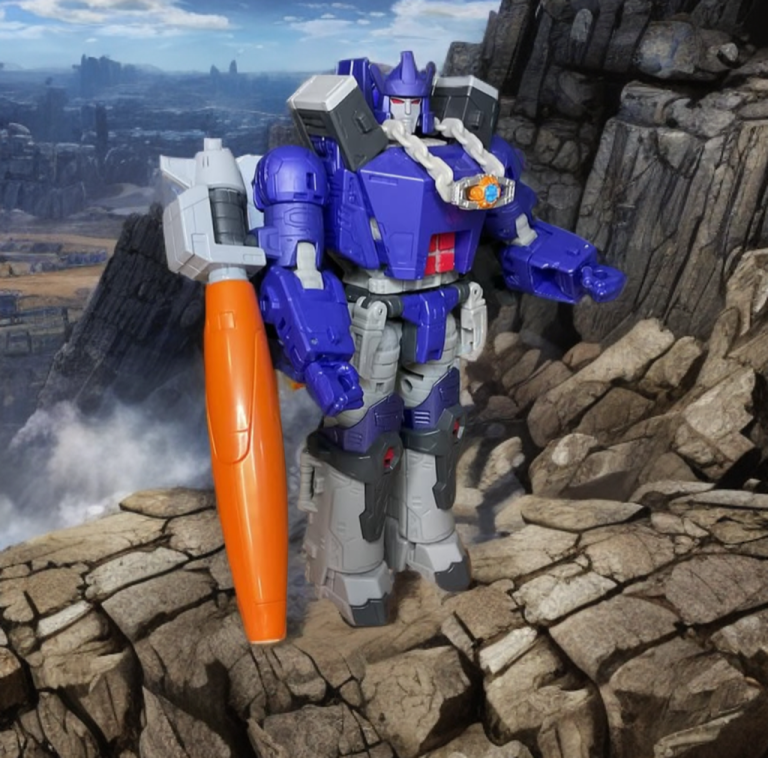
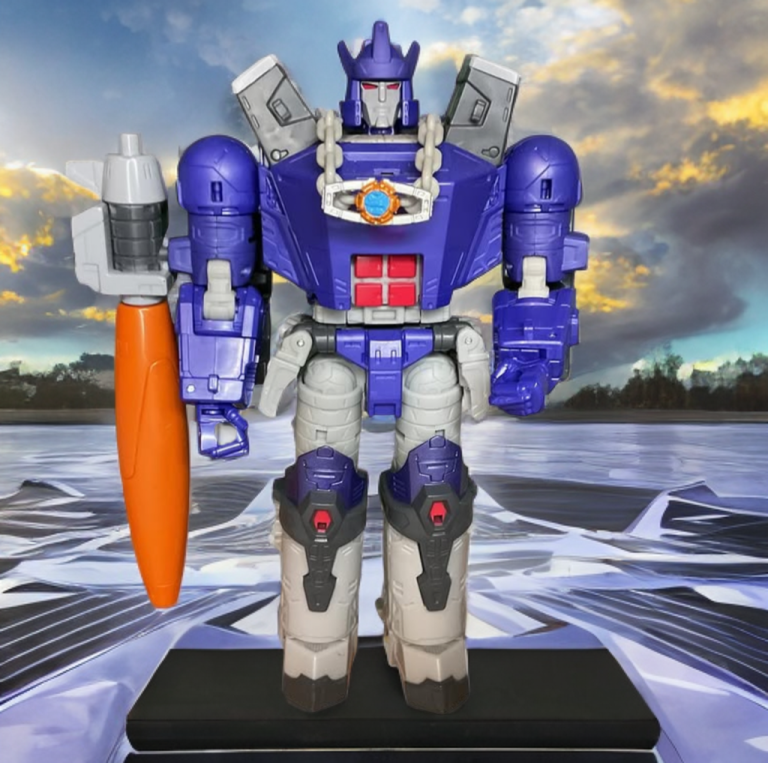
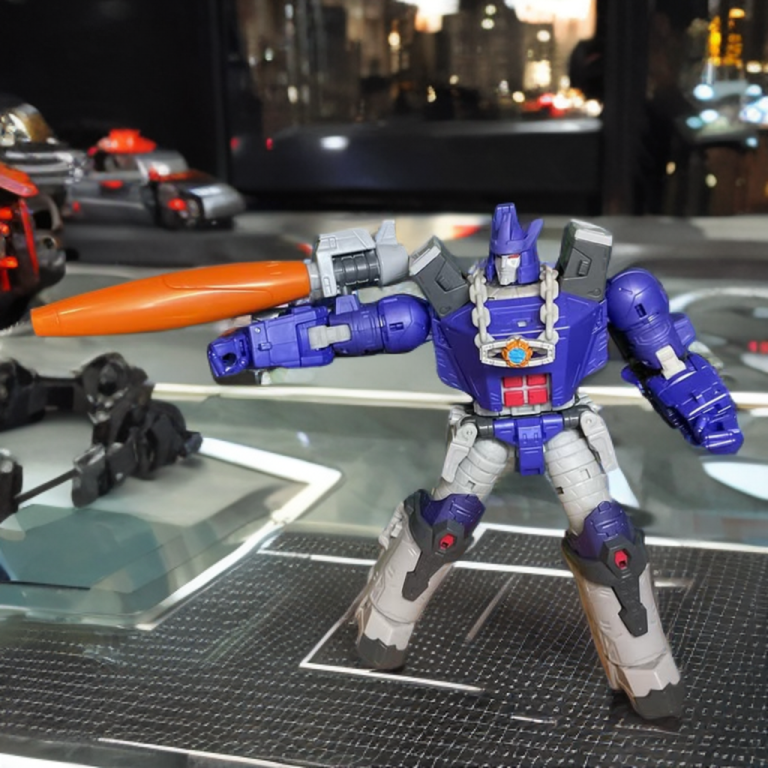
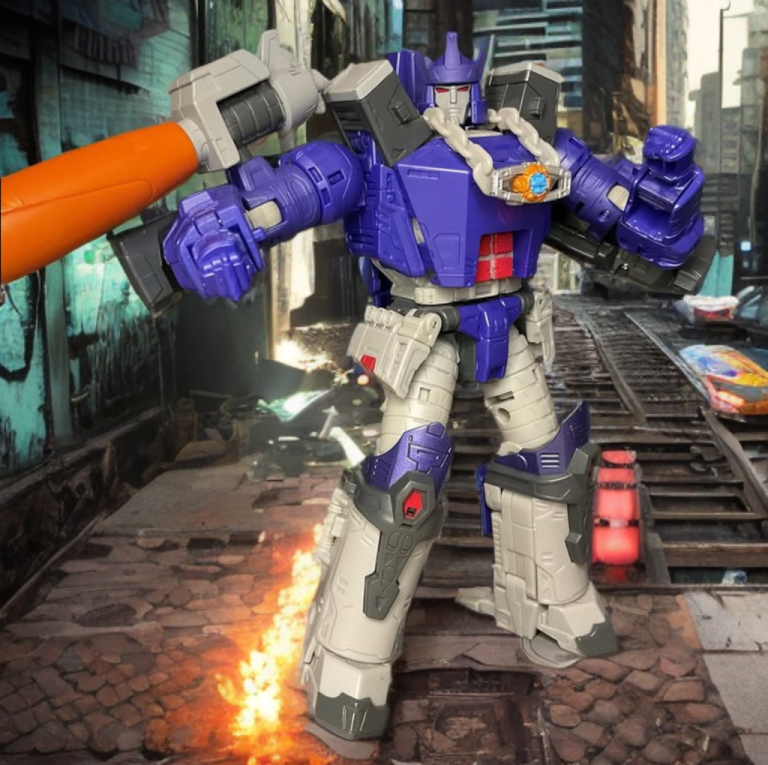
Studio Series 86 Galvatron stands out primarily for its color scheme, which shifts to a movie-accurate bluish-purple hue, differentiating it from earlier cartoon-inspired versions. The figure measures about 8.5 inches tall in robot mode, making it imposing and suitable for display alongside other Leader Class figures from the line. Key deco changes include dark grey accents instead of black, a light grey face for better screen fidelity, and an opaque orange Particle Cannon that evokes the film’s energy blasts more authentically.
Sculpt-wise, it’s a straight repaint of the 2021 War for Cybertron: Kingdom Galvatron mold, with no new tooling or remolds. This means it retains the chunky, detailed aesthetic that fans appreciated in the original, but some collectors note minor shortcomings, such as the absence of a painted “beard” or soul patch, which appears variably in the movie. Forum discussions highlight mixed feelings on the colors—some praise the vibrant pop and accuracy, while others feel certain shades are a blend of hits and misses compared to the film’s palette. Overall, the design earns high marks for finally delivering a Galvatron that feels like a direct pull from the 1986 animation, complete with intricate panel lines and metallic flourishes that enhance its menacing vibe.
| Release Variant | Deco & Paint Application Differences |
|---|---|
| Kingdom Edition (2021) | Features dark grey-purple plastic with heavy, weathered silver battle damage paint deco across the chest and forearms. |
| Legacy "Galvatron Unbound" | Styled with cell-shaded comic line-art details and a bright, flat magenta color scheme mimicking old Marvel media. |
| Studio Series SS86-31 (2026) | Premium Clean Finish: Erases all simulated battle damage grime in favor of a crisp, rich lavender-purple and stark bone-white finish directly mirroring the 1986 animated film cell palette. |
Articulation and Posability
One of the strongest aspects of this figure is its articulation, which allows for dynamic posing that captures Galvatron’s tyrannical personality. It features a ball-jointed head for expressive tilts and turns, swivel hinge shoulders and hips for broad movement, double-hinged elbows for deep bends, and single-hinged knees and ankles for stability in action stances. Additional swivels at the biceps, waist, wrists, and thighs add fluidity, while the hip guards can raise and swivel to prevent obstruction during leg poses.
The Particle Cannon attaches in multiple ways: above or below the elbow for cannon-arm configurations, or handheld for versatility. Ankle tilts further improve ground poses, making it easy to recreate scenes like Galvatron’s confrontations with Hot Rod or his command over the Decepticons. Collectors report that joints are generally tight, an improvement over some earlier releases where floppiness was an issue. This level of posability makes it a standout for display, though it’s worth noting that the figure is recommended for ages 8 and up, with a choking hazard warning for small parts.
Transformation Process
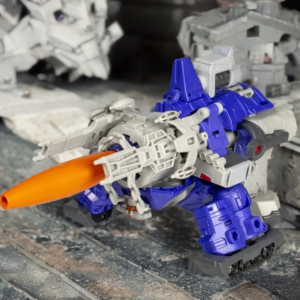
Transforming Galvatron from robot to galactic cannon mode takes 33 steps, a process that’s intuitive yet satisfying for experienced collectors. It starts with collapsing the legs into the cannon’s base, folding the arms inward, and reorienting the torso to form the barrel. The result is a chunkier, more detailed alt mode than the sleeker movie design, but it maintains faithfulness with added aura and power. Free-rolling wheels on the treads allow it to glide on smooth surfaces, adding a fun play element.
While the transformation is solid, it’s unchanged from the Kingdom mold, which some see as a missed opportunity for refinements. No lights or sounds are included, unlike the original G1 toy, which might disappoint those seeking electronic features. Still, the process is tab-secure and kibble-minimal, ensuring both modes hold together well without frustration.
Accessories and Display Options
Galvatron comes equipped with several accessories that enhance its value. The standout is the Autobot Matrix of Leadership, complete with a plastic chain for neck-wearing, allowing recreations of key movie moments like Galvatron’s taunting of Ultra Magnus. Twin blaster rifles, shaped like the Revenge warship, can be wielded separately or combined into a larger weapon, though some collectors criticize their inclusion as filler. All accessories store neatly in alt mode, preventing loss.
Transformation Rating: Mid-level
The Experience: A solid balance of clever engineering and satisfying "clicks." It requires attention to detail—particularly with panel alignment—but follows a clear path. Perfect for the collector who enjoys a 25-minute challenge.
The packaging includes a reusable cardboard diorama of the Decepticon throne room/Hall of Heroes, updated with characters like Astrotrain, Ramjet, and Thrust for immersive displays. However, the box art has been noted for an error in the numerical designation and for featuring the alt mode on the front, which may not showcase the robot form optimally.
Alternate Mode: Galactic Cannon
In cannon mode, Galvatron embodies his destructive essence from the film. The design is more robust than the movie’s sleek version, with detailed treads and a powerful barrel that accommodates effect parts for blasts. It’s stable and display-friendly, though lacking gimmicks like firing mechanisms. Collectors appreciate how it scales with other figures, making it ideal for dioramas of battles on Unicron or Cybertron.
Comparisons to Previous Versions
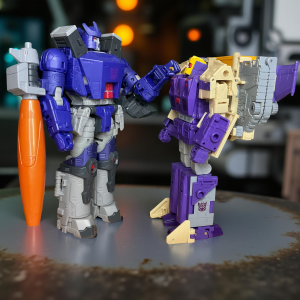
This isn’t the first Galvatron using this mold—it’s a repaint of the Kingdom version, which focused on cartoon accuracy for Seasons 3-4 of the animated series. The Kingdom figure had battle damage paint and looser joints in some cases, issues partially addressed here with tighter builds and no damage deco. The Legacy reissue removed the damage but kept similar colors, while Generations Selects offered a G1 toy-inspired palette.
For movie purists, Studio Series 86 wins with its bluish tones and opaque cannon, but it’s not a must-upgrade if you own the others unless you’re completing an 86 collection. Some wish for remolds like articulated hands or a taller spire to better match proportions, echoing sentiments that Hasbro could have invested more.
| Collector Verdict | Pros, Cons, & Final Assessment |
|---|---|
| The Pros | Flawless, animation-accurate deco layout; no messy scuff marks; incredible movie-accurate accessory loadout that completes the iconic 1986 coronation/destruction scenes. |
| The Cons | The base mold retains the core engineering patterns from the previous Kingdom release, offering no new articulation joints. |
| Shelf Presence | Outstanding. The clean lavender finish pops beautifully when standing next to SS86 Cyclonus and Scourge. |
| Final Rating | 9.5 / 10 — The Definitive Mainline Galvatron. |
Conclusion
The Studio Series 86-31 Leader Class Galvatron is a triumph for fans seeking a faithful recreation of the movie villain, with its improved paint and robust design making it a worthy addition to any Transformers collection. While it doesn’t reinvent the wheel—relying on a familiar mold—it’s a slam dunk for movie accuracy and playability. If you’re a Galvatron enthusiast or building out the 86 line, grab it; otherwise, wait for a sale if you already have similar figures. Rated 9/10 overall, it’s a testament to Hasbro’s commitment to nostalgia done right.
Forge Your Path with Us!
???? Choose Your Next Battle
 Eternia’s Dark Secret: How the 1982 Castle Grayskull Box Art Pulled the Ultimate Barbarian Bait-and-Switch
 Frank Frazetta’s Hidden Influences: The Masters Who Forged the Ultimate Barbarian
 The Ultimate Studio Series 86 Megatron Review: A Must-Read Bio
 Slithering Shadows: Ultimate Guide to the Snake Men of MOTU
 English
  Deutsch
  Français
  Português do Brasil
  日本語
日本語  Español
  English (Australia)