

The Greatness That Was Big John Studd: A Towering Legend in Wrestling History
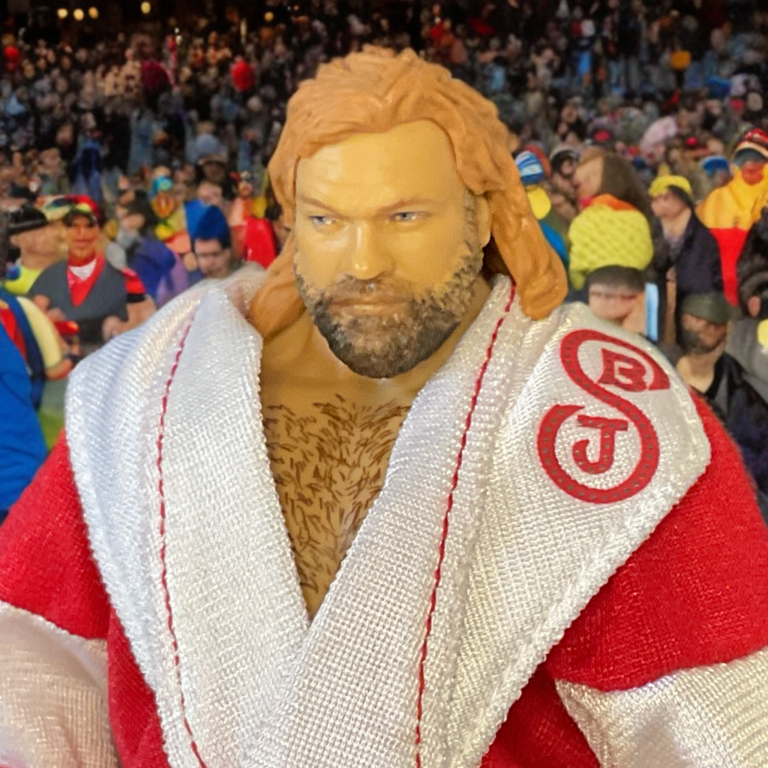
In the golden era of professional wrestling, few figures commanded the ring like the imposing Big John Studd. Standing 6-foot-10 and weighing around 364 pounds, John William Minton brought a larger-than-life presence that made him one of the most memorable giants in sports entertainment history. For fans of action figures, Studd’s towering physique and heel persona make his figures iconic collectibles that capture the raw power and drama of 1980s WWF (now WWE).
Studd wasn’t just big—he was a skilled big man who could dominate opponents, cut promos that drew heat, and engage in storylines that captivated audiences. His career spanned multiple territories, tag team gold, main event clashes, and a crowning Royal Rumble moment. This article dives deep into his official history, major feuds, key matches, and enduring legacy, all grounded in verified wrestling records. Whether you’re a longtime fan or discovering him through his action figure, Studd’s story is one of resilience, rivalry, and ring dominance.
Early Life and Path to Wrestling
John William Minton was born on February 19, 1948, in Butler, Pennsylvania. He grew up on a farm and attended Butler High School, where he played basketball. After high school, he served in the United States Army as a military police officer in Vietnam. This background of physical discipline and toughness would serve him well in the squared circle.
Trained by the legendary Killer Kowalski (and Charlie Moto) in Los Angeles, Minton debuted in 1972 under the name “The Mighty Minton” in NWA Hollywood Wrestling. He quickly formed a tag team with “Superstar” Billy Graham, facing off against the Tolos Brothers in memorable early bouts. His size and athleticism stood out immediately, setting the stage for a career built on power and intimidation.
| Category | Details |
| Real Name | John William Minton |
| Birth Date | February 19, 1948 (Butler, Pennsylvania) |
| Billed Height | 6-foot-10 |
| Billed Weight | ~364 lbs |
| Trained By | Killer Kowalski & Charlie Moto |
| Wrestling Debut | 1972 (as “The Mighty Minton”) |
The “True Giant” Debate: Billed vs. Actual Height
In the world of 1980s wrestling, promoters frequently “embellished” the stats of their performers to enhance their larger-than-life personas. Big John Studd was a primary example of this “billed” vs. “actual” phenomenon.
| Measurement Type | Height | Source / Context |
| Official Billed Height | 6’10” | Used in all WWF/NWA promotions and television commentary. |
| Estimated Real Height | 6’6½” | Based on visual comparisons with other athletes (like Bill Fralic at WM2) and unmasked era photos. |
Why the Discrepancy?
The “Andre” Factor: Because Studd’s primary rivalry was with Andre the Giant (billed at 7’4″), he needed a massive billed height to be seen as a credible physical equal.
Wrestling Boots: Standard wrestling boots, often fitted with internal lifts, typically added 2–3 inches to a performer’s stature.
The “Stud” Aura: Regardless of the tape measure, Studd’s massive 360lb+ frame and broad shoulders gave him a presence that made the 6’10” claim feel believable to the audience.
Breaking Into the Majors: Early WWWF and Tag Team Success
Minton first entered the World Wide Wrestling Federation (WWWF, precursor to WWF/WWE) in 1972 as “Chuck O’Connor.” On September 12 of that year, he challenged Pedro Morales for the WWWF World Heavyweight Championship but came up short. He departed in early 1973 but returned in 1976 with a masked gimmick that would yield his first major title success.
Teaming with his trainer Killer Kowalski as The Executioners (Studd as Executioner #2), he captured the WWWF World Tag Team Championship on May 11, 1976, defeating Louis Cerdan and Tony Parisi. The duo made a strong impact, though they were later stripped of the titles due to interference by a third Executioner. This period established Studd as a formidable force in tag team competition.
He also competed in the American Wrestling Association (AWA) during the mid-1970s, building experience against tough competitors.
Mid-Atlantic Dominance and Championship Gold
Studd found significant success in Mid-Atlantic Championship Wrestling (and related NWA territories). As Chuck O’Connor initially, and then adopting the “Big John Studd” name (inspired by promoter Paul Boesch’s comment that he looked like a “stud”), he racked up multiple tag team titles.
Key accomplishments included:
- NWA Mid-Atlantic Tag Team Championship wins with partners like Ken Patera, Ric Flair, Masked Superstar #1, and Roddy Piper.
- NWA American Heavyweight Championship (World Class) by defeating Bruiser Brody on July 25, 1977.
- Other regional titles in Hawaii, Florida, Georgia, and more, including tag gold with Buddy Rose and Jimmy Garvin.
He also worked under masks, such as Masked Superstar #2, before unmasking after a loss to Blackjack Mulligan. These years honed his big-man style—using power moves like the reverse bear hug and backbreaker—while traveling territories and facing legends.
Return to WWF: The Monster Heel Era with Freddie Blassie
Studd re-entered the WWF in late 1982, managed by “Classy” Freddie Blassie. Positioned as a monster heel, he brought a stretcher to the ring, promising to send opponents out on it after devastating beatdowns. He challenged Bob Backlund for the WWF Championship and positioned himself as one of the biggest threats in the promotion.
Blassie amplified Studd’s “true giant” gimmick with $10,000 (later $15,000) Bodyslam Challenges on television. Few could slam the massive Studd, building his aura of invincibility—until a certain French giant stepped up.
Major Championship Titles & Honors
| Title / Achievement | Organization | Key Partner / Note |
| World Tag Team Championship | WWWF | Partnered with Killer Kowalski (The Executioners) |
| Royal Rumble Winner | WWF | 1989 Winner (Last eliminated Ted DiBiase) |
| Mid-Atlantic Tag Team Title | NWA | Partners: Ric Flair, Roddy Piper, Ken Patera |
| American Heavyweight Title | WCCW | Defeated Bruiser Brody (July 25, 1977) |
| Hall of Fame Inductee | WCW / WWE | WCW (1995), WWE (2004) |
Historical Career Timeline
| Era | Key Persona | Significant Events |
| 1972–1973 | Chuck O’Connor | Challenged Pedro Morales for the WWWF Title. |
| 1976–1977 | Executioner #2 | Masked run; captured Tag Gold with Killer Kowalski. |
| Late 70s | Big John Studd | Dominated Mid-Atlantic; feuded with Blackjack Mulligan. |
| 1982–1986 | Monster Heel | Managed by Freddie Blassie, then Bobby Heenan. $15k Slam Challenge. |
| 1985 | WrestleMania I | Lost the $15,000 Bodyslam Match to Andre the Giant. |
| 1986 | Tag Specialist | Formed “The Heenan Family” giant duo with King Kong Bundy. |
| 1988–1989 | Babyface Return | Rejected Heenan; won the 1989 Royal Rumble. |
The Definitive Rivalries
Andre the Giant: The definitive “Battle of the Giants.” Highlights include the 1984 hair-cutting incident and the WrestleMania I Slam Challenge.
Hulk Hogan: Challenged for the WWF World Heavyweight Title throughout the mid-80s; scored multiple countout victories over the champion.
Ken Patera & King Kong Bundy: Notable as both allies (Heenan Family) and rivals in the tag team and battle royal divisions.
William “The Refrigerator” Perry: Famous elimination sequence during the WrestleMania 2 NFL vs. WWF Battle Royal.
Legacy in Media & Pop Culture
Acting Career: Studd appeared in major projects including The A-Team, Hunter, and the films Micki & Maude and Harley Davidson and the Marlboro Man.
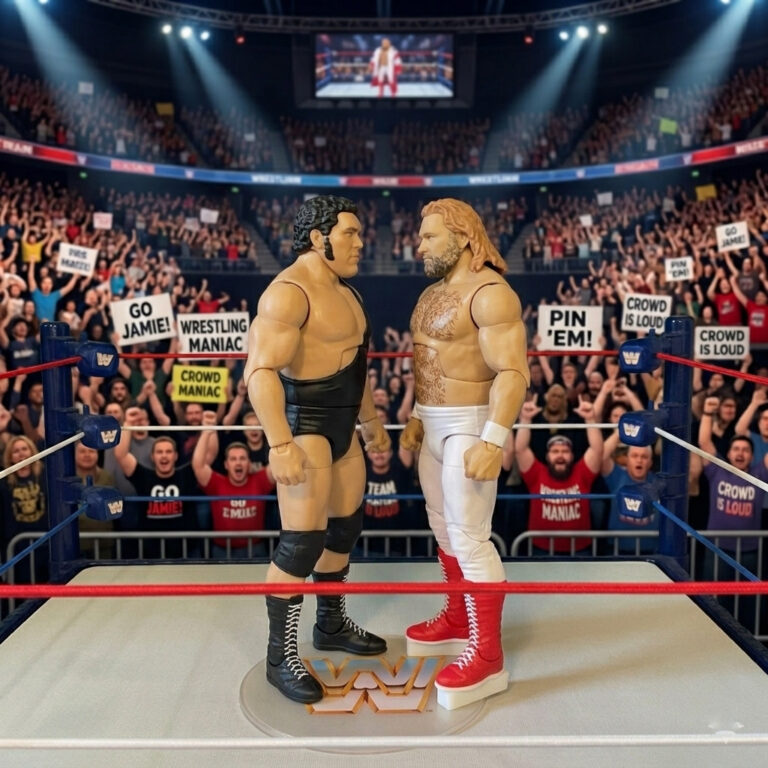
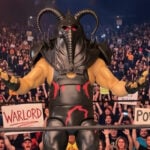
Action Figures: His likeness is immortalized in several eras, most notably the vintage LJN large-scale figures and the modern Mattel Elite collection, often paired with Andre the Giant or Bobby Heenan for “The $15,000 Slam Challenge” dioramas.
The Epic Rivalry: Big John Studd vs. Andre the Giant
The feud between Big John Studd and Andre the Giant stands as one of the most iconic big-man rivalries in professional wrestling history. Spanning from the early 1980s into the late 1980s, it centered on the question of who was the true giant of the squared circle. Their clashes combined raw power, personal animosity in the storylines, steel cage brutality, and unforgettable moments that helped elevate WWF programming during the Rock ‘n’ Wrestling era.
The rivalry began intensifying when Studd returned to the WWF in late 1982, managed initially by Freddie Blassie. Studd positioned himself as an unbeatable monster with his $10,000 (later $15,000) Bodyslam Challenge. Andre stepped in as a replacement opponent on an episode of Championship Wrestling on February 26, 1983. This moment ignited the program, as Andre nearly slammed Studd before interference occurred.
Throughout 1983, the two giants met repeatedly in singles and tag team matches. Key early encounters included steel cage matches. On July 23, 1983, at the Capital Centre in Landover, Maryland, Andre defeated Studd in a steel cage by escaping through the door at 15:21 after delivering a bodyslam and sit-down splash from the top rope. Another notable steel cage bout took place around the same period at the Philadelphia Spectrum.
Andre frequently got the better of Studd in these encounters, slamming him multiple times—including one instance where the force reportedly caused the ring to collapse. Studd, however, remained a persistent threat, using his size and power moves like the reverse bear hug to wear down the big Frenchman. Their matches often ended in countouts, disqualifications, or interference due to the physical toll and the need to protect both competitors.
The program continued into 1984. On July 20, 1984, at Kiel Auditorium in St. Louis, Missouri, they clashed again in a memorable singles bout. By this point, Studd had aligned with Bobby “The Brain” Heenan after leaving Blassie, solidifying his role as a premier heel.
A pivotal escalation occurred on November 13, 1984 (aired December 1), when Studd, Ken Patera, and Heenan attacked Andre during a tag team match. They cut Andre’s hair in a humiliating segment that fueled massive fan sympathy and set up long-term revenge angles. Andre defeated Patera in follow-up matches while building toward a showdown with Studd.
WrestleMania I Match Analysis: Andre the Giant vs. Big John Studd – The $15,000 Bodyslam Challenge
The $15,000 Bodyslam Challenge at the inaugural WrestleMania on March 31, 1985, stands as one of the most memorable big-man spectacles in wrestling history. Positioned as the seventh match on the card at Madison Square Garden in New York City, this showdown between Big John Studd (accompanied by Bobby “The Brain” Heenan) and Andre the Giant delivered a defining visual moment that helped establish WrestleMania as a groundbreaking event.
Match Build and Stipulations
The contest stemmed directly from Studd’s long-running $15,000 Bodyslam Challenge gimmick. Managed initially by Freddie Blassie and later by Heenan, Studd had boasted that no one could slam his massive 6’10”, 364-pound frame. Andre stepped up as a high-profile opponent, turning the challenge into a high-stakes affair.
Official stipulations: Andre had to successfully body slam Studd to claim the $15,000 prize. If Andre failed, he would be forced to retire (a dramatic hook amplified in promos, though framed primarily around the cash in the actual match). This created clear stakes and built anticipation through weeks of television segments highlighting Studd’s dominance and the personal animosity between the two giants.
The feud had deeper roots, including prior steel cage matches, repeated slam attempts, and the infamous November 1984 hair-cutting incident involving Studd, Ken Patera, and Heenan that humiliated Andre and fueled fan desire for revenge.
In-Ring Breakdown
Duration: Approximately 5:53 (one of the shorter matches on the card, fitting the big-man style and live pacing needs).
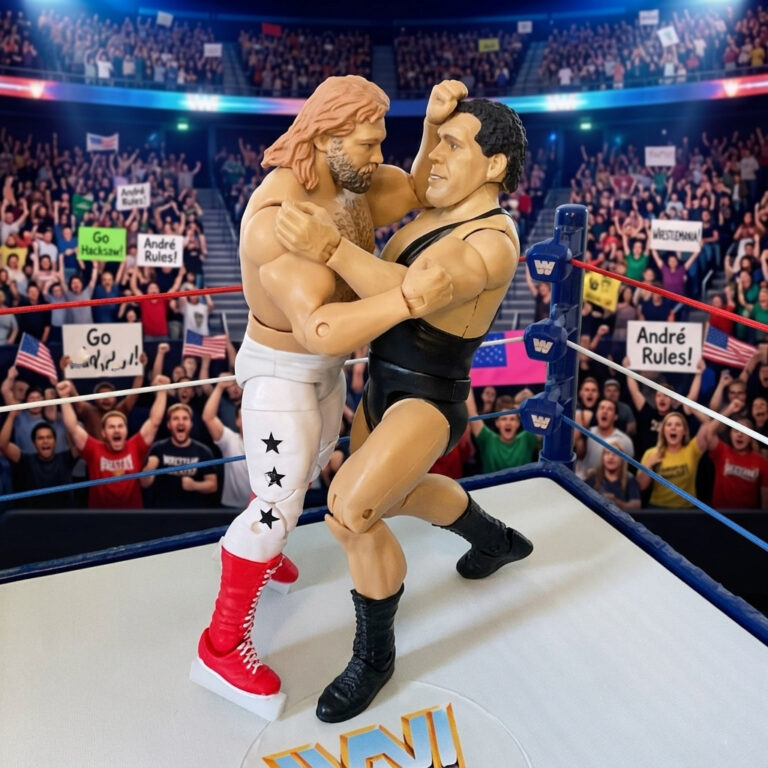
The bell rang with Studd immediately aggressive, backing Andre into the corner with clubbing forearms. Andre fought back with signature chops and a headbutt to create separation. Studd attempted early slams and power moves, including bear hugs, to wear down the big Frenchman and protect his “unslamable” reputation.
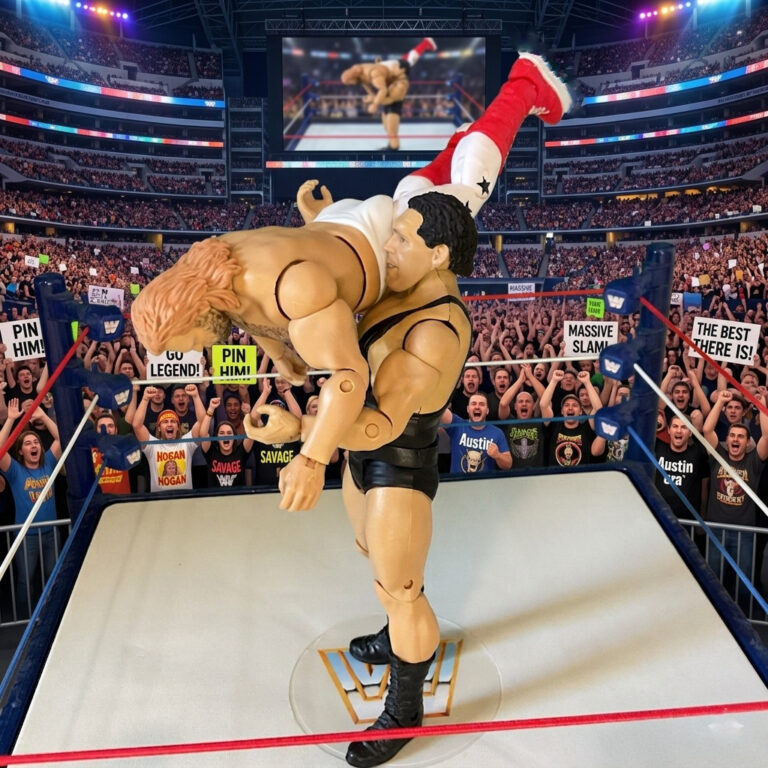
Andre methodically targeted Studd’s legs with kicks, weakening the foundation needed for any slam defense. The crowd chanted for the slam as Andre gained control. In the climax, Andre hoisted the massive Studd onto his shoulders and delivered a thunderous body slam in the center of the ring. The Madison Square Garden crowd erupted in celebration.
Andre claimed the oversized bag of cash from ringside. In a memorable post-match sequence, he began throwing handfuls of bills into the ecstatic audience—only for Heenan to snatch the bag and flee with Studd, denying Andre full satisfaction and keeping the heat alive for future encounters.
Match Psychology and Performance
This was classic 1980s big-man wrestling: deliberate pacing, emphasis on size and power, and storytelling over athletic flips. Studd played the arrogant heel effectively, using his size to dominate early segments. Andre, despite mobility limitations from his health issues, projected commanding presence and babyface fire.
The psychology centered on the “will he or won’t he” slam drama. Every failed attempt by Studd and every comeback by Andre built tension toward the inevitable payoff. While some modern viewers criticize the slow tempo, it suited the live arena atmosphere and the larger-than-life personas perfectly. The slam itself became an instant iconic image—proof that even the mightiest could be toppled.
No high-flying or complex chain wrestling here—just raw power collisions that felt authentic to two legitimate giants clashing.
Historical Context and Impact
WrestleMania I drew 19,121 fans live at Madison Square Garden and reached over one million viewers via closed-circuit television, marking it as a historic success at the time. The Bodyslam Challenge served as a strong mid-to-late card highlight, bridging earlier undercard bouts and the star-studded main event featuring Hulk Hogan and Mr. T.
For Big John Studd, the loss didn’t diminish his status. It reinforced his role as a credible monster heel capable of going toe-to-toe with the biggest names. The rivalry continued post-Mania with tag team wars alongside King Kong Bundy against Andre and various partners, including the “Machines” angle in 1986.
The match helped solidify WrestleMania’s reputation for delivering spectacle and emotional payoffs. It remains a frequently referenced highlight in WWE retrospectives and compilations.
Action Figure Display Potential
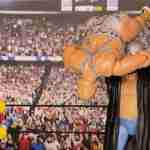
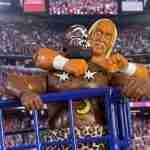
For collectors at fantasyactionfigures.com, this match offers endless diorama opportunities. Pose your Big John Studd figure mid-bear hug or attempting a slam, opposite an Andre the Giant figure delivering the decisive slam. Include a miniature money bag and a Bobby Heenan figure for the post-match theft recreation. The classic 1980s attire—Studd’s black trunks and Andre’s singlet—translates perfectly to modern Mattel Elite or vintage LJN-style figures, capturing the raw power of the era.
This single moment encapsulates why Studd’s towering presence mattered: he made giants feel even bigger and rivalries feel epic.
The $15,000 Bodyslam Challenge wasn’t just a match—it was a foundational WrestleMania memory that showcased Big John Studd’s ability to elevate major storylines through sheer physicality and heel charisma. It remains essential viewing for und
Post-WrestleMania, the feud expanded. Studd teamed with King Kong Bundy (also managed by Heenan), creating a dominant heel giant tandem. They targeted Andre in multi-man matches. A notable August 1985 incident saw Bundy and Studd “injure” Andre’s sternum with repeated splashes during a tag team bout, writing Andre off television temporarily in the storyline.
Andre returned stronger, often allying with partners like Hulk Hogan, Tony Atlas, Junkyard Dog, and Hillbilly Jim. Tag team warfare produced chaotic matches filled with disqualifications and post-match beatings. On October 3, 1985, for example, Andre and Tony Atlas defeated Studd and Bundy by disqualification.
In 1986, the angle incorporated the “Machines” storyline, where Andre wrestled as the masked Giant Machine. Studd and Bundy obsessively tried to unmask him, leading to additional comedic yet physical confrontations. Their battles remained a staple of house shows and television throughout this period.
The original heel-vs-face dynamic paused when Studd left WWF in 1986 for acting opportunities. Upon his return in late 1988, roles reversed: Studd turned face by rejecting Heenan, while Andre had joined the Heenan Family as a heel. This created fresh tension. They continued sporadic clashes into 1989, including a cage match on April 4, 1989. Studd’s focus shifted toward the Royal Rumble victory and other programs, but the history with Andre remained a cornerstone of his legacy.
Why the Rivalry Endured
Studd and Andre’s matches emphasized psychology over high-flying athleticism. Studd’s methodical, arrogant style contrasted with Andre’s commanding presence and crowd connection. Their real-life size made every collision feel monumental, and creative elements like the hair-cutting, money bag drama, and repeated slam attempts gave fans emotional investment. Though criticized by some for pacing, the feud successfully headlined arenas and contributed to WWF’s national expansion.
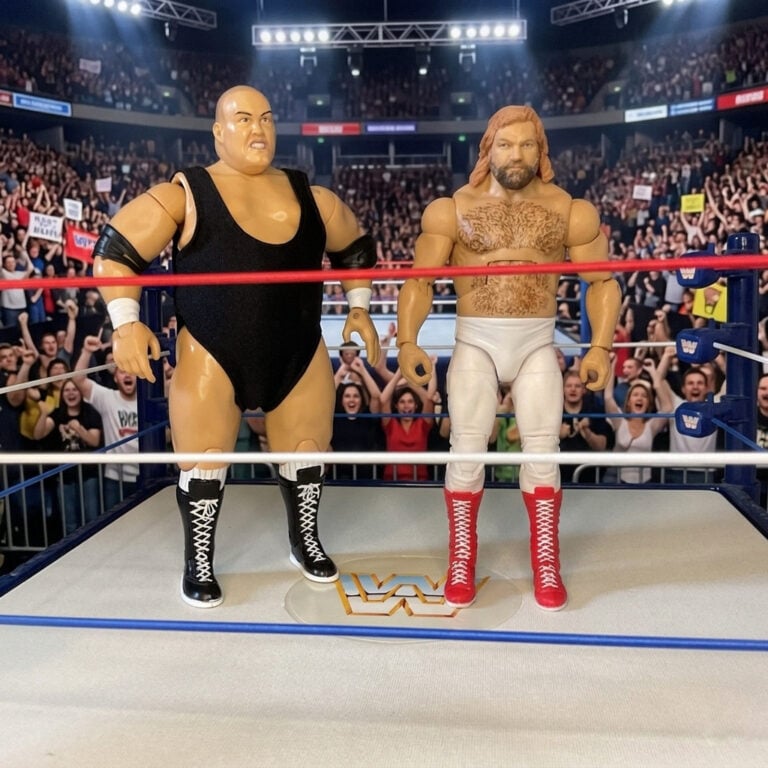
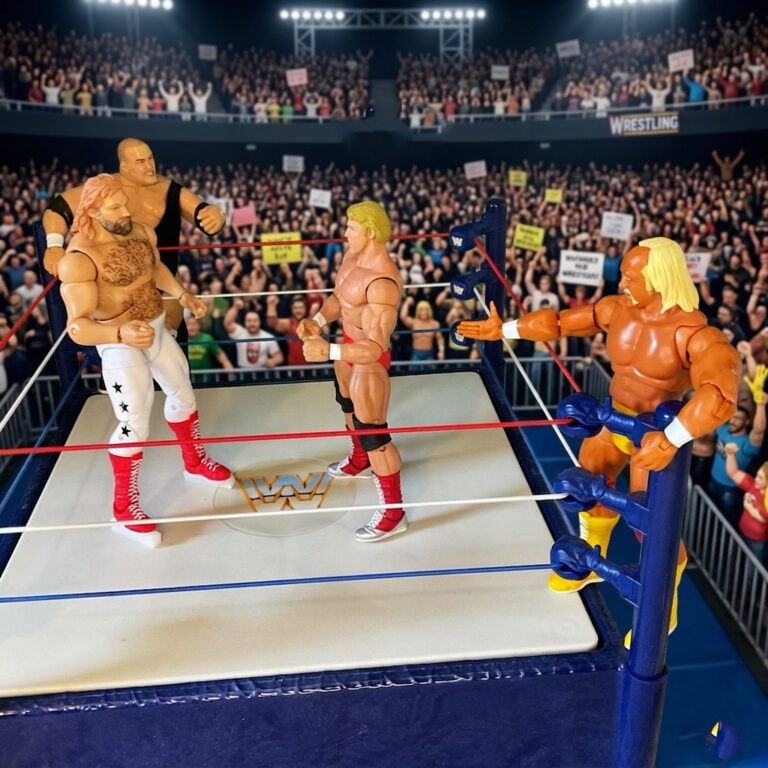
For action figure enthusiasts, this rivalry offers rich display opportunities. Pose Studd in his Heenan-era attire opposite an Andre figure recreating the WrestleMania slam, the hair-cutting aftermath, or steel cage drama. These pieces capture the physicality and spectacle that defined their battles.
This legendary program helped cement both men’s places in wrestling lore, showcasing that when two giants collide, the entire industry takes notice.
Clashes with Hulk Hogan and Championship Challenges
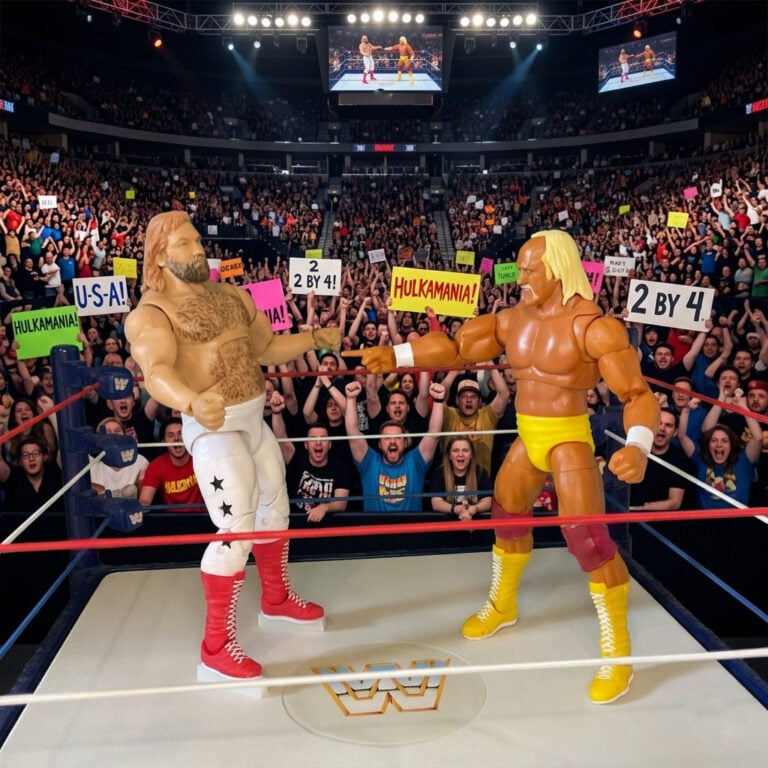
Studd frequently challenged Hulk Hogan during the Hulkamania era, both in singles and tag matches. He scored countout victories over the champion on several occasions but never captured the WWF title. Their outdoor match in Puerto Rico and bouts at venues like Boston Garden showcased Studd’s ability to push Hogan to the limit.
Teaming with Bundy against Hogan and Andre produced epic six- or eight-man tags that headlined house shows and television. These matches amplified the drama of the era, with Studd’s size making him a credible threat to the red-and-yellow hero.
WrestleMania 2 Battle Royal and Tag Team Runs
At WrestleMania 2 (1986), Studd competed in the WWF vs. NFL Battle Royal in Chicago. He targeted Atlanta Falcons’ Bill Fralic and eliminated Chicago Bears’ William “The Refrigerator” Perry—only for Perry to pull him over the top rope in a memorable elimination. Andre won the battle royal.
Studd and Bundy also challenged The British Bulldogs for the tag titles, delivering strong performances in a division filled with athletic teams. Their power-based style contrasted perfectly with faster opponents.
1989 Return: Face Turn, Royal Rumble Victory, and Later Feuds
After a two-year hiatus focused on acting, Studd returned in late 1988 on The Brother Love Show. He rejected Bobby Heenan’s invitation to rejoin the family, turning face and reigniting issues with Andre (now heel) and others like Haku.
1989 Royal Rumble (January 15, 1989): Entering at #27, Studd won the second-ever Royal Rumble match by last eliminating Ted DiBiase. This was a crowning achievement, validating his status as a top star.
At WrestleMania V, he served as special guest referee for Jake “The Snake” Roberts vs. Andre, disqualifying Andre after an attack on Studd. He feuded with Heenan Family members and teamed with Jim Duggan, but a full one-on-one blowoff with Andre never fully materialized on PPV. Studd left WWF in mid-1989 over a financial dispute.
Acting Career and Independent Appearances
Studd appeared in films like Micki & Maude (1984), The Protector, Harley Davidson and the Marlboro Man, and TV shows including The A-Team and Hunter. He wrestled sporadically on the independents into the early 1990s, training wrestlers like Ron Reis (“Big” Ron Studd).
Later Life, Health Battles, and Passing
Minton married Donna Conklin in 1978; they had three children. He dealt with wrestling-related injuries to his knee, shoulder, and back. In 1993, he was diagnosed with Hodgkin’s disease and liver cancer. He fought bravely through chemotherapy and procedures but passed away on March 20, 1995, at age 47.
Hall of Fame Legacy and Impact
Studd was posthumously inducted into the WCW Hall of Fame in 1995 and the WWE Hall of Fame in 2004 (inducted by Big Show, with his son accepting). His career highlights include multiple tag titles, the 1989 Royal Rumble win, and legendary rivalries that helped define an era.
For action figure collectors, Studd’s releases—from classic LJN-style to modern Mattel Elite figures—capture his intimidating look and are prized for dioramas recreating WrestleMania moments or Heenan Family poses.
Conclusion
Big John Studd’s greatness lay in his commanding presence, versatility as both heel and face, and contributions to some of wrestling’s most unforgettable storylines. From early tag triumphs with Kowalski to slamming challenges, Royal Rumble glory, and epic wars with Andre the Giant and Hulk Hogan, he left an indelible mark. Though his life was cut short, his legacy endures in WWE history, Hall of Fame recognition, and the action figures that let new generations experience the power of this true wrestling giant. Studd wasn’t just big—he was one of the all-time greats who helped build the foundation for modern sports entertainment.
His story reminds us that in wrestling, size, skill, and compelling rivalries create moments that last far beyond the final bell. For fantasy action figure enthusiasts, displaying a Big John Studd figure alongside Andre or Hogan captures that timeless drama perfectly.
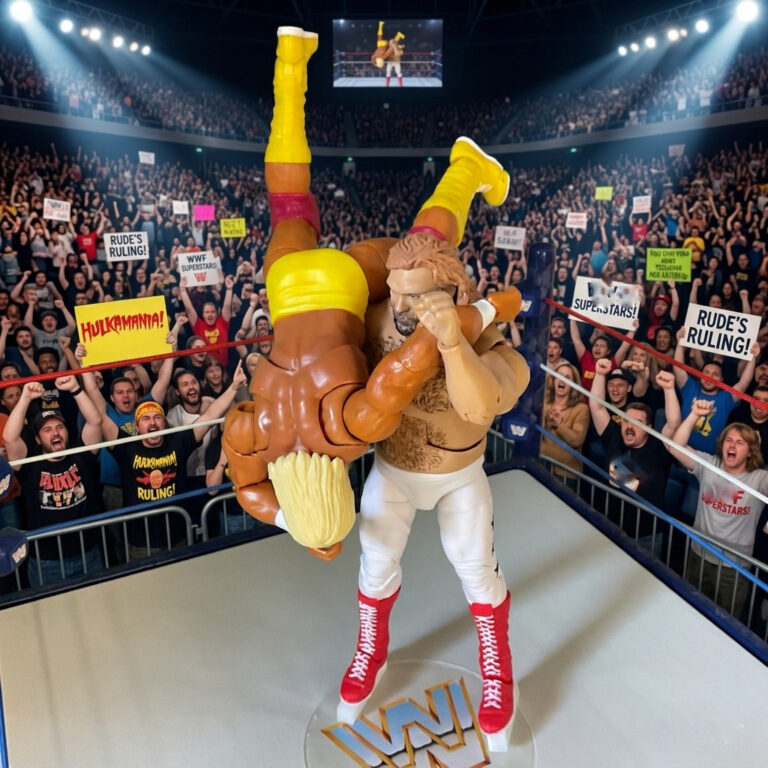
Disclaimer: WWE, Big John Studd, and all related characters and trademarks are the property of WWE. This article features official WWE merchandise, including wrestling figures and the wrestling ring, which were personally purchased for use in the accompanying photography. This content is a work of fan commentary and is not affiliated with, sponsored by, or endorsed by WWE or its licensees.

 English
  Deutsch
  Français
  Português do Brasil
  日本語
日本語  Español
  English (Australia)