

The Complete History of the Insidious Six in Spider-Man: The Animated Series (1994)
In Spider-Man: The Animated Series (often abbreviated as TAS or SM:TAS), which aired from 1994 to 1998 on Fox Kids, one of the most memorable villain teams was the Insidious Six. This group served as a direct adaptation of the classic Marvel Comics “Sinister Six,” but the name was changed to “Insidious Six” due to network concerns that “sinister” sounded too frightening for young viewers.
Formed and funded by the Kingpin (Wilson Fisk), the Insidious Six represented a major escalation in threats against Spider-Man. The team appeared in two key multi-episode arcs: the season-opening Neogenic Nightmare storyline in Season 2 and the ambitious five-part Six Forgotten Warriors saga in Season 5. Their stories intertwined with Peter Parker’s personal struggles, larger crime syndicate politics, and even Cold War espionage. Though they never achieved lasting victory, the Insidious Six became iconic for showcasing teamwork among Spider-Man’s rogues’ gallery and highlighting the hero’s vulnerability during power-loss crises.
- 1. The Formation of the Insidious Six
- 2. Doctor Octopus & The Chameleon: Command and Infiltration
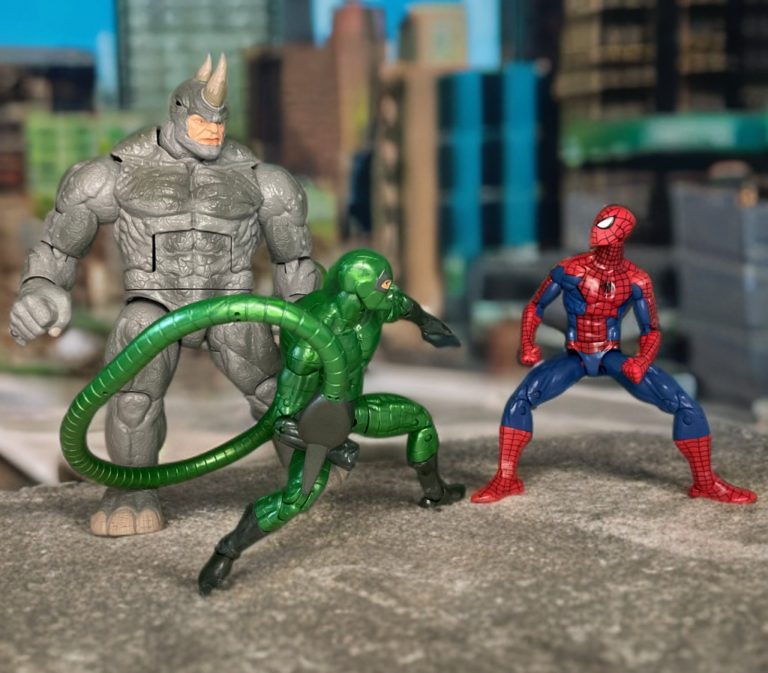
- 3. Mysterio & Rhino: Illusion and Impact
- 4. Scorpion & Shocker: Mutation and Concussion
- 5. Season 5 Evolution: The Vulture
- 6. The Neogenic Nightmare Arc (Season 2)
- 7. Comparison: Insidious Six vs. Sinister Six
- 8. Legacy and Impact
The Formation of the Insidious Six
The team’s origin ties directly into the power struggles of New York’s criminal underworld. By the end of Season 1, Spider-Man had repeatedly thwarted the Kingpin’s schemes, eroding his influence within the Crime Cartel—a council of mob bosses led by the elderly Silvermane. Facing pressure and the threat of being ousted, the Kingpin devised a plan to eliminate Spider-Man once and for all.
Using his lieutenant Alistair Smythe, Kingpin arranged a prison breakout. The Chameleon received his image inducer device and freed five fellow inmates: Doctor Octopus, Mysterio, Shocker, Rhino, and Scorpion. The escapees were transported to an abandoned warehouse where Kingpin revealed himself via intercom and proposed they unite as the “Insidious Six.” Initially skeptical and preferring solo revenge, the villains agreed after Kingpin reminded them of their past individual defeats and offered resources, funding, and a shared goal. This formation marked the start of the Neogenic Nightmare arc in Season 2, Episode 1 (“The Insidious Six”).
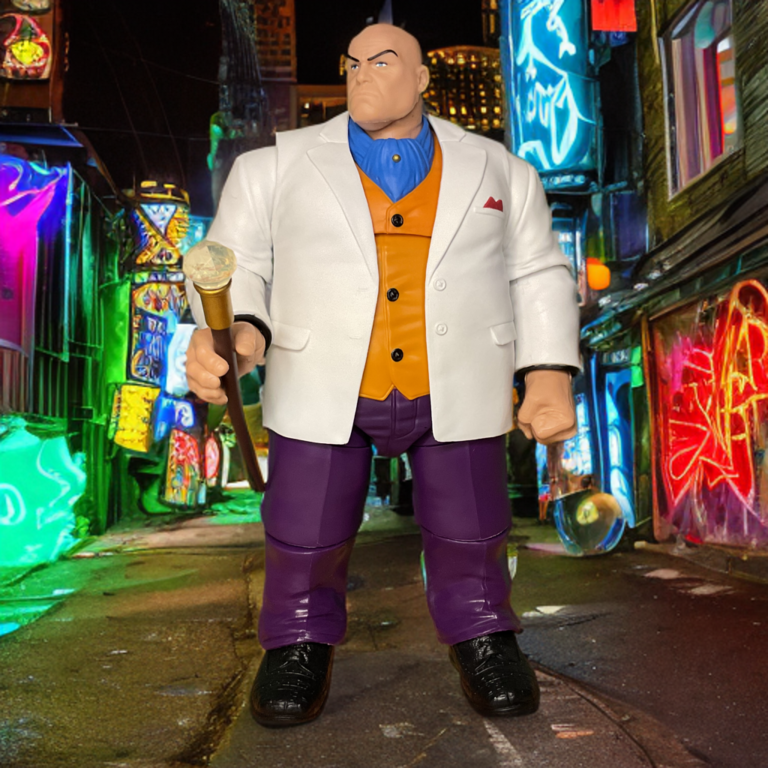
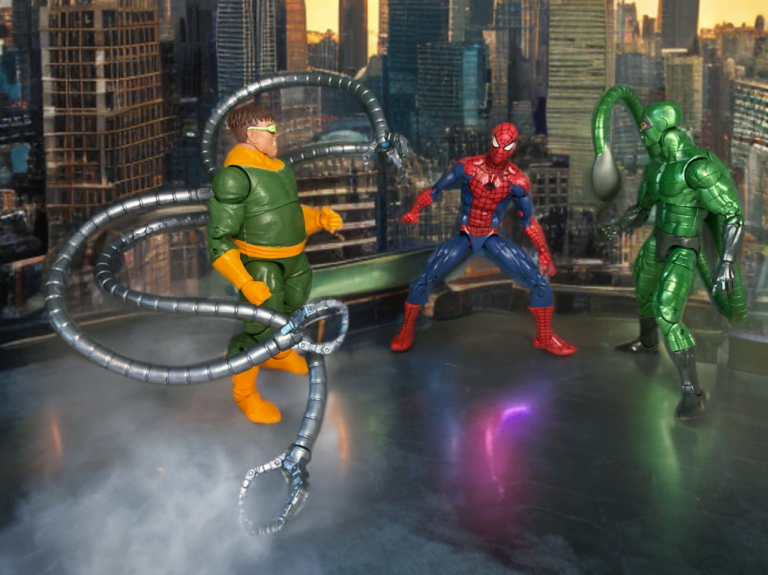
Doctor Octopus (Otto Octavius): The Field Commander
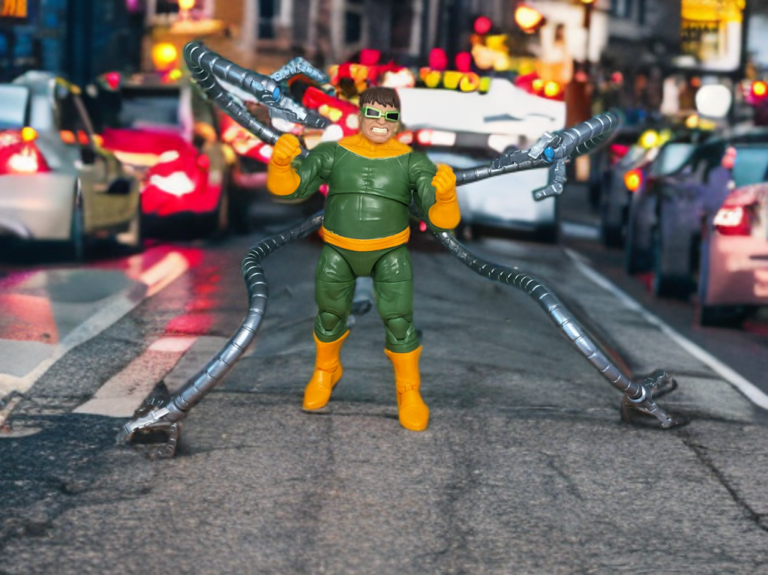
Otto Octavius serves as the intellectual engine and de facto field leader of the group. Fused to four super-strong, titanium-steel mechanical tentacles following a laboratory accident, Octavius possesses a combination of reach, strength, and genius-level intellect that makes him a peerless strategist.
Role in the Six: While the Kingpin provided the funding and overarching goals, it was often Doc Ock who dictated combat tactics on the ground. His arrogance frequently clashed with the other members—particularly the impulsive Scorpion—but his ability to multitask with his harness made him the only member capable of holding back Spider-Man while simultaneously coordinating the team’s movements.
Detail: Voiced by Gregg Berger, this version of Octavius was fueled by a deep sense of entitlement and a desire to reclaim his status as a world-class scientist. His leadership was defined by a cold, calculating pragmatism, though he remained ultimately subservient to the Kingpin’s payroll until the team’s eventual mutiny.
The Chameleon (Dmitri Smerdyakov): The Master of Infiltration
The Chameleon serves as the group’s most subtle and dangerous asset, specializing in psychological warfare and strategic sabotage. Unlike his comic book counterpart who often used traditional masks, this version utilized a high-tech image inducer—a belt-mounted device that allowed him to instantly mimic the appearance and voice of anyone, from Aunt May to the Kingpin himself.
Role in the Six: The Chameleon was the linchpin of the group’s logistics. He was instrumental in orchestrating the initial prison breakout that formed the team and acted as the group’s primary spy. His ability to sow discord by impersonating allies made him the member Peter Parker feared most in terms of protecting his secret identity.
Detail: A significant reveal in the “Six Forgotten Warriors” arc established that the Chameleon was the foster son of the Red Skull. This connection tied the character into a broader tapestry of international espionage and explained his cold, mercenary nature. Throughout the series, he remained a man of mystery, rarely engaging in direct physical brawls but instead ensuring the Six were always three steps ahead of the law.
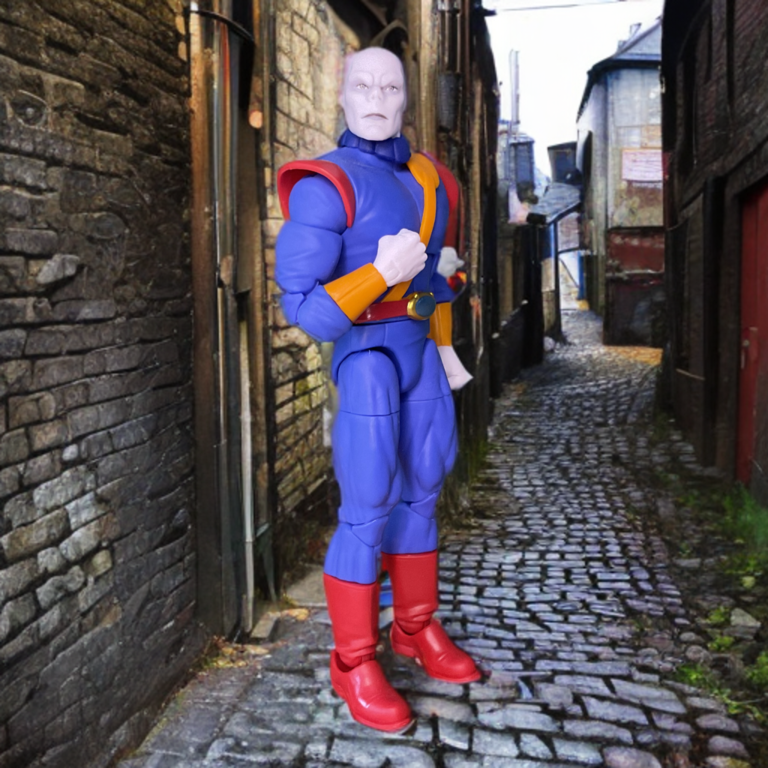
Comparison of Dynamics
The interplay between these two members created a “command and control” center for the Insidious Six. While Doctor Octopus provided the visible threat through his mechanical arms and battlefield directives, the Chameleon provided the invisible threat through his shapeshifting. Together, they transformed the group from a collection of “costumed crazies” into a legitimate paramilitary threat that nearly succeeded in unmasking and destroying Spider-Man during the height of his neogenic mutation crisis.
The Masters of Illusion and Impact
To round out the team’s tactical capabilities, the group integrated specialized roles that targeted Spider-Man’s senses and physical limits. While the leadership handled the planning, the presence of Mysterio and Rhino ensured the group could control the environment and dominate any physical confrontation. These two members represented the extremes of the team’s methodology: the subtle art of the hallucination and the blunt force of an unstoppable charge.
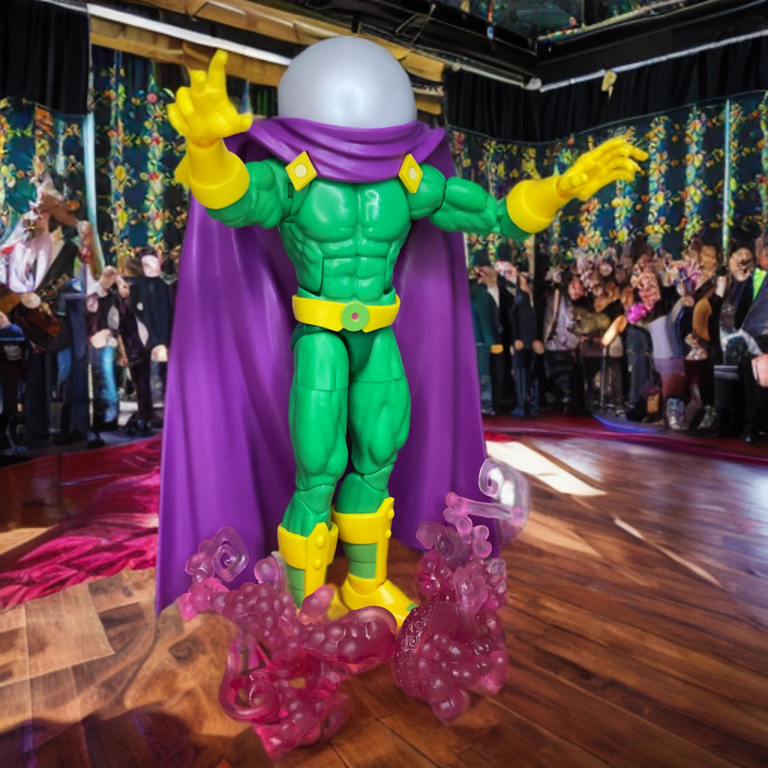
Mysterio (Quentin Beck): The Architect of Deception
Quentin Beck brought a cinematic flair to the criminal underworld, utilizing his background as a disgraced special-effects wizard to become the group’s primary strategist of misdirection. Unlike the heavy hitters who relied on physical damage, Mysterio’s goal was to fracture Spider-Man’s perception of reality.
Role in the Group: Mysterio’s contribution was essential for the team’s successful ambushes. By deploying sophisticated holographic projectors, chemical smoke screens, and psychological mind games, he could make a single warehouse look like a hall of mirrors or an alien landscape. This environmental manipulation allowed the other members to strike from the shadows, catching the wall-crawler off-balance.
Narrative Path: Within the show’s continuity, Beck’s tenure with the group was cut short. Following his initial involvement in the team’s formation, he was lost in an explosive confrontation at a bridge. By the time the group reformed for the search for the six keys, his seat was vacant, leading to a shift in the team’s composition as they moved toward a more aerial strategy.
Rhino (Alex O’Hirn): The Unstoppable Juggernaut
If Mysterio was the scalpel, Rhino was the sledgehammer. Alex O’Hirn provided the raw, concentrated power necessary to trade blows with a superhuman. Encased in a permanent, rhino-themed armored suit that granted him incredible durability and strength, he functioned as the team’s living tank.
Role in the Group: Rhino was rarely the one to devise a plan, but he was always the one to finish it. He was frequently paired with the Shocker, as their combined power could level city blocks. His primary objective in team battles was to act as a distraction, forcing Spider-Man to expend his energy dodging high-speed charges while the rest of the team closed in.
Characteristics: Despite his immense physical threat, O’Hirn was often portrayed as the muscle for hire, motivated more by the Kingpin’s high-paying contracts than by complex vendettas. His near-indestructibility made him the perfect frontline soldier, capable of shrugging off police fire and web-attacks alike, ensuring that the group could never be easily contained by conventional authorities.
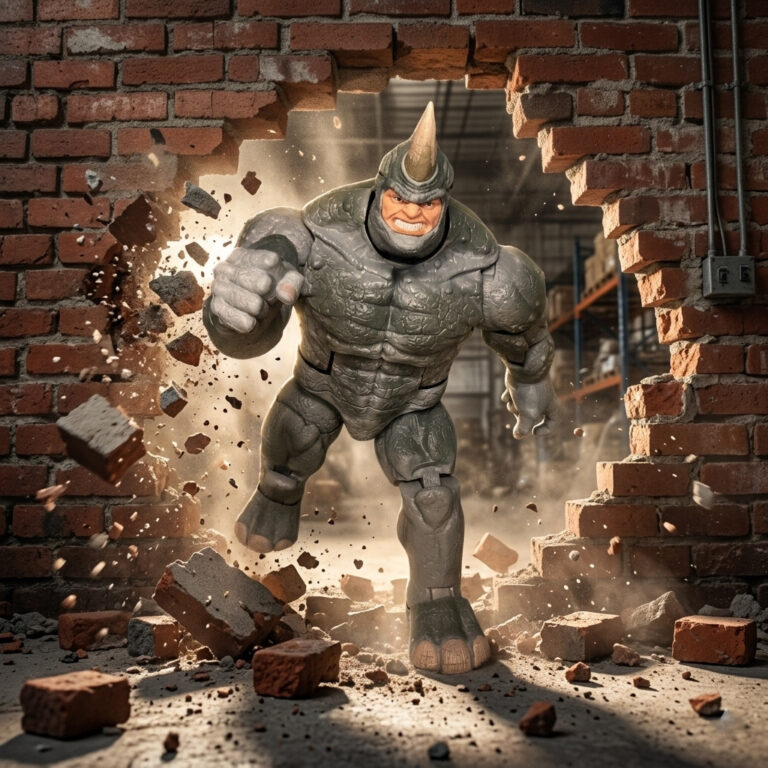
The brute force dynamic that Rhino brings to the Insidious Six exemplifies a classic Marvel blueprint: pairing an unstoppable, armor-clad titan with agile heroes to push their tactical limits to the brink. This specific archetype of heavy-hitting physical dominance is explored deeply in Marvel Legends Grizzly vs Rhino: Two Heavyweight Spider-Man Bruisers Compared, highlighting how these street-level tanks rely on raw momentum. It’s a combat philosophy that scales all the way up to Marvel’s cosmic tier, as examined in Can the Hulkbuster Actually Stop Juggernaut? The Surprising Truth, where mechanical engineering is explicitly designed to counter unyielding muscle. Finding the right narrative balance for these massive power scales was a creative hurdle the 1994 Fox Kids lineup constantly faced—a production era defined by distinct shifts in creative direction, animation style, and network standards, all of which are cataloged in Why the 1994 Iron Man Animated Series is the Ultimate Tale of Two Seasons.
The Synergy of Chaos and Force
The combination of Mysterio and Rhino created a “distort and destroy” dynamic. While Mysterio’s illusions kept Spider-Man guessing, Rhino’s charges ensured that any mistake Peter Parker made would be met with devastating physical consequences. This pairing showcased the Kingpin’s ability to merge disparate criminal talents into a singular, cohesive threat that pushed the hero’s spider-sense to its absolute breaking point.
The Lethal Edge: Mutation, Vibration, and the Aerial Shift
The final components of the Kingpin’s team provided the specialized weaponry needed to penetrate Spider-Man’s defenses. While the others handled deception and bulk, the Scorpion and Shocker brought high-intensity combat technology and personal vendettas to the fold. As the series progressed into its final chapters, the introduction of the Vulture marked a strategic evolution, ensuring the group remained a threat on every possible plane of battle.
Scorpion (Mac Gargan): The Volatile Predator
Mac Gargan represents one of the most tragic and dangerous results of neogenic experimentation in the series. Originally a private investigator hired by J. Jonah Jameson, Gargan was subjected to a genetic transformation that granted him superhuman strength and agility, but at the cost of his sanity and humanity.
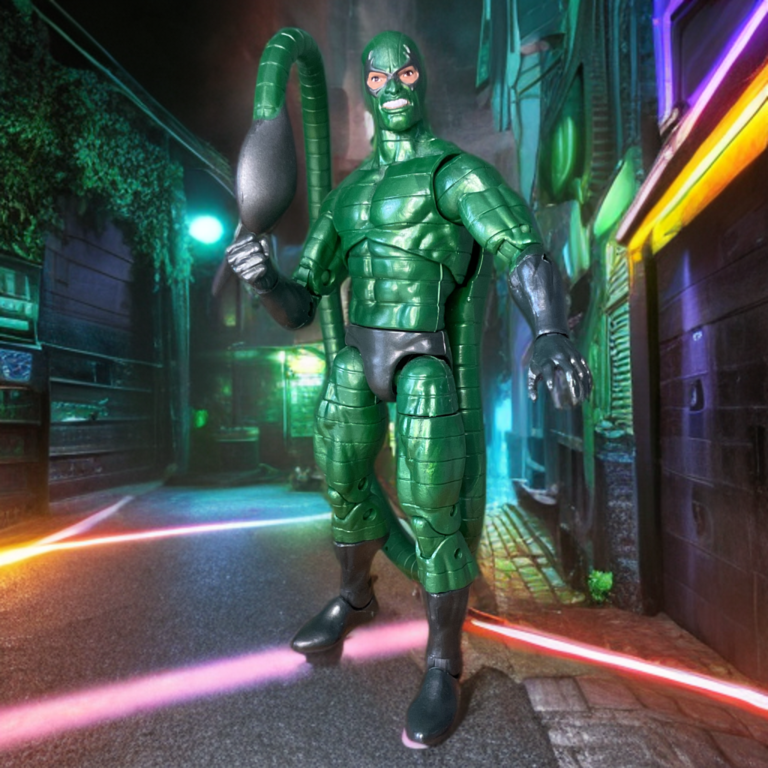
Weaponry and Rage: Equipped with a formidable mechanical tail capable of projecting powerful acid and concussive blasts, the Scorpion was a wild card within the team. His fighting style was characterized by a frantic, high-intensity aggression driven by a deep-seated hatred for both Spider-Man and Jameson, whom he blamed for his monstrous condition.
Team Role: Within the group, Gargan often served as the primary aggressor. His unpredictable nature and raw power made him a terrifying opponent, though his frequent outbursts of rage often required the more disciplined members, like Doctor Octopus, to keep him in check during complex operations.
Shocker (Herman Schultz): The Concussive Specialist
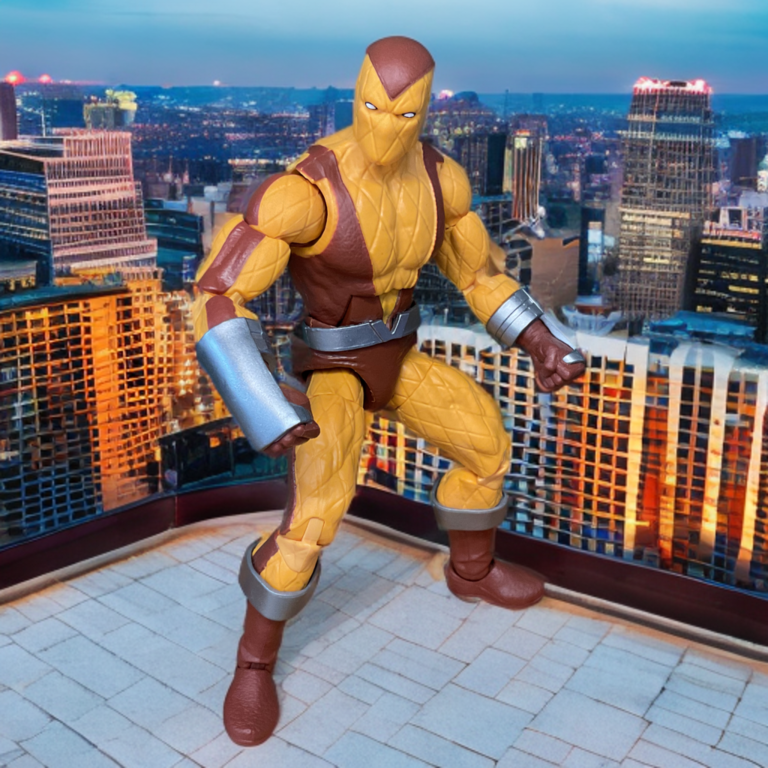
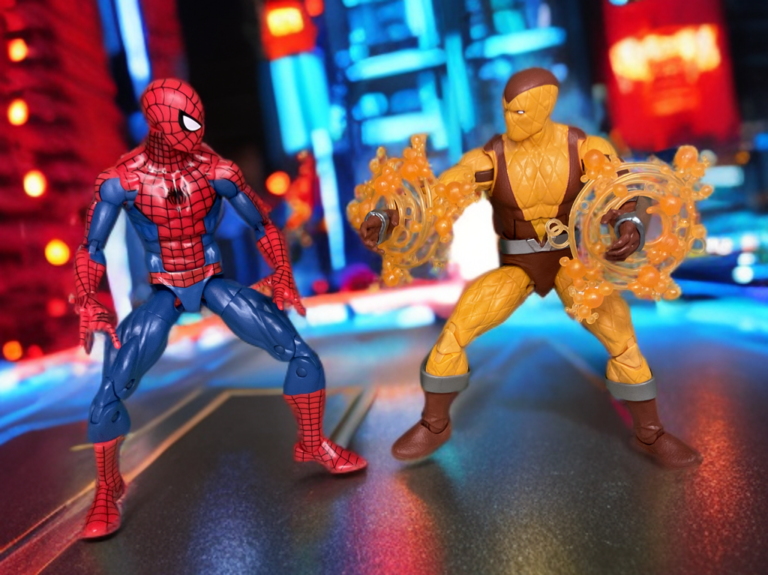
Herman Schultz is a career criminal who relies on his own engineering brilliance rather than physical mutations. Clad in a distinct yellow-quilted suit designed to insulate him from his own weaponry, the Shocker utilized high-frequency vibro-shock gauntlets to project devastating air blasts.
Tactical Firepower: Shocker provided the group with essential ranged capabilities. His gauntlets could shatter concrete, deflect projectiles, and incapacitate opponents from a distance. Unlike the more erratic Scorpion, Schultz was a professional mercenary—steady, reliable, and focused on the objective.
The Power Duo: He was most frequently seen operating alongside the Rhino. This pairing became a staple of the Kingpin’s operations, as Shocker’s concussive blasts provided the perfect cover for Rhino’s devastating charges, creating a wall of force that few heroes could withstand.
The Season 5 Evolution: Vulture (Adrian Toomes)
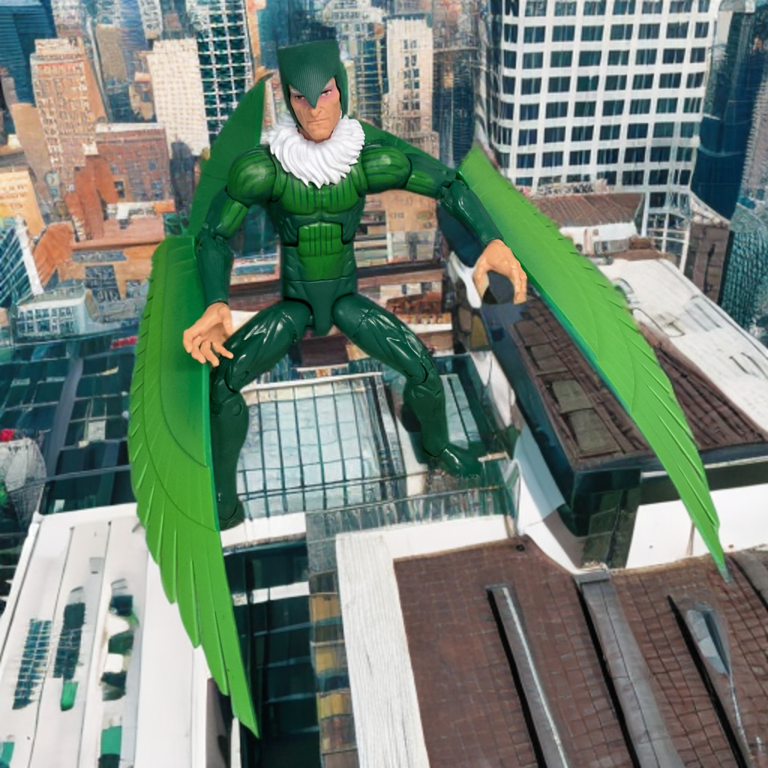
Following the disappearance of Mysterio, the team required a new specialist to maintain their tactical advantage. Enter Adrian Toomes, the elderly inventor of the Vulture flight suit. Using a sophisticated anti-gravity harness and metallic wings, Toomes brought a new dimension to the roster: aerial superiority.
The Vulture’s Reach: His inclusion allowed the team to coordinate attacks from the sky, making it nearly impossible for Spider-Man to find safety. Toomes’ tech expertise also filled the void left by Beck, ensuring the group had the scientific knowledge necessary to pursue the “Six Forgotten Warriors” legacy and its associated doomsday technology.
The Architect: Kingpin’s Silent Command
While he never donned a costume or engaged in the brawls himself, Wilson Fisk remained the true center of the group’s gravity. As the organizer and financier, he was the only individual with the resources to keep such volatile personalities working toward a single goal. Whether issuing commands through a remote intercom or monitoring the battles from his skyscraper, the Kingpin’s presence turned the collective into a disciplined extension of his own will. He was the puppet master who ensured that while the Six took the hits, the empire continued to grow.
| Member | Tactical Role | Notable Animated Episode | Comics Equivalent (1964) |
| Doctor Octopus | Field Commander / Brains | “Armed and Dangerous“ | Doctor Octopus (Leader) |
| The Chameleon | Espionage / Deception | “Day of the Chameleon“ | Kraven the Hunter |
| Mysterio | Illusions / Misdirection | “The Menace of Mysterio“ | Mysterio |
| Rhino | Heavy Hitter / Tank | “The Alien Costume, Part 1“ | Sandman |
| Scorpion | Aggressor / Mutation | “The Sting of the Scorpion“ | Electro |
| Shocker | Ranged Firepower | “The Awakening“ | (None – New Addition) |
| The Vulture | Aerial Superiority | “The Final Nightmare“ | The Vulture (Founder) |
The Neogenic Nightmare Arc: Debut and First Defeat (Season 2, Episodes 1–2)
Coinciding with Peter Parker beginning to lose his spider-powers due to a neogenic mutation (the season’s overarching threat), the Insidious Six launched their campaign. They committed high-profile crimes to lure Spider-Man, including an armored truck heist that turned into an ambush. Internal squabbling (e.g., Scorpion vs. Doctor Octopus over who would deliver the killing blow) allowed a powerless Spider-Man to escape temporarily.
The villains escalated by kidnapping Aunt May Parker (using Doctor Octopus in disguise) to force a confrontation. In a chilling clinic basement trap, they captured and unmasked Peter Parker, initially believing him a fraud due to his weakened state. Kingpin monitored via live feed while juggling threats from Silvermane’s rival faction.
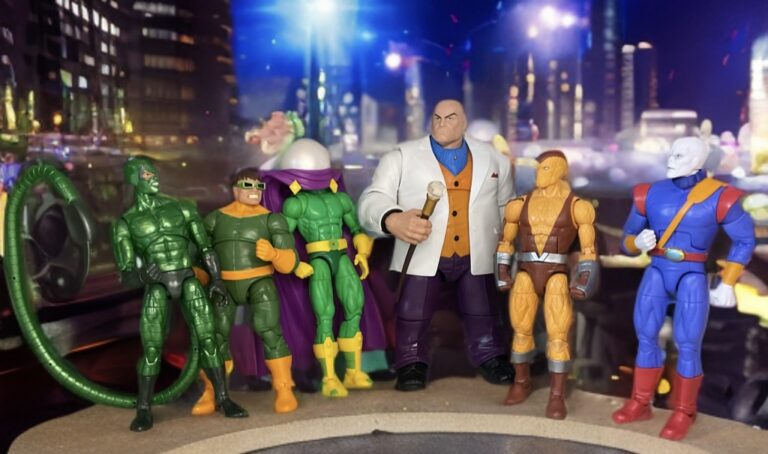
In “Battle of the Insidious Six,” a still-powerless Spider-Man used wits, Mysterio’s own holocubes for distractions, and environmental tactics to turn the team against one another. He rescued Silvermane (whom Kingpin tried to eliminate), exposed Chameleon’s disguises, and exploited infighting—such as Scorpion’s acid accidentally damaging Doctor Octopus’ arms. Frustrated by repeated failures and Kingpin’s broken promises, the Six mutinied in an alley, discarded their communicators, and disbanded. Silvermane used the chaos to rally the Crime Cartel against Kingpin, while Peter’s mutation continued to worsen.
Reformation in the Six Forgotten Warriors Arc (Season 5, Episodes 1–5)
Years later (in the show’s timeline), Kingpin learned of a long-lost WWII-era doomsday weapon created by the Red Skull. Tied to a conspiracy involving Peter Parker’s late parents (Richard and Mary Parker, revealed as government agents), the device required special “keys” or rings held by the “Six Forgotten Warriors”—aging WWII heroes.
Kingpin reformed the Insidious Six, recruiting Vulture in Mysterio’s place. The team was tasked with locating the keys, battling SHIELD agents, and ultimately activating the weapon. Key events included prison breaks, global chases, and clashes with Spider-Man, Silver Sable, and the reunited American Warriors (including a surprise return of Captain America).
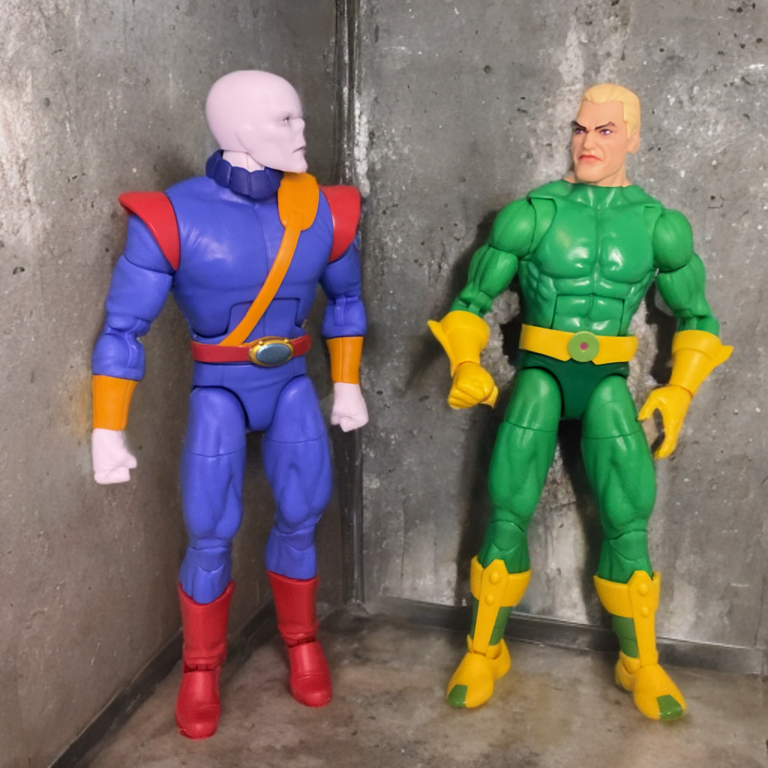
The arc reached its climax with betrayals: Chameleon, acting as a double agent for his foster father the Red Skull (and Red Skull’s son Rheinholdt), turned on Kingpin and the rest of the Six. The doomsday device was activated but ultimately thwarted by Spider-Man and his allies. The Insidious Six suffered another decisive defeat and scattered once more, with no further team appearances in the series.
Legacy
The Insidious Six never became a recurring monthly threat like in the comics, but their two major appearances delivered some of the show’s most tense, team-based action sequences. The Neogenic Nightmare debut brilliantly tied into Peter’s personal vulnerability, while the Six Forgotten Warriors arc elevated the stakes with espionage, family secrets, and crossover elements involving SHIELD and historical heroes.
Though they ultimately disbanded twice due to infighting, betrayal, and Spider-Man’s ingenuity, the Insidious Six left a lasting impression on fans as a symbol of the series’ ambitious, serialized storytelling. Their name may have been toned down, but their impact—showcasing the power of villainous cooperation against a hero at his lowest—was anything but insidious. In the end, they underscored a core theme of the 1994 series: even the most cunning team of rogues can’t overcome Spider-Man’s heart, resourcefulness, and unyielding sense of responsibility.
Comparing the Insidious Six (Spider-Man: The Animated Series, 1994) to the Comic Book Sinister Six
The Insidious Six from Spider-Man: The Animated Series (SM:TAS) is a clear homage to Marvel Comics’ iconic Sinister Six, one of Spider-Man’s most enduring villain teams. While the animated version captures the spirit of a coordinated rogue’s gallery assault, it makes significant changes for continuity, censorship, and storytelling needs. Below is a detailed comparison across formation, membership, story arcs, leadership, and overall impact.
Historical Context and the Shift in Origins
The transition of Spider-Man’s most famous villain team from the page to the screen involved significant alterations to both their branding and their fundamental motivations. In the original Marvel Comics continuity, the group was introduced by Stan Lee and Steve Ditko in The Amazing Spider-Man Annual #1 in 1964. This iteration, known as the Sinister Six, was a self-organized pact born out of Doctor Octopus’s frustration following a string of solo defeats. He personally recruited five other villains to overwhelm the wall-crawler, with the “Sinister” moniker serving to emphasize their coordinated and evil intent.
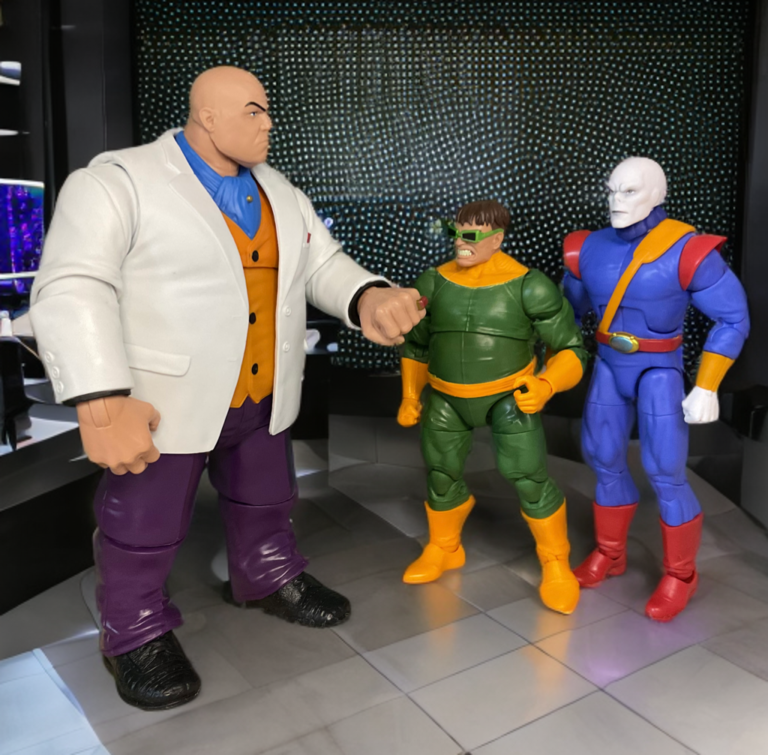
In the 1994 animated series, however, the team was rebranded as the Insidious Six due to specific broadcast standards. The Fox Kids network voiced concerns that the word “sinister” carried a tone that was too intense or frightening for their younger target demographic, leading to the selection of a more subtle but equally menacing alternative. Beyond the name change, the show fundamentally altered the group’s origin by removing the agency from the villains themselves. Instead of a voluntary pact led by Doctor Octopus, the animated team was an engineered asset orchestrated by the Kingpin. As part of a larger power struggle within the Crime Cartel, Wilson Fisk arranged a massive prison breakout and pressured the escapees into a forced alliance. By providing the funding, resources, and remote tactical commands, Fisk transformed the group into a mob-enforced paramilitary unit. This shift effectively tied the team into the series’ complex underworld politics, making them feel less like a traditional villainous brotherhood and more like a high-stakes corporate arm of the Kingpin’s criminal empire.
Membership and Roster
The core concept—six Spider-Man foes teaming up—remains, but the lineups differ substantially due to the animated series’ early-season availability of characters.
Original Comic Sinister Six (1964):
- Doctor Octopus (leader)
- Vulture
- Electro
- Mysterio
- Sandman
- Kraven the Hunter
This roster drew from Spider-Man’s earliest established rogues. Later comic incarnations rotate members frequently (e.g., replacing Kraven with Hobgoblin, adding Venom or Gog in some stories), with Doctor Octopus often (but not always) leading. Over decades, there have been numerous reformations, sometimes expanding beyond six or shifting leadership.
The Structural Foundation of the Insidious Six
The transition of the legendary Sinister Six from the comic book page to the 1994 animated screen necessitated a complete reimagining of the team’s roster and internal power dynamics. Renamed the Insidious Six to meet specific broadcast standards of the era, this iteration of the team was defined by its deep ties to the show’s established continuity and a unique hierarchical structure that set it apart from its literary origins. By selecting villains who had already been established as individual threats during the debut season, the show gave the team’s formation in the Neogenic Nightmare arc a weight of history that resonated with viewers. This initial lineup consisted of Doctor Octopus, Chameleon, Mysterio, Rhino, Scorpion, and Shocker, creating a balanced unit of specialized threats. When the group eventually reformed for the ambitious Six Forgotten Warriors saga in the final season, the Vulture stepped in to replace the late Mysterio. This change was not merely a plot necessity but a strategic shift that added aerial superiority to the group’s tactical options, ensuring they remained a multi-domain threat capable of attacking from the shadows, the streets, and the skies.
Strategic Adaptations and Tactical Balance
The specific roster choices were the result of both production realities and a desire for tactical diversity. Because classic comic members like Kraven the Hunter, Sandman, and Electro were unavailable due to external licensing restrictions involving unproduced film projects, the showrunners leaned into a model built on brawn, technology, and deception. In this framework, the Chameleon provided essential espionage and infiltration capabilities, while Rhino and Scorpion acted as the frontline juggernauts. Shocker complemented this physical force by offering essential ranged firepower. This specific mixture of powers ensured that every confrontation with Spider-Man was a high-energy spectacle characterized by a blend of physical dominance and technological trickery. The synergy of these disparate criminal talents made the Insidious Six a far more formidable opponent than any of them could hope to be alone, as they could effectively target the wall-crawler’s physical limits and his senses simultaneously.
Hierarchy and the Dual-Layered Command
Perhaps the most significant departure from the source material was the introduction of a dual-layered leadership structure that added a corporate-style complexity to the criminal underworld. In traditional comic narratives, the Six usually answer directly to Doctor Octopus, who serves as both the founder and the financier. However, the animated series placed the entire collective under the overarching control of the Kingpin, who acted as the architect and supreme commander. While Wilson Fisk provided the funding, technology, and long-term vision from his hidden base in the Chrysler Building, Doctor Octopus served as the tactical field general who managed the volatile personalities of his teammates during active combat. This hierarchy created a pressure-cooker environment where the villains often felt like mere pawns in a larger game. The resulting tension between the Kingpin’s cold, calculated demands and the villains’ individual desires for revenge transformed the group into a ticking time bomb. While their cooperation made them a terrifying obstacle for a hero already struggling with his own neogenic mutations, their inevitable betrayals and internal mutinies ensured that their insidious alliance would always remain its own greatest enemy.
Narrative Arcs and the Evolution of Conflict
The strategic philosophy behind the team’s battles underwent a massive transformation during its move to animation. In the original 1964 comic debut, the Sinister Six followed an ego-driven plan devised by Doctor Octopus that emphasized individual glory over teamwork. Rather than attacking as a cohesive unit, the villains targeted Spider-Man in a sequential war of attrition, engaging him one-on-one in specifically tailored environments designed to slowly deplete his energy. This approach ultimately backfired, as it allowed Spider-Man to focus his resolve on a single foe at a time, defeating them individually. While later comic iterations in the 1990s escalated to grander schemes involving global threats like poison gas satellites, the core weakness of the comic team remained their mutual distrust and a lack of centralized coordination.
The animated series abandoned this one-on-one format in favor of a more harrowing, unified assault that capitalized on the hero’s personal vulnerabilities. During the Neogenic Nightmare arc of Season 2, the Insidious Six functioned as a true pack, luring and ambushing a version of Peter Parker whose powers were physically failing due to a localized mutation crisis. This storyline pushed the stakes to a fever pitch, moving beyond simple bank heists to the kidnapping of Aunt May and the successful unmasking of the hero. By forcing a weakened Spider-Man to face all six threats simultaneously, the show created a sense of genuine peril rarely seen in the comics. While the villains were eventually undone by their own narcissism and Peter’s desperate resourcefulness, the defeat was so stinging that it led to an immediate mutiny against the Kingpin, causing the group to scatter into the city’s shadows.
The team’s final major appearance in the “Six Forgotten Warriors” epic expanded the scale of their conflict from street-level crime to a serialized masterpiece of international espionage. Tasked by the Kingpin with recovering powerful rings that acted as keys to a World War II-era doomsday device, the Six were thrust into a plot involving the Red Skull, the legacy of the Parker parents, and the aging heroes of a forgotten era. This arc integrated deep personal stakes for Peter with a global conspiracy, culminating in a dramatic betrayal by the Chameleon. Unlike the comics of that era, which often focused on grand villainy with less ongoing serialization, these animated arcs were woven into the fabric of the season’s larger plot. Ultimately, whether in print or on screen, the downfall of the Six remained consistent: while they were a symbol of the power of villainous cooperation, their fragile egos and the hero’s unyielding sense of responsibility ensured that they would always remain their own greatest obstacle.
Leadership, Dynamics, and Themes
- Comics: Doctor Octopus is the most consistent founder/leader, driven by intellect and revenge. The team is unstable due to clashing personalities—each wants personal glory.
- Animated: Kingpin as puppet master adds a crime-lord layer (absent in the original comic team). Doctor Octopus and others chafe under his control, leading to rebellion. Infighting feels more pronounced with voiced arguments and visible rivalries (e.g., Scorpion vs. Doc Ock).
Both capture the theme of “villains uniting against a common foe but undermining themselves.” The show amplifies this with Kingpin’s broken promises and Chameleon’s double-agent twist.
Legacy and Impact
- Comics: The Sinister Six became a staple, spawning many iterations, crossovers, and adaptations (including films like Spider-Man: No Way Home echoes). It popularized the idea of Spider-Man’s rogues gallery collaborating, influencing team books and events.
- Animated Series: The Insidious Six delivered memorable action and emotional depth, especially tying into Peter’s vulnerability. It popularized the team for a new generation of fans, even if the name change and roster tweaks drew some criticism. The arcs are praised for serialized storytelling and blending action with character drama.
The animated version feels like a “Season 1 roster” adaptation—practical for the show’s production order—while staying faithful in spirit. Many fans view the TAS lineup as a strong, distinct take, sometimes preferring its mix of brawn, tech, and deception over the classic comic roster.
In summary, the Insidious Six is a faithful but adapted version: same core idea of six coordinated threats, heavy infighting, and ultimate defeat by Spider-Man’s ingenuity, but restructured around the show’s continuity (Kingpin’s involvement, available villains, power-loss subplot) and toned for television. The comics offer more frequent, evolving reformations with broader scope, while the animated arcs provide tighter, more personal stories. Both remain highlights of Spider-Man lore, proving that even the wall-crawler’s greatest enemies are strongest together—until their egos tear them apart.


 English
  Deutsch
  Français
  Português do Brasil
  日本語
日本語  Español
  English (Australia)