

Azog the Defiler: The Hobbit Orc vs. Action Figures
“I am Azog, the Defiler, unchallenged lord of the orcs of Moria. My name strikes terror into the hearts of Dwarves, Men, and Elves alike. I lead my horde with iron will, forged in the fires of vengeance. Against Thorin Oakenshield and his wretched kin, I waged war to reclaim what is mine—Moria, the ancient dwarf-realm, belongs to the orcs under my rule. None can stand against my blade, my fury, or my relentless hunt. I am the shadow that haunts the deep, the scourge of Middle-earth, and my wrath will crush all who dare defy me.”
Azog the Defiler is one of the most notorious orc figures in J.R.R. Tolkien’s Middle-earth legendarium, known primarily for his role in igniting a brutal war between dwarves and orcs. While his presence in Tolkien’s original writings is relatively brief and historical, Peter Jackson’s film adaptation of The Hobbit elevates him to a central antagonist, expanding his backstory and giving him a more personal vendetta. This article explores Azog’s biography as depicted in Tolkien’s works and contrasts it with his portrayal in The Hobbit film trilogy, highlighting the creative liberties taken in the cinematic version.

Azog in J.R.R. Tolkien’s Original Works
In Tolkien’s lore, Azog is an orc chieftain who ruled over the goblin tribes in the Mines of Moria (Khazad-dûm) during the Third Age. His origins are shrouded in mystery, but by around TA 2480, Sauron’s orcs had overrun Moria, and Azog likely rose to power among them, becoming the self-proclaimed “king” of the region. He enters the historical record prominently in TA 2790 when the dwarf king Thrór, grandfather of Thorin Oakenshield, attempted to revisit and reclaim Moria. Azog captured Thrór, beheaded him, and carved his own name into the dwarf’s forehead as a mark of dominance. He then tossed the head and a small pouch of coins to Thrór’s companion, Nár, as a mocking payment, warning the dwarves never to return. This act of brutality sparked the War of the Dwarves and Orcs, a nine-year conflict that saw dwarven forces from all clans unite under Thrór’s son, Thráin II, to exact revenge on the orcs across the Misty Mountains.
The war culminated in the Battle of Azanulbizar (also known as Nanduhirion) in TA 2799 outside the East-gate of Moria. Azog emerged late in the battle, fresh and unbloodied, and slew Náin, the father of Dáin Ironfoot. However, as Azog attempted to flee back into Moria, the young Dáin pursued him and beheaded the orc chieftain with his axe. In a poetic act of retribution, Dáin impaled Azog’s head on a stake and stuffed the same pouch of coins into his mouth.
Azog’s death marked the end of his brief but tyrannical rule, which lasted from around TA 2790 to 2799. Leadership of the Moria orcs passed to his son, Bolg, who would later lead goblin forces at the Battle of Five Armies in The Hobbit and meet his own end there. In Tolkien’s The Hobbit (published in 1937), Azog is mentioned only fleetingly by Gandalf during a conversation with Thorin, where he notes that Thorin’s grandfather was slain by “an orc” named Azog in Moria, prompting Thorin to curse the name. Additional details about Azog were fleshed out in appendices to The Lord of the Rings (1954-1955), particularly in “Durin’s Folk,” where his role in the war is elaborated. Tolkien portrays Azog not as a recurring villain but as a historical figure whose actions set off a chain of events influencing dwarf-orc relations for generations.

Azog in Peter Jackson’s The Hobbit Trilogy
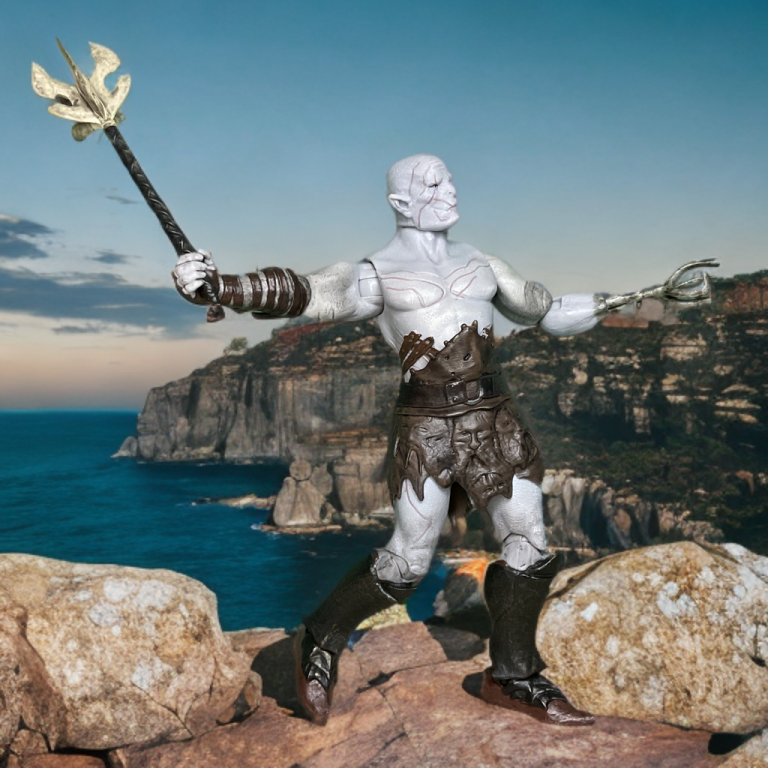
Peter Jackson’s The Hobbit film trilogy (2012-2014) transforms Azog from a long-dead historical footnote into a living, breathing primary antagonist, dubbed “the Defiler” or “the Pale Orc.”
Recommended reading: Who is Ajani Goldmane?
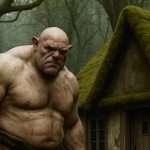
Portrayed by Manu Bennett through motion capture, Azog is depicted as a massive, pale-skinned orc with piercing blue eyes, intricate scar-like tattoos across his body, and a prosthetic left arm ending in a spike—later upgraded to blades or a flail. His appearance sets him apart from other orcs, emphasizing his status as a superior, Gundabad-bred warrior in service to Sauron.
In the films, Azog’s backstory begins similarly: In a flashback in An Unexpected Journey (2012), he beheads Thrór during the Battle of Azanulbizar, but instead of being killed by Dáin, he loses his arm to a vengeful Thorin Oakenshield and is presumed dead—only to survive and harbor a deep grudge. Revived and commanding a pack of warg-riding hunter orcs, Azog pursues Thorin and his company throughout their quest to reclaim Erebor. He first appears hunting them after they escape the goblin tunnels, leading to a dramatic confrontation on a cliff where Bilbo Baggins saves Thorin, and the Great Eagles intervene.
In The Desolation of Smaug (2013), Azog tracks the dwarves to Beorn’s house but is forced to retreat. Summoned to Dol Guldur by Sauron (revealed as the Necromancer), he is given command of an orc army, though he delegates the hunt to his son Bolg to focus on Sauron’s war preparations. He briefly clashes with Gandalf during the wizard’s investigation of Dol Guldur.

The trilogy culminates in The Battle of the Five Armies (2014), where Azog leads a massive orc force to Erebor, using were-worms for tunneling and signal flags for battlefield command. He orchestrates attacks on Dale and the dwarves, kills Thorin’s nephew Fíli, and engages Thorin in a personal duel on Ravenhill. In a tense fight on a frozen river, Azog mortally wounds Thorin but is ultimately slain when Thorin stabs him through the chest with Orcrist, drowning him under the ice. Azog’s role amplifies themes of personal revenge, tying him directly to Sauron’s rising threat and making him a foil to Thorin’s heroism.
Key Differences and Adaptations
The most striking difference is Azog’s fate: In Tolkien’s books, he dies definitively at Azanulbizar, beheaded by Dáin, whereas the films allow him to survive, shifting the arm-severing to Thorin to create a direct rivalry. This change provides the trilogy with a consistent villain, as the book lacks a singular orc antagonist beyond the brief Great Goblin and Bolg at the final battle. Jackson’s version also emphasizes Azog’s physical prowess and cunning, portraying him as Sauron’s champion, which is not explicit in the lore. His pale, scarred design draws from concept art and practical effects, evolving through production to become more imposing.
These adaptations serve the demands of a blockbuster trilogy, adding action, continuity, and emotional stakes, but they diverge from Tolkien’s more subdued, historical tone. Fans debate the changes—some appreciate the added depth, while purists prefer the original’s restraint. Ultimately, Azog exemplifies how adaptations can breathe new life into minor characters, bridging Tolkien’s rich world-building with modern cinematic storytelling.
 English
  Deutsch
  Français
  Português do Brasil
  日本語
日本語  Español
  English (Australia)