

Webstor MOTU Origins Cartoon Collection Review & Cartoon History
In the sprawling tapestry of Eternia, where muscle-bound heroes clash with skull-faced tyrants and a menagerie of beastly warriors, few characters capture the essence of sneaky villainy quite like Webstor. This blue-skinned, multi-eyed master of escape isn’t the loudest or most powerful foe in Skeletor’s roster, but his quiet cunning, arachnid agility, and that unforgettable grappling hook backpack have made him a standout since his 1984 debut.
Since my blog launched with a focus on fantasy action figures in July 2025, I missed out on covering many of the Filmation-inspired Cartoon Collection characters in real time. I’m making up for that now. While I’ve enjoyed reviewing the 200x Cartoon Collection figures, I’ve always felt a stronger personal love, attraction, and affinity for the Filmation versions—the designs and aesthetic I grew up with. Mattel’s Masters of the Universe Origins line has done an admirable job bridging vintage nostalgia with modern playability, and the Cartoon Collection version of Webstor—often called the “Filmation version” in collector circles for its direct nod to the animated series—stands as one of its most faithful and fun releases.
This article isn’t just a quick unboxing or surface-level review. It’s a comprehensive, evergreen deep dive: the figure’s design and play features, Webstor’s roots in the vintage toy line, his memorable (if underutilized) appearances in the early 1980s cartoons, his personality quirks, his enduring partnership with Kobra Khan, his expanded role across the comics, and the broader lore that makes him far more than just “the spider guy.” Whether you’re a longtime fan dusting off your vintage collection or a newer enthusiast discovering MOTU through Origins, this should serve as your go-to reference for years to come. Let’s climb the walls and unravel the web.
The Vintage Roots: From Black Widow Concept to Iconic 1984 Figure
Webstor’s story begins in the creative development phase of the Masters of the Universe toy line. Originally designed under the working title “Black Widow,” he was released in 1984 as part of a wave that brought more specialized, animal-inspired villains into Skeletor’s ranks. Mattel packaged him boldly as the “Evil Master of Escape,” complete with a backpack housing a long wire/rope and grappling hook. This was no mere accessory—the mechanism allowed the figure to slide along the wire when hooked to a surface, delivering a genuine climbing action feature that delighted children and differentiated him immediately from bulkier, less agile warriors.
Visually striking, the vintage figure featured a dark blue body offset by vibrant orange accents on the belt and armor, a prominent black widow spider emblem on the chest, clawed feet for gripping, and a head sculpt boasting multiple eyes and a toothy, menacing grin. His orange laser pistol completed the kit, blending the role of stealthy infiltrator with capable combatant. The design perfectly embodied MOTU’s signature fusion of barbarian fantasy and sci-fi toyetic excitement, making him pop on store shelves and in bedroom battles alike.
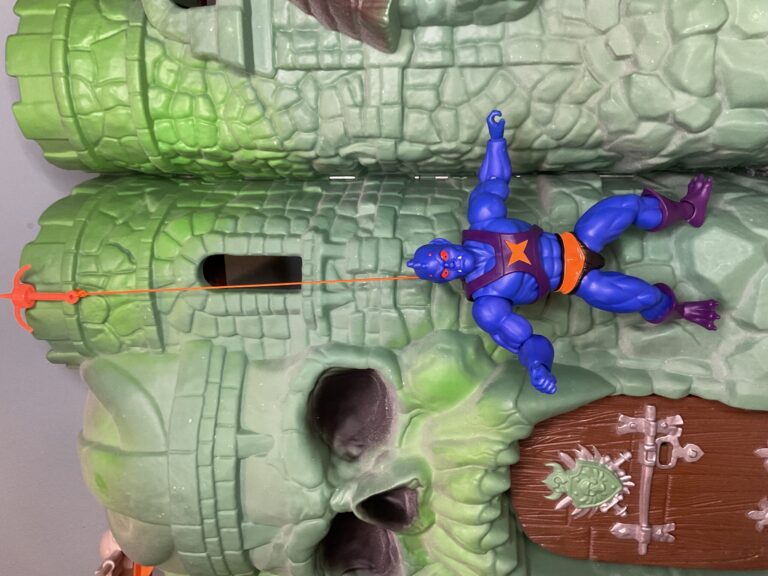
Beyond aesthetics, Webstor represented an important evolution in the line. Early waves emphasized raw power through characters like Beast Man and Trap Jaw. Webstor, alongside figures such as Kobra Khan and Clawful, introduced specialized skills—stealth, precision, and escape artistry—that encouraged more narrative-driven play. Children could imagine daring palace heists, narrow getaways from Castle Grayskull, or coordinated villain team-ups. His packaging and commercials reinforced the “master of escape” identity, sparking creativity where He-Man had to rely on wits as much as strength. Even today, the vintage Webstor holds strong nostalgic and resale appeal, proving that a clever gimmick paired with a memorable silhouette can create a lasting icon. He remains a favorite for customizers and completists who appreciate how he expanded the possibilities of Eternian adventures.
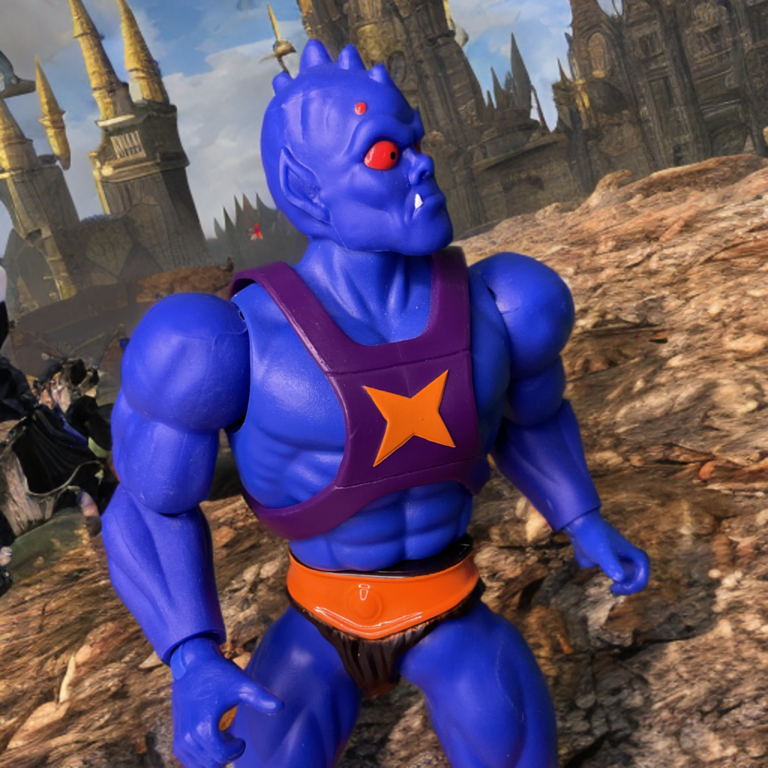
MOTU Origins Cartoon Collection Webstor Figure
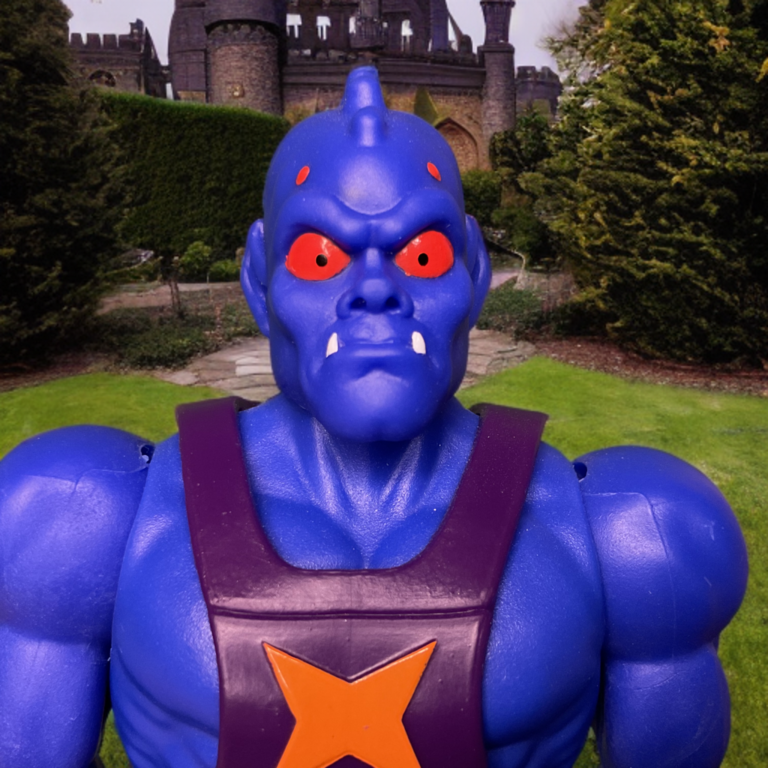
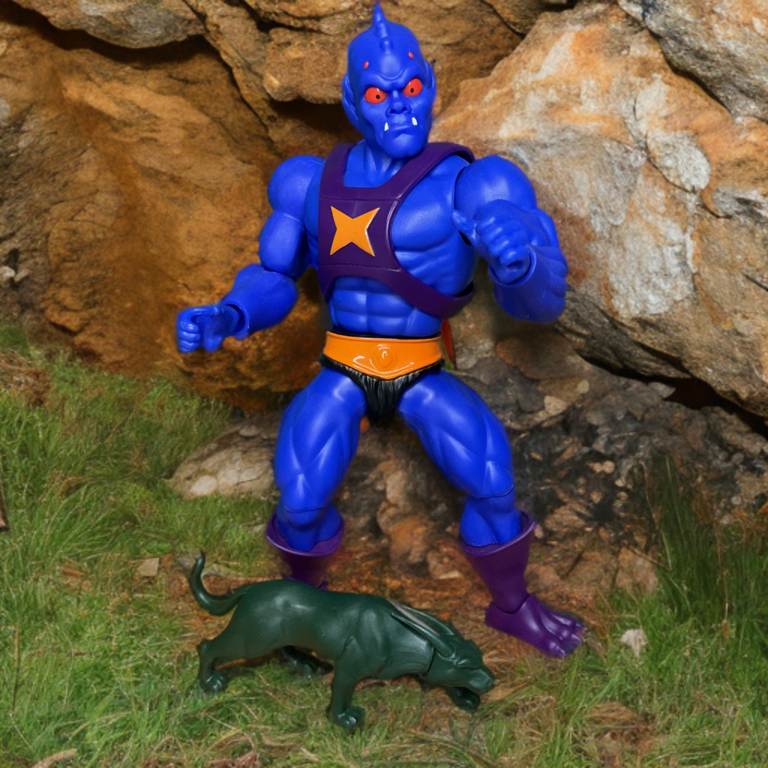
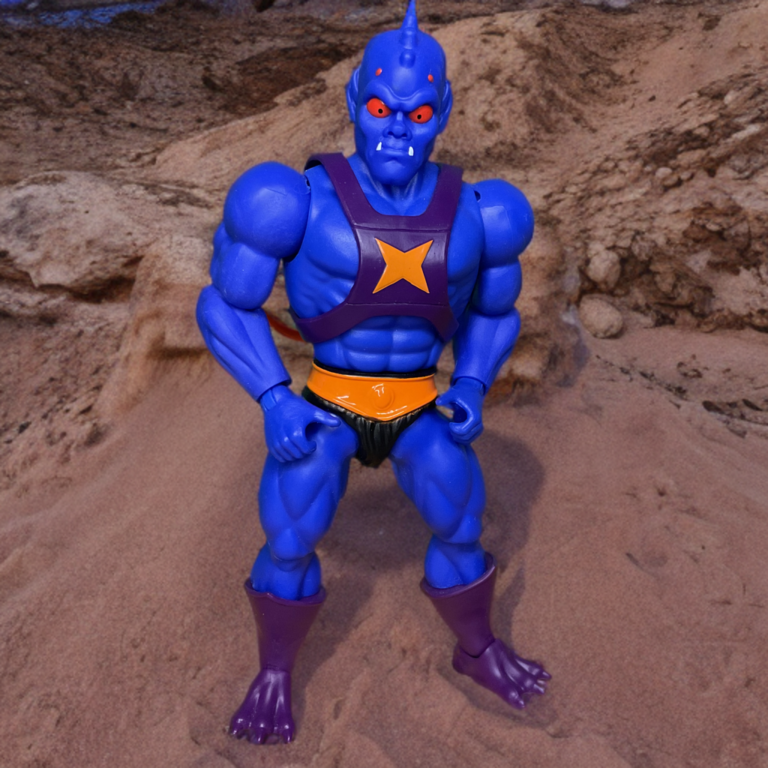
Mattel’s Origins line has successfully recaptured the chunky, classic feel of the vintage toys while incorporating modern engineering for better articulation and durability. The Cartoon Collection Webstor specifically channels the Filmation animated series, offering a screen-accurate interpretation that resonates deeply with fans of that era. Measuring 5.5 inches tall with approximately 16 points of articulation—including swivel/hinge ankles, calves, knees, ball-jointed hips, swivel waist, swivel/hinge shoulders, elbows, wrists, and a double ball-jointed head—the figure provides excellent posability for dynamic displays and action poses.
The sculpt and color applications are highlights. Rich dark blue skin contrasts beautifully with bright orange belt and accents, while the glossy black widow emblem on the chest armor stands out under display lighting. His legs are straighter and more proportionate to the cartoon model, giving a sleeker silhouette than the standard bulkier Origins buck. The head sculpt captures the animated version’s slightly less monstrous, more expressive humanoid-spider appearance, complete with a pug nose and that signature toothy smirk. The removable harness/backpack includes glossy detailing and practical hooks for the rope, supporting a reliable grappling mechanism that winds back smoothly—finally realizing the vintage promise with consistency.
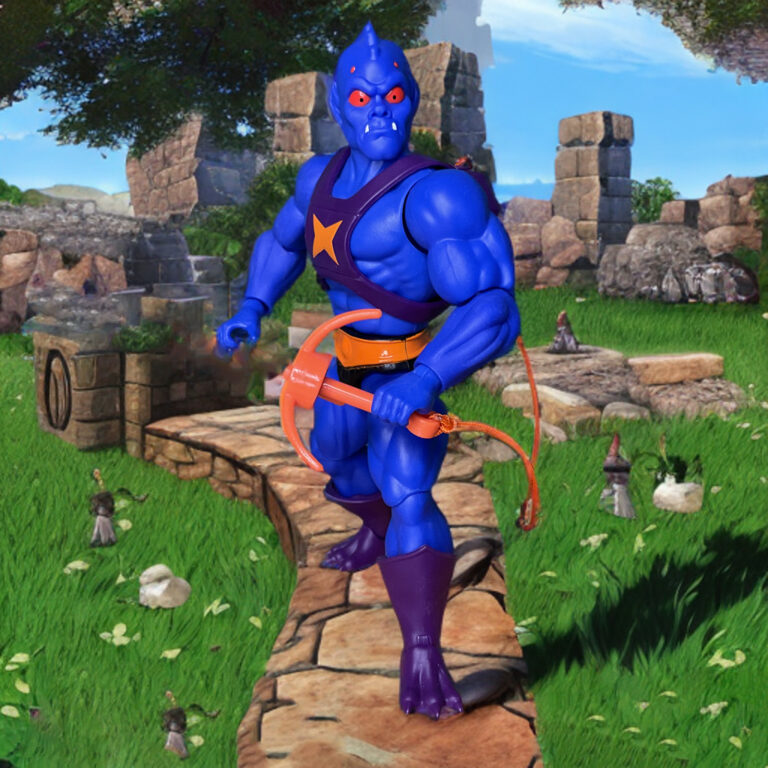
Accessories add storytelling depth. He comes with the classic orange laser rifle (a sturdy, updated version that feels solid in hand) and the episode-specific Grimalkin Statue from “The Cat and the Spider,” a thoughtful inclusion that ties the toy directly to the cartoon. A mini-comic expands the lore in classic MOTU fashion. In hand or on the shelf, Webstor excels at sneaky wall-crawling stances, dramatic escapes, tense ambushes, or team poses with other villains. Collectors consistently praise the crisp paint apps, joint quality, and overall premium feel, though some note occasional string management challenges with knots or slippage—a minor trade-off for such an engaging feature.
Compared to the standard Origins Webstor or Classics releases, this Filmation-inspired edition shines for its fidelity to the 1980s animation. It integrates seamlessly with other Cartoon Collection figures, enabling fans to recreate specific episodes or build expansive, lore-accurate displays. In an age when many toy lines prioritize extreme articulation at the expense of character charm, this release strikes an ideal balance: chunky enough for that authentic MOTU vibe, yet poseable enough for modern collectors. For those with a personal connection to the Filmation aesthetic, it feels like a direct link to childhood viewing sessions.
Personality Quirks: Sly, Sarcastic, and Smarter Than the Average Henchman
Webstor’s enduring appeal stems from a distinctive personality that sets him apart from louder, more chaotic villains. He embodies quiet competence, dry wit, and a preference for strategy over brute force. Voiced by John Erwin in the cartoon, his deadpan retorts to Skeletor’s tirades reveal a self-assured intelligence shared by several second-season additions. He operates as a master thief and infiltrator—lurking in shadows, scaling obstacles undetected, striking opportunistically, and slipping away before opposition can fully mobilize.
This cunning nature extends into broader media. Expanded lore, particularly the UK comics, develops him into a skilled mathematician, strategist, puzzle-solver, and technical expert capable of designing sophisticated traps or forming temporary alliances when logic demands it. He demonstrates respect for worthy intellects and harbors ambitions of rising higher in the evil hierarchy, suggesting a nuanced villain who is not irredeemably malicious but driven by calculation and personal code. His arachnid instincts add a primal, territorial edge, yet he balances them with humanoid reasoning, creating a compelling mix that makes him versatile for storytelling.
These quirks reward imagination. Webstor is the thinker plotting in the background, the escape artist defying capture, and the sarcastic observer cutting through ego. Whether posed in a diorama, featured in fan fiction, or displayed alongside his allies, he invites creative expansion and stands as proof that brains can be as formidable as brawn in the world of Eternia.
Webstor’s Role in the Early 1980s Filmation Cartoon
Webstor made a memorable entrance in the first produced episode of Season 2, “The Cat and the Spider” (1984). Following Prince Adam and Melaktha’s discovery of the powerful Grimalkin Statue in the Temple of the Cat Folk, Skeletor summons Webstor to claim it. The episode immediately showcases his talents: effortless infiltration of the Royal Palace, witty banter with Skeletor, and agile navigation of a chaotic multi-faction chase involving the cat emissary Kittrina and the heroes. His customized spider-legged Wind Raider adds a fun visual flourish to the adventure, while the story explores themes of cultural respect and judging by actions rather than appearances.
Subsequent appearances frequently paired him with Kobra Khan, allowing the duo to shine in independent schemes such as “Disappearing Dragons,” where they drive the plot without direct oversight from Skeletor. “Journey to Stone City” grants Webstor additional screen time during a jungle mission alongside Evil-Lyn. He appears or is referenced in further episodes and crosses into She-Ra territory (notably “Battle for Bright Moon”), repeatedly demonstrating his value as a stealth specialist who can breach even heavily guarded locations.
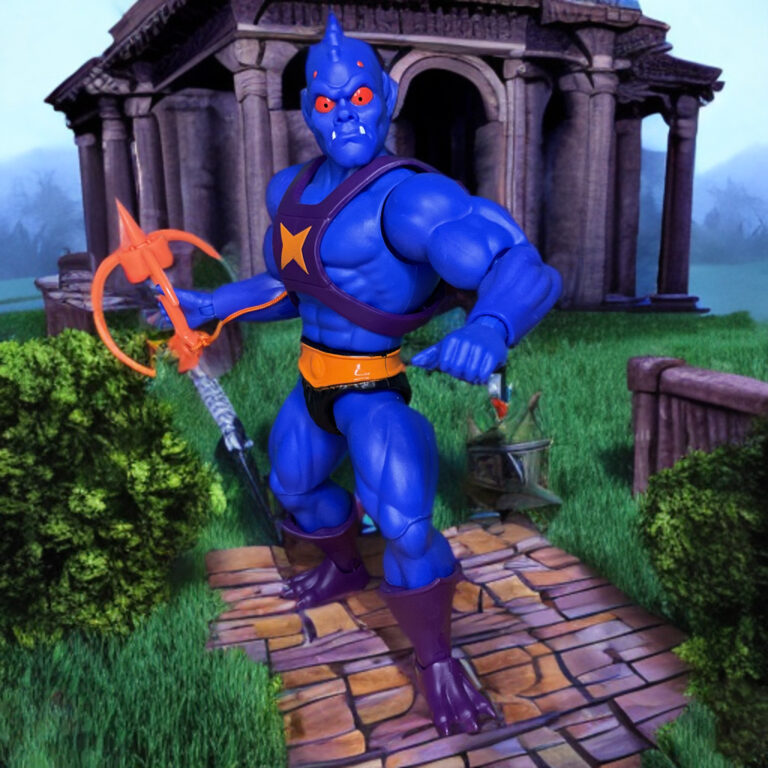
Though never a season-long main antagonist, Webstor enriched the series by introducing variety—stealth missions, chases, and clever escapes—preventing the villains from feeling repetitive. The Filmation animation beautifully captured his lithe movements and expressive face, making the Origins Cartoon Collection figure an ideal on-shelf tribute to those classic episodes.
His Enduring Partnership with Kobra Khan: The Arachnid-Reptilian Duo
Few villainous relationships in MOTU are as consistent and effective as Webstor’s partnership with Kobra Khan. The blue arachnid and venomous reptilian complement each other perfectly: Webstor’s stealth, vertical mobility, climbing prowess, and escape expertise mesh seamlessly with Kobra Khan’s area-denial sleeping gas, more direct combat style, and occasional leadership initiative. Together they form a reliable, competent unit capable of operating with a surprising degree of independence from Skeletor—rare among the often-bickering or bumbling evil forces.
In the Filmation cartoon, this duo dynamic becomes prominent after Webstor’s introduction. Episodes like “Disappearing Dragons” position them as the primary antagonists in a self-contained plot, with Kobra Khan often edging into a leadership role while Webstor contributes tactical execution and more screen time in later team-ups such as “Journey to Stone City.”
Their synergy enables multi-pronged attacks—Webstor scaling walls or infiltrating from above while Khan controls the ground or deploys chemical advantages. This pairing adds a layer of coordinated threat to stories, making their schemes feel more threatening and professional. The relationship carries into She-Ra crossovers, highlighting its narrative usefulness across the shared universe.
The minicomics reinforce the bond. Rock People to the Rescue! features them as the central antagonistic force, executing plans that highlight both characters’ specialized skills. Their collaboration comes across as a budding professional partnership rather than forced teamwork. In the UK London Editions comics, their joint appearances benefit from the series’ deeper characterization. Webstor’s strategic planning and technical mind enhance Kobra Khan’s more aggressive approach, creating an effective support team for larger multi-villain arcs. They function less like fractious underlings (compare to Two Bad’s bickering heads) and more like dependable colleagues who understand and cover each other’s weaknesses.
Later continuities, including Classics bios, portray them as distinct “monster” archetypes within Skeletor’s army—ancient Arachna survivor meeting reptilian warrior—symbolizing how the evil leader recruits diverse threats from Eternia’s history. Fans celebrate this duo enthusiastically through customs, dioramas, and stories, often posing the Origins Webstor with Kobra Khan figures to recreate classic moments or invent new schemes. The partnership works so well because of the contrast and synergy: intellect and agility meeting durability and chemical warfare. It adds stability and menace, making both characters more memorable. For collectors, it’s one of the most satisfying villain friendships in MOTU, ideal for dynamic shelf displays and imaginative play that extends far beyond the source material.
Webstor in the Comics: Strategic Depth, Traps, and Expanded Lore
While the toys and cartoon laid Webstor’s foundation as a stealthy operative, the comics—particularly the minicomics and UK London Editions series—elevated him into a sophisticated strategist and intellectual force.
His three primary minicomic appearances keep him aligned with the cartoon portrayal but deliver engaging action. In The Clash of Arms, he participates in a large-scale villain assault with Clawful, Whiplash, Jitsu, and others, only to be comically dispatched early by Stridor—illustrating that agility has limits against overwhelming power. Rock People to the Rescue! spotlights him alongside Kobra Khan as the main antagonists, emphasizing palace infiltration and their effective teamwork. Eye of the Storm (packed with Snout Spout) casts him in a supporting role during Skeletor’s weather-manipulation plot, where his climbing and scouting abilities aid the chaotic scheme. These short tales prioritize fun, accessible hero-villain conflict while reinforcing his utility and partnership dynamics.
The UK London Editions comics (72 fortnightly issues from 1986–1988, plus spin-off magazines) provide Webstor’s richest material. Known for in-depth character exploration under Brian Clarke and featuring Scrollos as an all-knowing narrator for origin segments, these stories treat secondary villains with respect and nuance.
In Issue #21 (“The Perfect Trap”), Skeletor tasks Webstor with building the ultimate inescapable prison for He-Man. Drawing on his mathematical and engineering prowess, Webstor constructs an elaborate device but—true to his master-of-escape nature—intentionally includes a logical flaw or hidden solution. When He-Man deduces it, Webstor responds with dignity rather than fury, respecting the hero’s intellect and allowing an honorable departure. This tale cements him as a tactical genius who values cleverness and maintains a personal code even in service to evil.
Issue #22 (“Puzzles of Peril”) builds directly on this foundation. Skeletor dispatches Webstor to investigate a mysterious alien ship. He-Man arrives for the same purpose, leading to a tense truce. The vessel presents a series of complex logic puzzles, mechanical challenges, and intelligence tests set by invaders evaluating potential conquest targets. Collaborating, Webstor and He-Man overcome the gauntlet through combined brainpower. Impressed, the aliens depart. He-Man offers Webstor redemption and a place among the heroes; he declines but candidly reveals ambitions to eventually supplant Skeletor and challenge He-Man strategically. These two issues form a mini-arc that grants Webstor profound depth—technical expertise, puzzle-solving mastery, respect for adversaries, and calculated long-term goals. It ranks among the strongest characterizations of any supporting MOTU villain in print.
Webstor appears sporadically throughout the UK run, often deploying his climbing skills for reconnaissance, sabotage, or escapes during epic conflicts involving Viper Tower battles or villain faction team-ups. His interactions with Kobra Khan and others benefit from the series’ richer world-building, portraying him as one of Skeletor’s more reliable and intellectually capable operatives—ambitious yet not blindly obedient. Later issues blended original content with adapted German stories, keeping him active in the expanding Eternian saga.
Subsequent comics continued this trajectory. The Masters of the Universe Classics line’s bios established him as Araneus, son of Raknus—one of the last Arachna spider-warriors driven underground by the Snake Men and awakened in modern times. Retaining ancestral knowledge as a mathematician and escape artist, this canon ties together toy, cartoon, and comic elements into a cohesive “ultimate” backstory. In Dark Horse’s Revelation prequel comics, he makes brief but fitting battle-hardened cameos (such as Issue #2), fitting the darker tone while preserving core traits. Additional modern entries like Forge of Destiny include him in expanded casts, demonstrating his ongoing relevance.
Across these printed adventures, Webstor evolves from a gimmick-driven supporting player into a multifaceted character whose intellect, honor, and ambition add genuine layers to Eternia’s conflicts. The comics reward longtime fans by exploring “what if” scenarios—Webstor as trap architect, puzzle master, or reluctant collaborator—providing depth that complements his physical agility and partnership with Kobra Khan. For Origins owners, these tales offer endless inspiration for displays, custom stories, or headcanon, turning a single figure into a gateway for broader lore exploration.
Broader Legacy and Why Webstor Endures
Webstor’s staying power lies in his versatility across media. He fits stealth missions, coordinated villainy with Kobra Khan, grand strategic plots, or solo infiltrations with equal ease. The 2002 series amplified his monstrous Arachna side with a dedicated episode, while modern interpretations continue adapting his core traits. In the collector world, the Origins Cartoon Collection version is praised for evoking the Filmation spirit so many cherish, blending nostalgia with fresh playability.
He exemplifies why MOTU resonated: memorable designs, imaginative features like the grappling hook, and characters with enough depth to grow alongside fans. Whether scaling a custom diorama, recreating “The Cat and the Spider,” pondering UK comic traps, or teaming with Kobra Khan on the shelf, Webstor continues to inspire. In a franchise packed with larger-than-life icons, this quiet arachnid proves that the most effective threats are sometimes the ones you never see coming—until their web is already tightening.
The Master of Escape: Webstor Appearance Tracker
| Era / Media Type | Title / Episode Name | Role / Notes |
| Filmation Cartoon (1984) | The Cat and the Spider | Debut. Infiltrates the palace to steal the Grimalkin statue. |
| Filmation Cartoon (1984) | Disappearing Dragons | Partners with Kobra Khan to capture dragons. |
| Filmation Cartoon (1984) | Journey to Stone City | Missions with Evil-Lyn and Kobra Khan in the jungle. |
| Filmation Cartoon (1985) | The Good Shall Survive | Supporting role in Skeletor’s attempt to conquer Avion. |
| She-Ra (Filmation) (1985) | Battle for Bright Moon | Cameo during the multi-villain assault on Bright Moon. |
| Vintage Minicomic (1984) | The Clash of Arms | Joins a massive villain ambush against He-Man and Fisto. |
| Vintage Minicomic (1986) | Rock People to the Rescue! | Lead antagonist alongside Kobra Khan; captures the Rock People. |
| Vintage Minicomic (1986) | Eye of the Storm | Assists Skeletor’s weather-manipulation plot against Snout Spout. |
| UK London Editions (#21) | The Perfect Trap | Major Role. Webstor designs a “perfect” prison for He-Man. |
| UK London Editions (#22) | Puzzles of Peril | Major Role. Teams up with He-Man to solve alien logic puzzles. |
| UK London Editions (#30) | Eyes of the Serpent | Battles He-Man alongside Skeletor and Clawful. |
| MOTU 2002 Cartoon | The World Shall Shiver | Re-imagined as a more monstrous, arachnid-like creature. |
| Netflix Revelation (2021) | Reason and Blood | Brief appearance as part of the veteran “Evil Warriors.” |
| Modern Comic (2023) | Forge of Destiny #2 | Featured in the prequel lore for the Netflix continuity. |
Conclusion
From his 1984 vintage roots and Filmation cartoon escapades to his strategic brilliance in the comics, dynamic partnership with Kobra Khan, and the outstanding MOTU Origins Cartoon Collection release, Webstor has woven a rich and enduring legacy across toys, animation, and print. Revisiting these Filmation-inspired elements feels like returning home to the versions that first sparked imagination, and it’s rewarding to finally give a character like him the thorough exploration he deserves.
The Origins Cartoon Collection Webstor succeeds as both a loving tribute and a highly playable modern toy, full of potential for new stories drawn from decades of lore. Here’s to more sneaky infiltrations, perfect traps, clever puzzle-solving, dynamic villain duos, and timeless MOTU nostalgia. By the power of Grayskull—and a well-aimed grappling hook—may your collections climb ever higher and your Eternian adventures remain endlessly entertaining.
 English
  Deutsch
  Français
  Português do Brasil
  日本語
日本語  Español
  English (Australia)