

The Ultimate Voltes V GX-31SP 50th Anniversary Review & Bio
Electrifying Beginnings: The Birth of a Super Robot Legend
In the late 1970s, Japanese animation was buzzing with giant robots battling cosmic threats, and few captured the imagination quite like the one that combined five vehicles into a towering defender of Earth. Produced by Toei Company and animated by Nippon Sunrise, this series hit TV Asahi screens in June, 1977. It formed the middle chapter of what fans dub the Robot Romance Trilogy, sandwiched between its predecessor about a combiner robot facing off against an empire and its successor involving intergalactic romance amid mecha clashes.
The brainchild of director Tadao Nagahama and producer Yoshiyuki Tomino, the show drew from earlier concepts that evolved from a potential sequel to another combiner series. Initially toyed with under names like Granbuffer Ace, it settled into its electromagnetic identity, blending high-stakes action with family drama. Sponsors from the toy world, including Popy, ensured that the on-screen machines would leap into kids’ hands as diecast wonders. The narrative pulled threads from dramatic tales of parental quests, infusing robot fights with emotional depth that set it apart from pure monster-bashing formats.
Broadcast amid a wave of super robot shows, it quickly became a staple, with its opening theme belted out by Mitsuko Horie and company, and the ending crooned by Ichiro Mizuki.
Article Directory
- 1. Electrifying Beginnings: The Birth of a Legend
- 2. Invasion from the Stars: Core Story
- 3. Profiles of Earth’s Defenders
- 4. The Animated Series Voltes V
- 5. Global Echoes: Cultural Impact
- 6. Forged in Metal: Evolution of Chogokin
- 7. Crafted for Glory: Design Details
- 8. Merge and Conquer: Transformation
- 9. Strike a Pose: Articulation
- 10. Volting Verdict: A Timeless Tribute
Beyond Japan, it sparked fervor in places like the Philippines, where it aired in 1978 and embedded itself in pop culture, even influencing local adaptations decades later. In Indonesia and Cuba, dubbed versions kept the robot’s volts pulsing through international airwaves. North American audiences got a taste through licensed releases, while video games like the Super Robot Wars series kept the machine marching in digital battles since the 1990s.
This wasn’t just another robot romp; it wove in social commentary on class divides through its alien invaders’ society, where horned elites lorded over the hornless masses. The human pilots, a mix of siblings and allies, brought relatable tensions—sibling rivalries, outsider integrations, and generational conflicts—into the cockpit. As episodes unfolded, viewers weren’t just cheering for laser blasts; they were invested in the pilots’ personal arcs, from motocross champs to robotics whiz kids. The show’s legacy endures, with toys evolving from simple diecasts to intricate collector pieces, proving that some robots never rust.
Invasion from the Stars: Unpacking the Core Story
The tale kicks off with Earth under siege from the Boazan Empire, a distant planet where technology mirrors our own but society is rigidly stratified. Emperor Zu Zambajil, a tyrant fixated on conquest, dispatches his nephew Prince Heinel to lead the charge. Boazanian forces arrive in massive flying saucers, unleashing bio-mechanical Beast Knights—hulking monstrosities blending organic ferocity with mechanical might—to crush humanity’s defenses.
Enter Earth’s counterstrike: a super-electromagnetic robot designed by the brilliant Dr. Kentaro Goh, who vanishes mysteriously before the invasion ramps up.
His wife, Mitsuyo Goh, and colleague Professor Hamaguchi rally with Commander Oka to activate the machine from Big Falcon base. Five young pilots are chosen: Kentaro’s sons Kenichi, Daijiro, and Hiyoshi, plus Ippei Mine and Megumi Oka. They helm five distinct vehicles that merge into the ultimate defender, repelling Beast Knights week after week with escalating firepower.

As battles rage, secrets unravel. Dr. Kentaro isn’t just a missing scientist; he’s Prince La Gour, a Boazanian noble born without horns, destined for slavery in a system that reveres horned aristocrats. He led a rebellion against Zambajil’s oppressive rule, fleeing to Earth with rebels like General Dange. Marrying Mitsuyo, he fathered the Goh boys while secretly building the robot as a safeguard. Captured and returned to Boazan, his fate becomes the pilots’ driving quest, blending family reunion with planetary defense.
Heinel, exiled for his half-hornless heritage, sees the conquest as redemption, aided by scheming subordinates like the cunning Zuhl and the brutish General Gururu. Betrayals simmer within Boazan ranks—Ri Katherine’s unrequited affections for Heinel, Jangal’s ambitions—adding layers to the villainy. Earth’s side isn’t without strife; Ippei’s lone-wolf attitude clashes with team dynamics, while Megumi’s ninja heritage brings stealth to the fray.
Climactic showdowns reveal La Gour’s imprisonment and the rebels’ Solar Bird spaceship, built to liberate Boazan. The pilots storm the empire, facing off in epic melees that culminate in Heinel’s tragic realization of his uncle’s manipulations. Peace dawns as the hornless rise, but not without sacrifices that underscore the costs of war. This narrative arc, rich with themes of identity and revolution, elevated the series beyond typical robot clashes, making each volt-in sequence a symbol of unity against division.
Pilots at the Helm: Profiles of Earth’s Defenders
The heart of the defense lies in its human operators, a quintet whose diverse backgrounds fuel both cockpit synergy and occasional sparks. Leading the charge is the eldest Goh sibling, a sharpshooter with a need for speed on two wheels. His steady hand and tactical mind make him the natural commander, often calling the shots in mid-battle scrums.
Next comes the rodeo veteran, an orphan whose cowboy grit translates to handling the arm components with flair. He’s the wildcard, bringing raw power and quick reflexes honed from lassoing steers, though his independent streak sometimes bucks against group strategies.
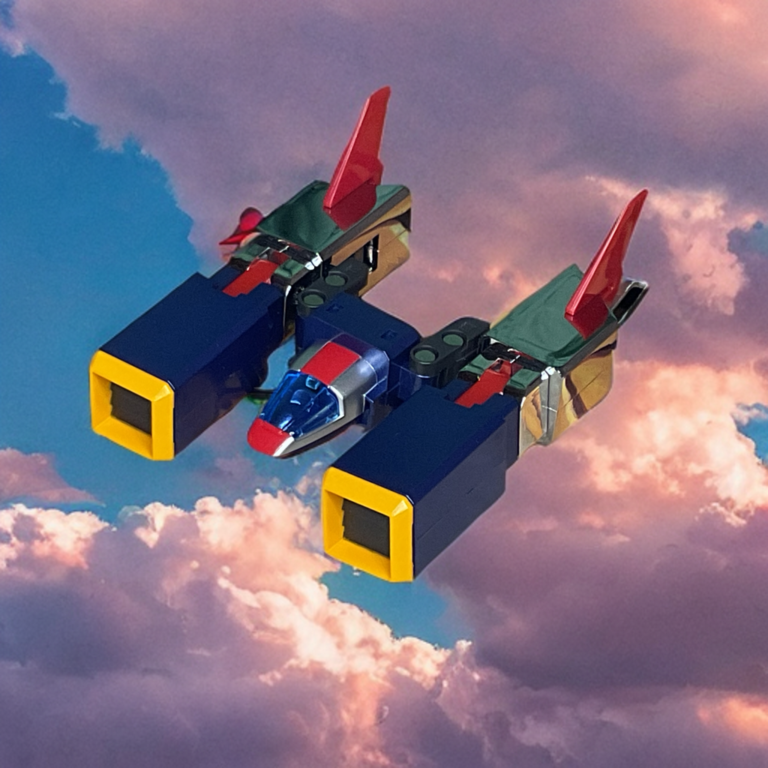
| Vehicle Name | Pilot | Forms (Part of Voltes V) | Primary Color Scheme | Special Features/Role |
|---|---|---|---|---|
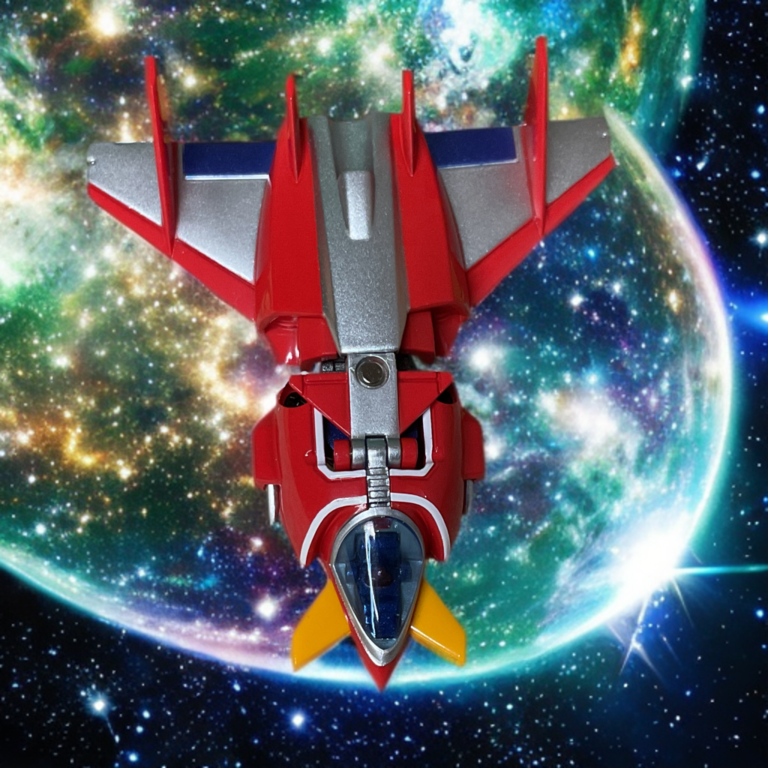
| Volt Cruiser | Kenichi Goh | Head | Red with white and blue accents | Sleek jet fighter; provides leadership and tactical oversight; transforms by folding wings to form helmet and visor. |
| Volt Bomber | Ippei Mine | Arms | Blue with red and white accents | Wide-winged bomber; delivers raw power and quick reflexes; magnetic-assisted arm attachment for punching/chain attacks. |
| Volt Panzer | Daijiro Goh | Body and Chest | Blue with red accents | Armored tank with treads and cannon; core stability and defense; houses electromagnetic reactor for overall power. |
| Volt Frigate | Hiyoshi Goh | Legs | Green with yellow and red accents | Submarine-like vessel; extends for height and mobility; supports inventions and precision maneuvers in battles. |
| Volt Lander | Megumi Oka | Feet | Blue with red and yellow accents | Wheeled lander with drill stabilizers; grounds the robot for balance; adds agility and espionage elements from ninja heritage. |
| Mecha Hawk (Support Vehicle) | Various (often General Dange or autonomous) | N/A (Aerial Support) | Red with white accents | Mechanical eagle fighter; provides reconnaissance, aerial attacks, and intel; not part of main combination but aids in missions. |
This lineup ensures balanced capabilities, with each vehicle contributing unique weapons and maneuvers before the grand merge.
The middle Goh brother specializes in defense, his burly frame and strategic thinking perfect for the core body section. Trained in close combat, he ensures the combined form withstands punishing hits, turning potential defeats into stalemates ripe for counterattacks.
The youngest Goh is a pint-sized prodigy, tinkering with gadgets and piloting the leg sections with precision that belies his age. His inventions often tip the scales, from enhanced scanners to emergency repairs mid-fight.
Rounding out the team is the commander’s daughter, a skilled operative whose agility shines in the foot modules. Her background in covert arts adds espionage elements, sneaking through enemy lines or delivering pinpoint strikes.
These pilots don’t just drive machines; they embody resilience, growing from reluctant warriors into a cohesive unit. Their interactions—banter over comms, training montages—humanize the high-tech havoc, reminding viewers that behind every laser sword swing is a team forging bonds under fire.
The Boazan Empire: Antagonists with Depth
On the flip side, the invaders aren’t faceless foes; their society pulses with intrigue. At the apex sits Emperor Zu Zambajil, a despot whose horned privilege blinds him to his people’s suffering. His decrees fuel the war machine, but paranoia breeds internal rifts.
Prince Heinel, the frontline commander, wrestles with his tainted bloodline, driving ruthless tactics to prove his worth. His aides form a treacherous trio: the loyal yet lovelorn Ri Katherine, the scheming scientist Zuhl, and the ambitious Jangal, each vying for favor amid backstabs.
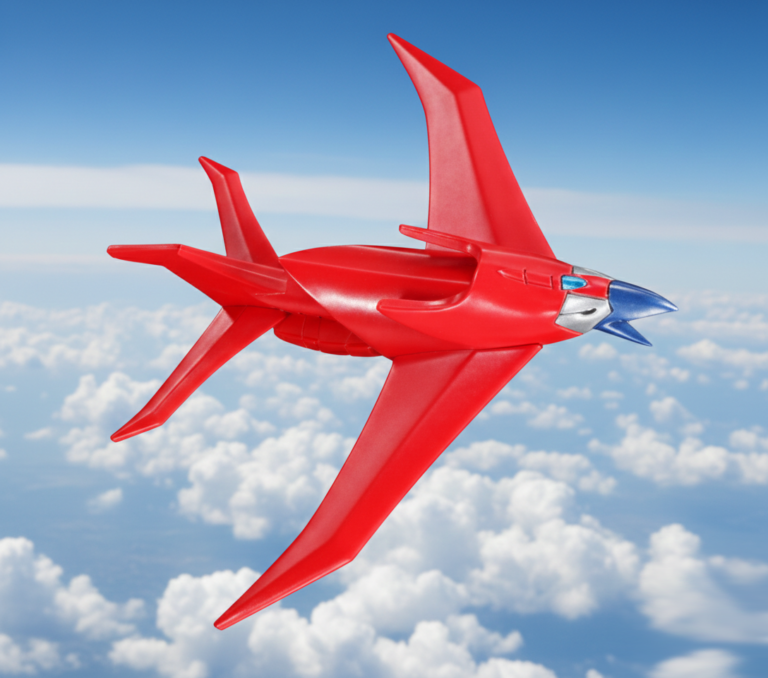
Generals like Do Bergan and Gururu embody brute force, deploying Beast Knights engineered for destruction—creatures with tentacles, drills, or energy beams that test the defenders’ limits. Inspector Duke Zaki lurks as an enforcer, sniffing out disloyalty.
Yet, cracks show through rebels like General Dange and Doir, who aid the Earth side with intel and tech, including the Mecha Hawk for aerial support. This faction highlights the empire’s rot, turning villains into tragic figures ensnared by systemic injustice. Their arcs add nuance, making victories bittersweet as pilots confront the humanity in their enemies.
The Animated Series Voltes V
The animated series Voltes V (full Japanese title: Chōdenji Mashīn Borutesu Faibu, or Super Electromagnetic Machine Voltes V) is a classic super robot anime that premiered on TV Asahi in Japan from June 4, 1977, to March 25, 1978. It consists of exactly 40 episodes, each running approximately 24 minutes. Produced by Toei Company and animated by Nippon Sunrise (now Bandai Namco Filmworks), it was directed by Tadao Nagahama with production involvement from Yoshiyuki Tomino. The series forms the second installment in the Robot Romance Trilogy, following Combattler V and preceding Tōshō Daimos.
It aired weekly on Saturdays, blending high-energy mecha battles with emotional family drama, themes of rebellion against oppression, and revelations about identity and heritage. The story follows five young pilots defending Earth from the invading Boazanian Empire using five electromagnetic vehicles that combine into the mighty robot Voltes V.
The series gained massive international popularity, especially in the Philippines, where it aired starting in 1978 (with a notable ban in 1979 that amplified its cultural resonance). English-dubbed versions used names like Steve Armstrong (Kenichi Goh), Mark (Ippei Mine), Big Bert (Daijiro Goh), Little Jon (Hiyoshi Goh), and Jamie (Megumi Oka). Compilation films exist, such as a 1980 overseas release covering early episodes and the 1999 Philippine theatrical film Voltes V: The Liberation compiling the final arc (episodes 36–40).
Below is a comprehensive episode guide featuring the original Japanese air dates, Romanized titles, Japanese titles (in kanji/kana), and widely recognized English translations (drawn from official subs, dubs, and reliable sources like Anime News Network, JustWatch, and fan archives). Many episodes follow a “monster-of-the-week” structure with Beast Fighters, but the overarching plot builds toward revelations about the pilots’ father and the Boazanian civil war.
| Episode | Air Date | Japanese Title (Romaji) | Japanese Title (Original) | English Title (Common Translation) | Brief Summary |
|---|---|---|---|---|---|
| 1 | June 4, 1977 | Uchū kara no Shinryakusha | 宇宙からの侵略者 | Invaders from Outer Space | The Boazanian invasion begins; Prince Heinel leads the assault, and the Voltes team is assembled. |
| 2 | June 11, 1977 | Kutō e no Zenshin | 苦闘への前進 | Marching Into an Agonizing Battle | The pilots train and face their first major threat. |
| 3 | June 18, 1977 | Bohyō ga Oshieta Sakusen | 墓標が教えた作戦 | The Strategy Told from the Grave | A clue from the past reveals tactics against the invaders. |
| 4 | June 25, 1977 | Ma no Shadow Hissatsu Ken | 魔のシャドウ必殺剣 | The Devilish Shadow Sword Killing Technique | A deadly new Beast Fighter employs shadow-based attacks. |
| 5 | July 2, 1977 | Senkan Mikasa ga Kiki o Yobu | 戦艦三笠が危機を呼ぶ | Battleship Mikasa Causes a Crisis | Focuses on a deceptive enemy strategy involving a powerful battleship threat. |
| 6 | July 9, 1977 | Inanake! Aiba Eiffel | いななけ! 愛馬エイフル | Neigh! Beloved Horse Eiffel | Escalating battles and team bonding centered on a horse-related episode. |
| 7 | July 16, 1977 | (Title varies; often mid-series battle) | — | More Beast Fighter confrontations | More Beast Fighter confrontations. |
| 8 | July 23, 1977 | Chiteijō no Inbō | 地底城の陰謀 | A Conspiracy in the Underground Fortress | Intrigue deepens within the enemy ranks. |
| 9 | July 30, 1977 | (Personal developments episode) | — | Key developments in the pilots’ personal stories | Key developments in the pilots’ personal stories. |
| 10 | August 6, 1977 | Borutesu to Kesshō Dekinai | ボルテスと結合できない | Cannot Combine with Voltes | A crisis prevents combination; the team struggles. |
| 11 | August 13, 1977 | Fukkatsu Borutesu V | 復活ボルテスV | Revived Voltes V | The robot is restored for a comeback. |
| 12 | August 20, 1977 | Borutesu Kishi Kaisei | ボルテス起死回生 | Voltes Revived from the Dead / Voltes Resurrection | A desperate revival amid heavy losses. |
| 13 | August 27, 1977 | Chichi o Nerau Wana | 父を狙う罠 | The Trick of Father Aiming at the Earth | A trap targets the pilots’ mysterious father. |
| 14–35 | September 1977 – February 1978 | (Core mid-series episodes) | — | Mid-series monster-of-the-week phase | These form the core monster-of-the-week phase with escalating Beast Fighters, internal Boazanian betrayals, and gradual hints about Dr. Goh’s (Prince La Gour’s) past. Episodes introduce new weapons, alliances, and emotional stakes, including character backstories and rivalries. |
| 36 | Late February / March 1978 | (Final arc opener) | — | Final arc begins | The team prepares for a counteroffensive into space. |
| 37 | March 4, 1978 | (Journey intensifies episode) | — | Journey toward Boazan intensifies | Journey toward Boazan intensifies. |
| 38 | March 11, 1978 | Dai Uchū e Shutsugeki Seyo!! | 大宇宙へ出撃せよ!! | Commence Sortie into the Universe!! | The heroes launch into deep space. |
| 39 | March 18, 1978 | (Climactic build episode) | — | Climactic confrontations build | Climactic confrontations build. |
| 40 | March 25, 1978 | Kuzureyuku Jyaaku no Tō!! | 崩れゆく邪悪の塔!! | The Crumbling Tower of Evil!! | The series finale: resolution of the war, family revelations, and the fall of the oppressive regime. |
This table keeps the focus on official details from the 1977–1978 Japanese broadcast. Episodes 14–35 are summarized as a block since they follow a consistent pattern of weekly Beast Fighter battles and plot progression without major overarching title changes in most listings.
Here is a detailed episode guide for episodes 14–35 of the original Voltes V (Chōdenji Mashin Borutesu Faibu) anime series, covering the mid-series run from September 1977 to February 1978. This block consists of the core “monster-of-the-week” phase, where the Voltes Team repeatedly battles new Boazanian Beast Fighters (bio-mechanical monsters) deployed by Prince Heinel and his forces. Each episode typically features intense aerial/ground combat, Voltes V’s combination sequence, signature attacks like the Super Electromagnetic Yo-Yo or Chain Knuckle, and incremental plot progression—such as hints about Dr. Kentaro Goh’s (Prince La Gour’s) past, internal Boazanian scheming (e.g., betrayals by subordinates like Zuhl or Jangal), team dynamics, character backstories, and growing emotional stakes for the pilots.
Detailed individual summaries are not widely documented in English sources for every episode (many archives like IMDb list “[Add a plot]” or brief notes, while fan wikis and databases provide titles and key events). Below is a chart with the most accurate available information: episode number, air date, Japanese title (romaji and original), English title (common translation from reliable sources like Anime News Network and Akurasu Wiki), and a factual brief summary based on official episode content, avoiding speculation or non-canon elements.
| Episode | Air Date | Japanese Title (Romaji) | Japanese Title (Original) | English Title (Common) | Detailed Summary |
|---|---|---|---|---|---|
| 14 | September 3, 1977 | Chichi to Ko no Wana | 父と子の罠 | The Trap of Father and Child | A Beast Fighter sets a trap exploiting the pilots’ longing for their missing father, Dr. Kentaro Goh, forcing emotional confrontations and a desperate defense to protect Big Falcon base. |
| 15 | September 10, 1977 | Kōtei kara no Okurimono | 皇帝からの贈り物 | The Present from the Emperor | Emperor Zambajil sends a “gift” in the form of a powerful new Beast Fighter to aid Heinel, testing Voltes V’s limits while highlighting Boazanian imperial arrogance and internal rivalries. |
| 16 | September 17, 1977 | Falcon-jō Kaimetsu no Kiki | ファルコン城壊滅の危機 | The Crisis of Falcon’s Destruction | A direct assault threatens to destroy Big Falcon headquarters; the team must rally with new tactics and upgrades to repel the invaders and save their home base. |
| 17 | September 24, 1977 | (Beast Fighter battle episode) | — | Mid-series battle focus | Voltes V faces a cunning Beast Fighter using deceptive maneuvers; emphasis on team coordination and emerging hints about Boazanian society’s class divides. |
| 18 | October 1, 1977 | (Personal/ally development) | — | Deepening alliances and rivalries | Character-focused episode with backstory elements for supporting cast; a Beast Fighter attack coincides with internal doubts and strengthened resolve among the pilots. |
| 19 | October 8, 1977 | (Beast Fighter assault) | — | Escalating enemy tactics | A new monster employs advanced energy weapons; Voltes V counters with electromagnetic enhancements, building tension toward revelations about the pilots’ heritage. |
| 20 | October 15, 1977 | (Mid-arc conflict) | — | Betrayal and counterattack | Boazanian schemers like Zuhl plot against Heinel; a fierce battle ensues as Voltes V defends against a multi-pronged invasion force. |
| 21 | October 22, 1977 | (Weapon upgrade focus) | — | New powers unlocked | The team tests experimental Super Electromagnetic upgrades amid a brutal Beast Fighter onslaught, showcasing improved attacks like enhanced laser swords. |
| 22 | October 29, 1977 | (Emotional stakes rise) | — | Family bonds tested | A Beast Fighter targets the pilots’ personal weaknesses; deeper emotional moments highlight sibling dynamics and loyalty to their missing father. |
| 23 | November 5, 1977 | Koinu yo, Ashita e Aruke! | 子犬よ、明日へ歩け! | Puppy, Walk into Tomorrow! | A lighter yet poignant episode involving a loyal animal companion; a Beast Fighter battle underscores themes of hope and perseverance. |
| 24 | November 12, 1977 | Teki: Shin Shōgun no Chōsenjō | 敵:新将軍の挑戦状 | Enemy: The New General’s Written Challenge | A new Boazanian general issues a direct challenge; Voltes V engages in a high-stakes duel with a formidable Beast Fighter (Okozenia introduced). |
| 25 | November 19, 1977 | Jibaku!! Chōdenji Bōru! | 自爆!! 超電磁ボール! | Self-Destruct!! Super Electromagnetic Ball! | Voltes V deploys the explosive Super Electromagnetic Ball technique in a desperate bid against a self-destructing Beast Fighter. |
| 26 | November 26, 1977 | (Betrayal arc) | — | The Traitor’s Scheme | Internal Boazanian treason unfolds; a Beast Fighter exploits divisions, forcing the team to adapt quickly. |
| 27 | December 3, 1977 | Nazo no Kikō Washi no Shōtai | 謎の機械鷲の正体 | The Revelation of Mysterious Mechanical Eagle | Introduction of Kagamikiri (a mechanical eagle Beast Fighter); revelations about aerial threats and Boazanian tech. |
| 28 | December 10, 1977 | Chichi Kentarō Gō no Himitsu | 父・剣太郎・剛の秘密 | Our Father, Kentarou Goh’s Secret | Major plot advancement: clues emerge about Dr. Goh’s true identity as Prince La Gour, shocking the pilots amid ongoing battles. |
| 29 | December 17, 1977 | (Emotional fallout) | — | Aftermath of revelations | The team processes the father’s secret heritage; a Beast Fighter attack tests their unity. |
| 30 | December 24, 1977 | (Holiday-timed battle) | — | Renewed determination | Voltes V faces a seasonal-themed or intense assault; pilots reaffirm their commitment despite personal turmoil. |
| 31 | December 31, 1977 | (Year-end climax) | — | High-stakes defense | A powerful Beast Fighter pushes Voltes V to its limits, with hints of the impending space counteroffensive. |
| 32 | January 7, 1978 | (New year escalation) | — | Rising tensions | Boazanian forces intensify attacks; team upgrades and alliances strengthen. |
| 33 | January 14, 1978 | (Character spotlight) | — | Personal growth amid war | Focus on individual pilot arcs; Beast Fighter battle highlights resilience. |
| 34 | January 21, 1978 | (Pre-final arc buildup) | — | Preparing for the endgame | Major hints toward the Boazan journey; intense combat with advanced enemies. |
| 35 | February 4, 1978 | Hoshi no Senshi e no Chinkonka | 星の戦士への鎮魂曲 | Requiem For A Starfighter | A tragic, poignant episode honoring fallen allies or pilots; sets the stage for the final space arc with emotional weight. |
These episodes maintain a formula of weekly Beast Fighter defeats while steadily building the overarching narrative toward the pilots’ discovery of their father’s Boazanian royal origins, the empire’s class-based oppression, and the decision to launch a counter-invasion. Battles grow more dramatic, with Voltes V gaining new techniques and the Boazanians showing internal fractures. For full viewing, subtitled releases preserve the original drama and themes of family, rebellion, and unity.
Global Echoes: How the Series Shaped Cultures
Beyond its home turf, the show’s influence rippled worldwide. In the Philippines, its 1978 debut on local networks sparked a mania, with kids mimicking volt-in poses and toys flying off shelves. Political turbulence saw it pulled from airwaves in 1979 amid concerns over violent themes, but its return post-1986 revolution cemented it as a symbol of freedom, birthing the “Voltes V generation” of activists inspired by its anti-oppression message.
Indonesia embraced dubbed episodes, weaving the robot into folklore, while Cuban broadcasts introduced Latin audiences to mecha mayhem. English dubs, though incomplete, trickled into other markets, paving the way for broader anime appreciation.
Toy lines amplified this reach: early Popy diecasts morphed into Mattel’s Shogun Warriors exports, while Bandai’s Godaikin and later Soul of Chogokin series kept collectors hooked. Video game crossovers in Super Robot Wars let players relive battles alongside other icons, blending timelines for fresh thrills.
Modern nods include a 1999 anime film recapping the saga, a 2023 Philippine live-action series with cinematic tie-ins, and ongoing merchandise. This enduring pull proves the series’ formula—heart-pounding action laced with social commentary—still resonates, inspiring new generations to stand against tyranny, one electromagnetic spin at a time.
Philippine Cultural Impact
The Philippine cultural impact of Voltes V stands as one of the most remarkable examples of how a Japanese anime series transcended its origins to become deeply embedded in national identity, collective memory, and even political symbolism.
Debuting on Philippine television via GMA Network in 1978, the series arrived during a turbulent period under President Ferdinand Marcos’ martial law regime (declared in 1972). It quickly captured the imagination of Filipino children and families, airing on Friday evenings and becoming a weekly ritual. Kids rushed home from school to catch episodes, mimicking the “volt-in” combination sequences and singing the theme song (often in phonetic Japanese or the localized version). Merchandise exploded in popularity—action figures, T-shirts, lunchboxes, and toys tied to promotions like hotdog brands flew off shelves, turning the show into a commercial juggernaut.
What elevated Voltes V beyond typical kids’ entertainment was its resonance with the era’s realities. The story of young pilots uniting to overthrow an oppressive, hierarchical empire—complete with themes of rebellion against tyranny, class division (horned elites vs. hornless masses), family separation, and sacrifice—mirrored the struggles against authoritarian rule. While the official reason for its ban on August 27, 1979 (with only four episodes left unaired) cited excessive violence and harmful effects on children, widespread speculation points to the show’s revolutionary undertones as the true trigger. The narrative of defiance against a dictatorial figure like Emperor Zu Zambajil felt too close to home amid real-world suppression of dissent.
The abrupt cancellation sparked outrage among young viewers, who felt robbed of the conclusion. This frustration contributed to the emergence of the so-called “Voltes V generation“—those who grew up during martial law and later channeled their pent-up sense of justice into activism. When the People Power Revolution unfolded in February 1986, toppling Marcos through massive, nonviolent protests at EDSA, many observers noted parallels: the unified resistance, the call for liberation, and the symbolic “combination” of diverse groups against oppression. Post-revolution, under President Corazon Aquino, the series returned to airwaves almost immediately, symbolizing restored freedoms.
The ban paradoxically amplified its status. Forbidden fruit became legendary, passed down through bootleg tapes, oral retellings, and nostalgia. By the late 1990s, during the “Golden Age of Anime” in the Philippines (late ’90s to early 2000s), GMA Network capitalized on this by re-airing the full series and compiling the missing episodes into a 1999 theatrical film, Voltes V: The Liberation. Demand surged after comedy sketches on shows like Bubble Gang parodied the theme song in segments like Ang Dating Doon, reigniting widespread sing-alongs and cultural references.
The show’s influence spans generations. Surveys of Baby Boomers and Generation X Filipinos rank Voltes V as one of the most-watched and impactful anime, with high viewership percentages reflecting its cross-generational appeal. It introduced many to Japanese animation, fostering a lasting love for mecha and anime culture. Artistic tributes abound: installations like Toym de Leon Imao’s Voltes V-inspired piece at the University of the Philippines Diliman (a hub of martial law-era activism), custom models at toy conventions, limited-edition clothing lines for anniversaries, and even flip-flops featuring the robot.
In 2023, GMA Network produced Voltes V: Legacy, a live-action television adaptation (90 episodes) and its cinematic compilation Voltes V: Legacy – The Cinematic Experience. Directed by Mark A. Reyes V (who watched the original as a child), it starred a new generation of actors and boasted high-quality VFX praised even by Toei Company. The project reaffirmed the series’ place in national culture, celebrating themes of bravery, unity, and resistance that echo Philippine history—from colonial eras to modern challenges. Philippine Ambassador to Japan Mylene J. Garcia-Albano highlighted it as strengthening bilateral ties, while fans view it as vindication after decades of censorship.
Today, Voltes V remains more than nostalgia; it’s a cultural touchstone symbolizing resilience and collective power. Filipinos still belt out the theme song at gatherings, reference “volting in” for teamwork metaphors, and see in its story a reflection of their own journey from oppression to empowerment. No other foreign anime has woven itself so tightly into the fabric of Philippine society, turning a super robot saga into an enduring emblem of hope and defiance.
To illustrate key figures and their roles in the Philippine context:
- Voltes V Generation — Kids of the late 1970s who experienced the ban and later participated in or were inspired by the 1986 revolution.
- Ferdinand Marcos — Leader whose regime banned the series, inadvertently boosting its rebellious aura.
- Corazon Aquino — Post-revolution president under whom the show returned.
- GMA Network — Primary broadcaster, re-airer, and producer of the 2023 live-action version.
- Mark A. Reyes V — Director of Voltes V: Legacy, bridging old fans and new audiences.
This phenomenon underscores how media can transcend entertainment, becoming a vessel for cultural identity and historical reflection in ways the creators never anticipated.
Forged in Metal: The Evolution of Chogokin Toys
Bandai’s Soul of Chogokin line, launched in 1997, revives classic robots with premium diecast and engineering, honoring the Chogokin brand’s 1972 debut. These aren’t kiddie playthings; they’re collector-grade tributes, boasting heft, articulation, and faithful designs that let fans recreate screen moments.
The GX-31 designation marks this super robot’s entry, with iterations refining details over years. The 50th anniversary edition, dubbed GX-31SP, celebrates half a century of alloy awesomeness, released in August 2024 at around 33,000 yen. It amps up the shine with silver chrome plating on key parts, swapping yellow accents for orange to evoke vintage vibes while nodding to recent deluxe versions.
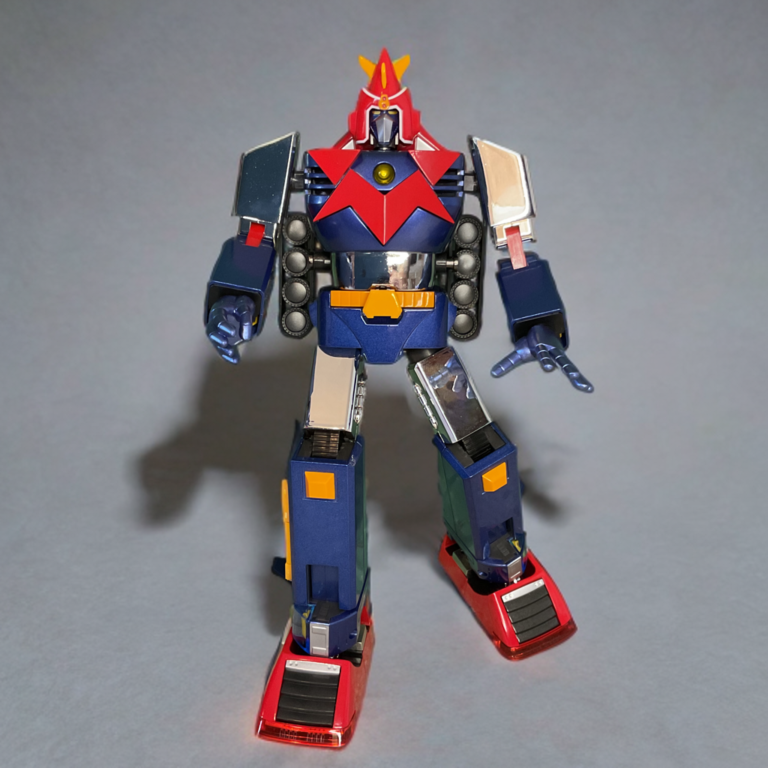
This isn’t a ground-up redesign; it’s a polished reissue, building on the GX-31V’s foundation but with tweaks like updated mounting bases for accessories. Collectors praise its balance of nostalgia and modernity, making it a centerpiece for displays that span decades of robot history.
Box to Battlefield: Unboxing the GX-31SP
The moment you slice through the tape and lift the lid on the Bandai Soul of Chogokin GX-31SP Voltes V Chogokin 50th Anniversary Version, the experience begins as a true collector’s ritual. The outer packaging immediately sets an elevated tone: a sturdy, premium window box dominated by bold, metallic foil accents in gold and silver that scream “anniversary edition.” The front panel features dynamic artwork of Voltes V in its iconic heroic stance, sword raised high against a cosmic backdrop, with the “50th Anniversary” branding prominently displayed alongside the classic Soul of Chogokin logo. Side panels showcase the five individual Volt vehicles in formation, while the back highlights the chrome-plated details and transformation sequence, building anticipation before you even touch the contents.
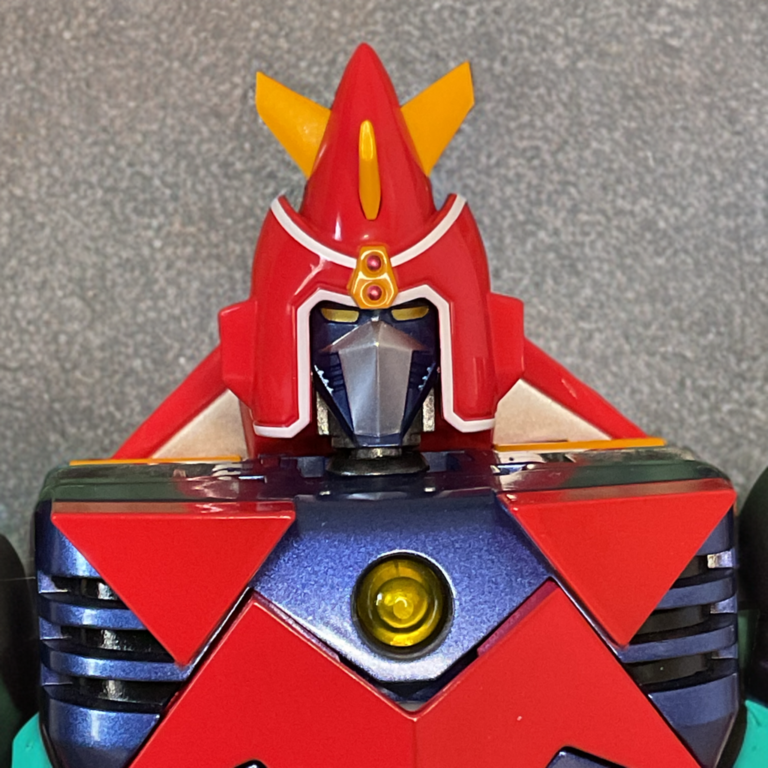
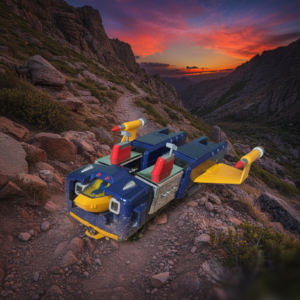
Peeling back the flaps reveals layered foam trays meticulously designed to cradle each component securely—no rattling or shifting during shipping. The five core vehicles—Volt Cruiser, Volt Bomber, Volt Panzer, Volt Frigate, and Volt Lander—sit nestled in their own compartments, each individually wrapped in protective plastic sleeves to guard against fingerprints and minor scuffs. Their pre-painted finishes gleam right out of the box: deep crimson reds for the accents, rich royal blues on the limbs, and those striking silver sections now upgraded to actual chrome plating for the 50th Anniversary treatment. The shift to orange highlights (replacing the yellows of earlier variants like the GX-31V) adds a vibrant, fresh pop that feels both nostalgic and celebratory, closely echoing the anime’s bold color scheme while giving this edition its own distinct flair.
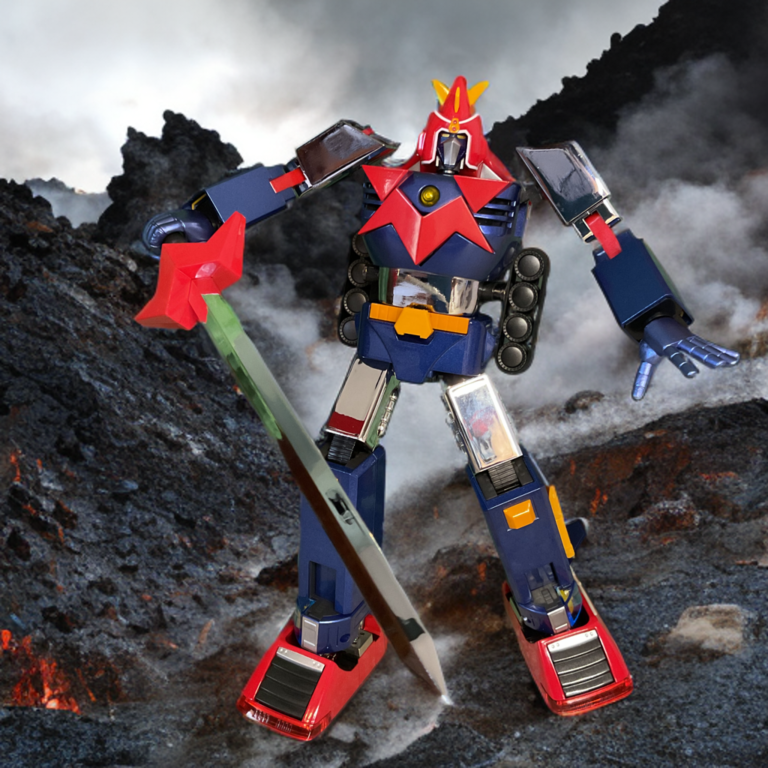
Lift any vehicle and the quality hits you instantly. The diecast zinc alloy construction dominates the build, delivering that unmistakable, satisfying heft and metallic “clunk” when pieces tap together or rest in your palm. This isn’t lightweight collector bait—it’s solid, substantial engineering that promises longevity through countless transformations. Joints feel tight and precise out of the gate, with no loose flops or creaks; ratchets engage firmly, and ball joints move smoothly without excess play. Even the smaller details impress: finely molded panel lines, tampo-printed emblems and vents, and chrome accents on thrusters, cockpits, and mechanical joints that catch light with a mirror-like shine, elevating the pieces from mere toys to display-worthy art.
Tucked alongside the vehicles are the essential supporting parts: a dedicated display stand with adjustable arms (perfect for aerial poses or elevated combined displays), the Tenkuu Ken (Sky Sword) with its translucent energy blade effect, optional hand parts for varied grips, and minor extras like landing gear options or connection pieces for seamless vehicle-to-robot shifts. The instruction booklet—clear, illustrated, and multilingual—lays out the transformation steps in logical sequence, though seasoned Soul of Chogokin collectors often bypass it entirely, diving straight into the tactile joy of folding wings, retracting treads, and snapping components together with magnetic-assisted locks that click satisfyingly into place.
What turns this unboxing into an event is the sensory overload: the subtle scent of fresh paint and diecast, the cool weight of metal in your hands, the visual feast of chrome reflecting room lights like polished armor. Small but thoughtful touches abound—gold-foil anniversary seals on the inner tray, precise color-matching across all pieces, and the updated hawk mechanism mounting base (improved from the GX-31V for better stability and compatibility). No corner-cutting here; even the packaging internals feel premium, with foam cutouts that hug each part perfectly and prevent any migration during transit.
For veterans of the line, the GX-31SP feels like a refined homecoming: familiar enough to spark instant nostalgia, yet polished enough to stand proudly beside prior releases. Newcomers get an immediate sense of why Voltes V endures— the combination process flows intuitively, the weight inspires confidence, and the finish demands admiration. By the time you’ve arranged the vehicles in launch formation or completed the first “volt-in” to form the full robot, the battlefield beckons. This isn’t just unpacking a figure; it’s the ceremonial start of battles old and new, where childhood heroes meet adult appreciation in one gleaming, diecast package. From box to battlefield, the GX-31SP delivers an unboxing that lives up to the legend.
Crafted for Glory: Design and Build Details
Standing at approximately 25 cm (about 9.8–9.84 inches) tall in its fully combined robot mode, the Bandai Soul of Chogokin GX-31SP Voltes V Chogokin 50th Anniversary Version commands immediate presence on any shelf or display case. This height strikes an ideal balance for the Soul of Chogokin line—towering enough to dominate alongside other super robots yet compact enough for practical home setups, evoking the imposing scale of the on-screen hero without overwhelming smaller collections.
The figure’s design begins at the top with the head unit (formed from the Volt Cruiser), featuring razor-sharp sculpting that faithfully recreates the anime’s angular, helmet-like visage. The visor area uses translucent red plastic, subtly hinting at the cockpit interiors where the pilots once sat, adding a layer of immersive detail that rewards close inspection under light. This transparency effect not only nods to the series’ electromagnetic theme but also allows faint glimpses of internal structure, enhancing the sense of depth and realism.
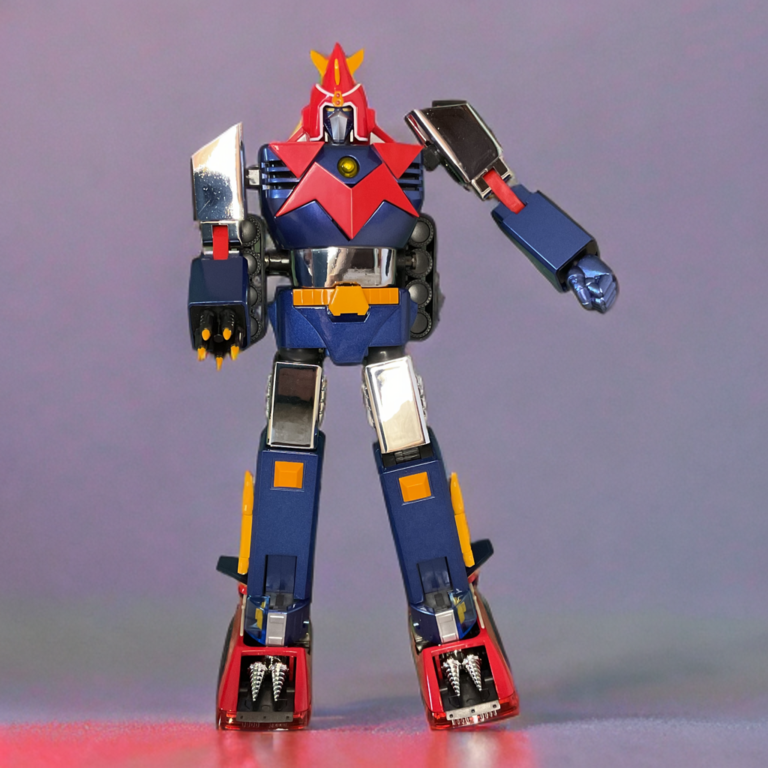
Moving downward, the arms (from the Volt Bomber) deliver exceptional flexibility through ratcheted shoulders and elbows. These joints provide secure, incremental clicks for holding dramatic poses—whether drawing the Tenkuu Ken overhead, extending for a Chain Knuckle launch, or crossing in a defensive guard—without the dreaded sagging that plagues lesser figures. The chrome plating on the upper arms and forearms gleams with a mirror-like finish, catching light to emphasize every mechanical seam and panel, a deliberate tribute to the vintage Gokin toys’ metallic allure.
At the heart lies the torso (Volt Panzer), engineered with a robust diecast core that anchors the entire assembly. This central mass ensures rock-solid stability during posing or display, preventing the top-heavy feel common in combiner designs. Integration between sections is seamless: connection points lock with magnetic assists and audible snaps, creating a unified silhouette that feels monolithic rather than pieced-together.
The lower half—legs from the Volt Frigate and feet from the Volt Lander—grounds the figure with authority. Ankle tilts offer subtle side-to-side and forward/backward adjustment for natural weight shifts, while the feet’s drill-like stabilizers and broad bases provide excellent footing on flat surfaces or display stands. This setup excels in grounded, powerful stances, from wide-legged battle readiness to dynamic forward lunges.
Surface detailing elevates the premium feel across the board. Panel lines are deeply etched and consistent, vents and mechanical textures are finely molded, and key emblems (like the chest V insignia) receive crisp tampo printing instead of fragile stickers. This approach ensures longevity—no peeling or fading over time—and maintains a clean, high-end aesthetic that honors the anime’s clean lines while avoiding the dated look of adhesive decals.
Materials tell the story of true Chogokin heritage: zinc alloy diecast dominates load-bearing areas for that satisfying heft (the figure weighs in noticeably substantial, often around 1–1.3 kg boxed based on similar releases), delivering the clunk and cool touch collectors crave. ABS plastic handles flexible joints and finer parts for smooth articulation without brittleness, while PVC accents add durability to protruding elements like thrusters or weapon grips. The result is a figure that feels engineered for endurance—built to withstand repeated transformations and posing without wear showing prematurely.
Joints engage with precise, satisfying clicks throughout; ratchets hold firm, and ball joints offer smooth range. That said, some collectors note occasional minor quirks with spring-loaded mechanisms in the leg connections (a holdover from the GX-31 lineage), where tension might feel inconsistent out of the box. These are typically minor and easily addressed with a gentle nudge, adjustment, or light lubrication—nothing that detracts from the overall experience or requires tools.
GX-31 vs. GX-31SP (50th Anniversary) Comparison Chart
| Feature | Original GX-31 (2006) | New GX-31SP (50th Anniv.) |
| Silver Accents | Flat Silver Paint / Molded Grey | High-Brilliance Silver Chrome Plating |
| Plating Locations | Minimal | Forearms, Abdomen, and Thighs |
| Volt Cruiser Head | Solid Red/Blue (Anime Style) | Added White Border (Vintage Popinica Tribute) |
| Volt Bomber Forearms | Silver | Blue (Anime Accuracy Update) |
| Hawk Mecha Link | Standard Clip | New Improved Joint System (from GX-31V) |
| Cockpits | Painted / Solid | Translucent Window (Volt Frigate) |
| Tank Mode | Not included | Reproduced “Heavy Tank” Form |
| Base Color Finish | Standard Matte/Satin | Premium Metallic Base Coating |
What truly sets the GX-31SP apart is its thoughtful engineering for dual purposes: collector-grade display and nostalgic play. The chrome accents on silver sections (updated specifically for this 50th Anniversary edition) give it a polished, celebratory shine that honors the original diecast era, while the orange highlights and refined hawk mounting base (improved over the GX-31V) add modern flair without straying from canon accuracy. It’s a bridge between cautious adult collecting—where the figure sits pristine under lights—and the childhood glee of spinning it into action poses, reliving “volt-in” sequences on your desk.
In an era of increasingly fragile high-end figures, the GX-31SP stands as a testament to Bandai’s mastery: robust, detailed, and built to last, capturing Voltes V’s spirit in every sculpted inch and metallic gleam. Whether admired statically or maneuvered through epic recreations, it embodies super robot glory—solid, shining, and eternally ready for battle.
Merge and Conquer: Transformation Mechanics
The true enchantment of the Bandai Soul of Chogokin GX-31SP Voltes V Chogokin 50th Anniversary Version unfolds in its transformation sequence—a meticulously engineered homage to the anime’s legendary “Volt In!” combination cry. What could have been a complex, fiddly process is transformed into an intuitive, satisfying ritual that captures the spirit of five individual machines uniting into one unstoppable super robot. The design philosophy here is pure genius: clever mechanical solutions, magnetic assists, and thoughtful part alignment make the entire procedure feel both authentic to the source material and delightfully accessible for collectors of all experience levels.
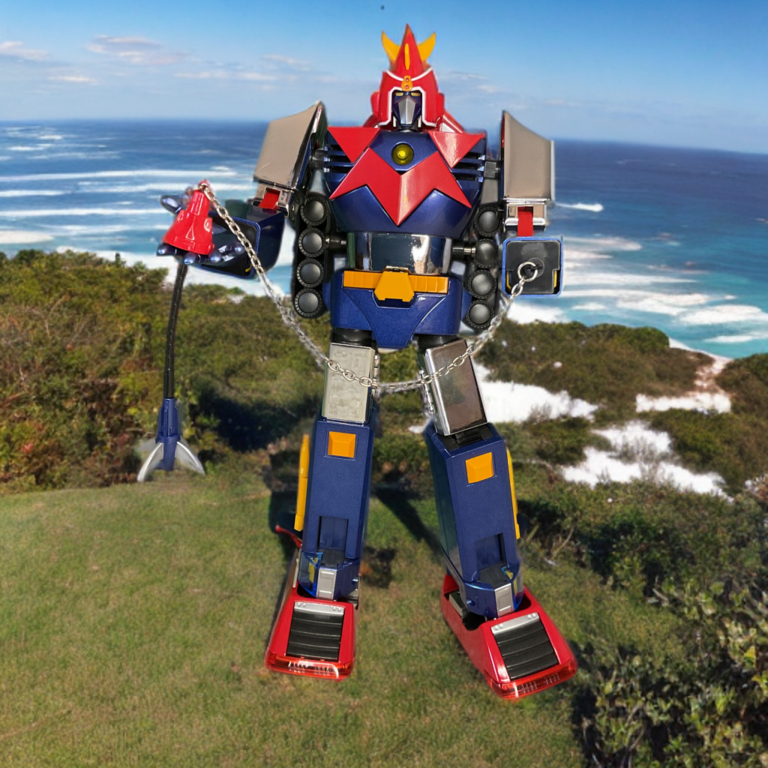
Begin with the Volt Cruiser (the head component). In vehicle mode, it resembles a sleek, aerodynamic fighter jet with swept-back wings and extended landing gear. To initiate the head formation, fold the wings downward and inward along pre-scored hinges until they tuck neatly against the sides, forming the distinctive cheek guards and side panels of Voltes V’s helmet. The landing gear retracts upward and locks flush, while the nose cone pivots and collapses to become the lower jaw and neck connector. The cockpit canopy becomes the translucent red visor, preserving that subtle hint of the pilots inside. A small tab on the underside snaps into the torso’s neck port later, ensuring rock-solid alignment.
Next come the arms from the Volt Bomber. In bomber configuration, it’s a wide-winged attack craft with prominent engine nacelles. Transformation involves sweeping the wings forward and upward to form the upper arm armor, then folding the fuselage inward so the nose becomes the forearm and fist. The engine sections rotate to become the shoulder pauldrons. Crucially, the connection points feature built-in magnets—a modern upgrade that Bandai has refined over the years—that pull the arms toward the torso’s shoulder sockets with a gentle but firm attraction. Once aligned, they lock with a satisfying metallic click, eliminating any wobble and providing instant security for dynamic poses.
The torso—the mighty Volt Panzer—serves as the unchanging central anchor. In tank mode, it rolls on heavy treads with a low, armored profile. To prepare for combination, retract the treads upward into concealed bays (they fold neatly without protruding), revealing the chest connection ports and the iconic V-shaped emblem area. The cannon barrel on top folds down and tucks away, while side panels swing open slightly to accept the arm and leg attachments. This core section’s diecast-heavy construction ensures the completed figure remains perfectly balanced and stable, no matter how extreme the pose.
The legs emerge from the Volt Frigate, a longer, more streamlined vessel in vehicle form. Unfold the main body sections outward to double the length, creating elongated thighs and calves. The forward section rotates 180 degrees to form the knee joint, while smaller panels extend to become the shin armor. Connection tabs at the hips slide into the torso’s lower ports with a guided rail system that prevents misalignment. Once seated, a secondary lock engages with an audible snap, securing the legs firmly.
Finally, the feet from the Volt Lander ground the entire assembly. In lander mode, they feature wheeled bases and drill-like stabilizers. Fold the wheels upward, extend the drill tips downward for added stability (a nice touch for display), and rotate the main sections to form broad, armored feet. These snap onto the ankle pegs of the legs with precision—again aided by subtle magnetic guidance in key areas—completing the lower body with excellent weight distribution and ankle tilt range.
The entire combination typically takes 2–5 minutes for first-timers and drops to under a minute once familiar. Every major joint and connection produces a distinct, reassuring click or snap to confirm it’s locked—no guesswork, no forcing parts. Bandai’s engineers avoided the need for tools, screws, or fragile pegs that could wear over time; instead, they relied on robust sliding rails, spring-loaded locks, and those strategic magnets that make alignment feel almost effortless.
In fully combined robot mode, Voltes V stands tall and rock-steady. The weight distribution—diecast concentrated in the torso and limbs—prevents top-heaviness, while the wide stance and ankle articulation keep it planted even in sword-wielding lunges or mid-spin attack poses. The chrome-plated accents catch light across every angle, emphasizing the mechanical seams and making each “volt-in” transformation feel like a cinematic moment brought to life.
Disassembly reverses the process with equal smoothness: pull gently on the magnetic-locked arms to release them, unfold the legs and feet back to vehicle mode, and reverse the head and torso steps. The design minimizes stress on joints—no grinding plastic, no loose tabs after repeated cycles. Collectors report transforming the figure dozens (even hundreds) of times with no visible wear, a testament to the quality control and material choices.
This isn’t just a gimmick; it’s the heart of why the GX-31SP resonates so deeply. It recreates the anime’s most thrilling sequence—the moment five become one—with engineering that feels both nostalgic and cutting-edge. Every click, every fold, every magnetic tug is a small victory, turning what could be a chore into pure, electrifying joy. From individual vehicles arrayed in launch formation to the towering, chrome-shining Voltes V ready to conquer, the transformation mechanics of the GX-31SP prove that the magic of combination isn’t just on screen—it lives in your hands.
Strike a Pose: Display Options and Articulation
The GX-31SP Voltes V truly shines when it comes to poseability, offering a level of dynamic expression that makes it more than just a static display piece—it’s a collectible built for recreating the high-octane action of the anime. With over 20 points of articulation spread across its roughly 25 cm tall combined form, the figure delivers impressive range without compromising stability, thanks to the heavy use of diecast metal in the core structure and limbs. This setup allows for fluid, heroic stances that capture the essence of Voltes V’s signature moves, from the dramatic draw of the Tenkuu Ken (Sky Sword) to sweeping spins that evoke the Super Electromagnetic Yo-Yo or Chain Knuckle attacks.
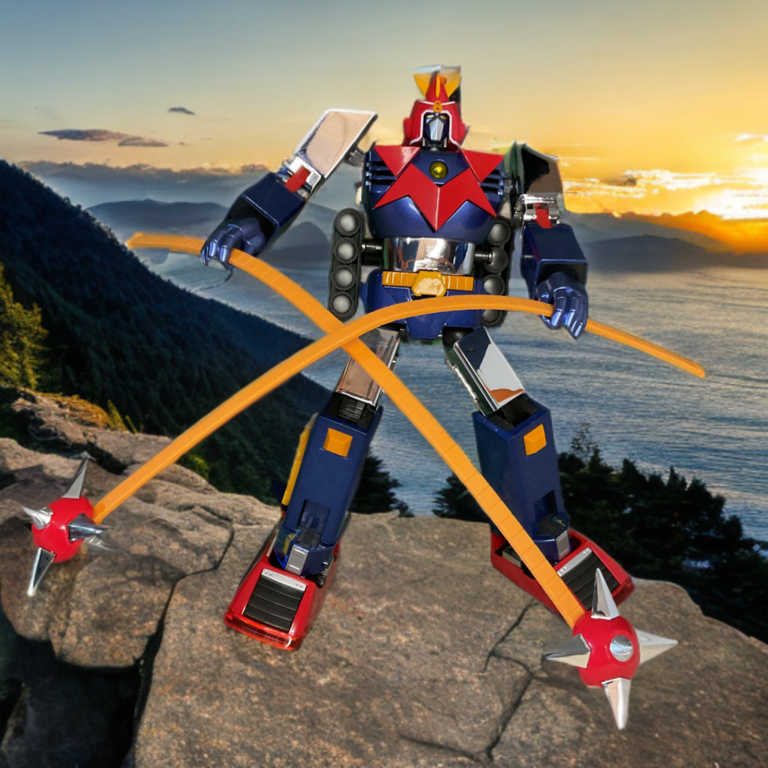
Key articulation highlights include:
- Shoulders and elbows that provide deep forward/backward swing and bent-arm flexibility, perfect for raising the sword overhead in a classic finishing pose or crossing arms for defensive blocks.
- Wrists with ball joints for precise hand positioning, enabling the figure to grip weapons securely or point dramatically toward the horizon.
- Hips and knees offering solid abduction, forward kicks, and deep bends, supporting dynamic mid-battle lunges or grounded power stances.
- Ankles with tilt and pivot for natural weight distribution, helping the figure stand confidently even in asymmetrical poses.
- Waist and neck swivel for torso twists and head tilts, adding personality to expressions—whether glaring at an invisible Beast Fighter or looking upward in determination.
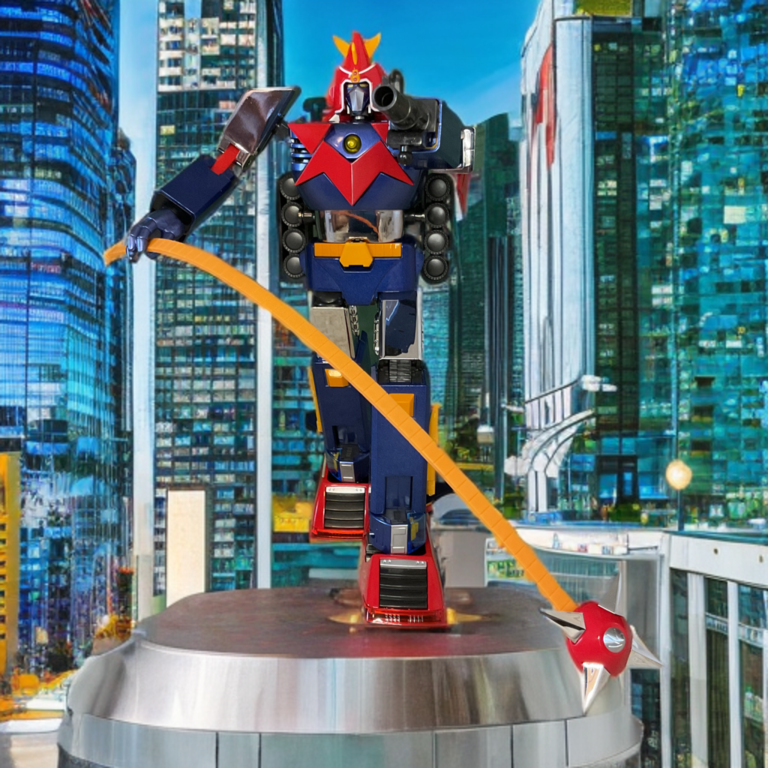
While the head joint can occasionally feel slightly loose in some examples (a minor quirk noted by reviewers, often resolved with gentle adjustment or magnetic assist), the overall engineering ensures poses hold without constant sagging. The chrome-plated accents catch light beautifully in these dynamic positions, emphasizing sculpted details like panel lines, vents, and the iconic chest emblem, turning even subtle movements into eye-catching displays.
The included display stand elevates the experience further, designed specifically for this combiner with adjustable arms that clip securely to the figure’s back or legs. This allows for true aerial heroics—tilting Voltes V forward in a diving attack, suspending it mid-spin, or angling it dramatically as if launching from Big Falcon base. The stand’s sturdy construction handles the figure’s weight effortlessly, and its modular design lets you experiment with heights and angles for custom dioramas.
Don’t overlook the individual vehicle modes, where the poseability extends into creative setups. Each Volt machine transforms convincingly and holds its form:
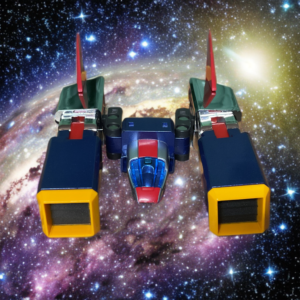
- Volt Cruiser (head) glides with folded wings and landing gear, “soaring” when perched on the stand or grouped with others.
- Volt Bomber (arms) features sweeping wings and adjustable thrusters, ideal for flight poses or side-by-side formations.
- Volt Panzer (torso) rolls smoothly on its retractable treads, evoking tank-like charges across a shelf.
- Volt Frigate (legs) and Volt Lander (feet) offer wheeled or drill-stabilized bases, grounding the group in launch-ready configurations.
Collectors love arranging the five vehicles in a “pre-combination” launch bay scene—perhaps arrayed in a semi-circle on a shelf or atop the display rack—before snapping them together for the full robot reveal.
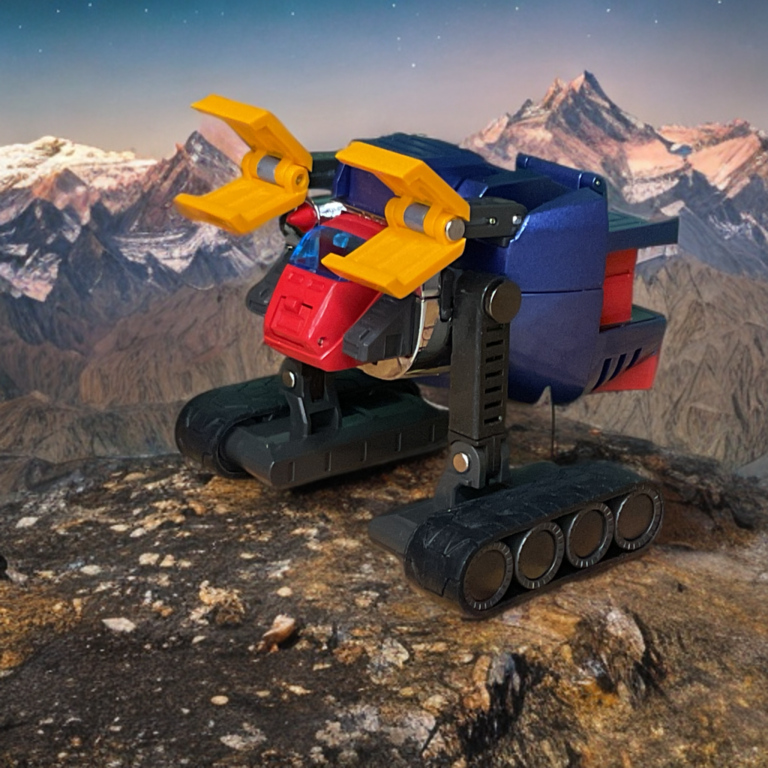
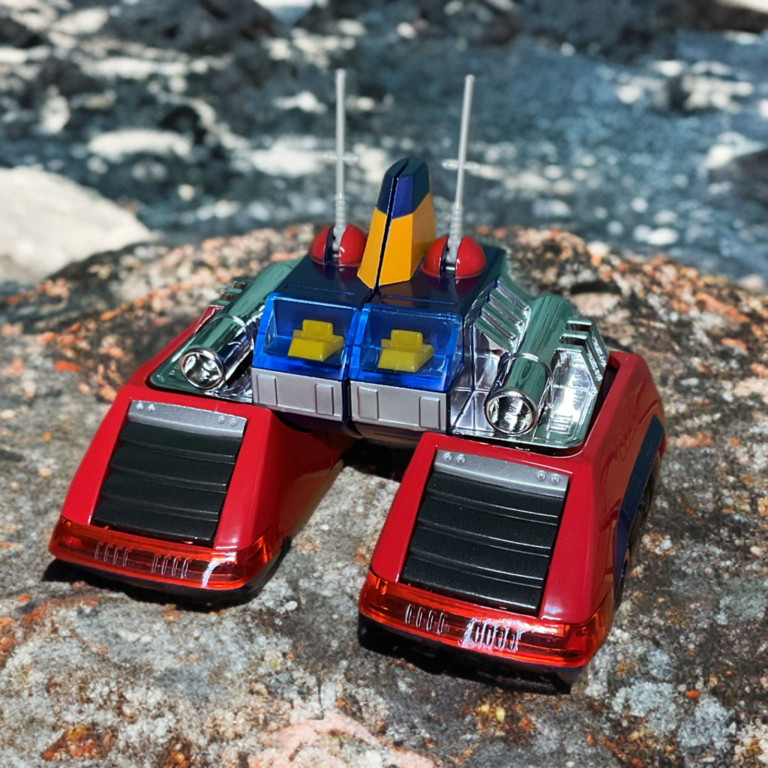
This versatility makes the GX-31SP adaptable to various display styles: a solitary guardian on a spotlighted pedestal, a full squadron setup, or integrated into larger super robot collections alongside other Soul of Chogokin releases.
Under proper lighting—whether natural window light, LED strips, or dedicated spotlights—the chrome gleams intensify, casting metallic reflections that make Voltes V appear almost alive.
The silver plating on arms, chest, and thrusters contrasts sharply with the vibrant reds, blues, and oranges, creating a glowing, heroic silhouette that dominates any shelf. For those with display cases, the figure’s stability and articulation mean it can hold elaborate poses for months without drooping, while the anniversary edition’s polished finish resists fingerprints better than matte variants.
In short, whether you’re staging epic recreations of anime battles, experimenting with dramatic angles, or simply enjoying the tactile joy of repositioning a premium diecast robot, the GX-31SP rewards engagement at every turn. It transforms from a beautiful static tribute into an interactive celebration of Voltes V’s legacy, proving that great super robot figures aren’t just looked at—they’re posed, admired, and brought to life time and again.
Side by Side: How It Stacks Against Earlier Versions
Compared to the original GX-31, this SP edition dials up the bling with plating that outshines the painted silvers. The orange shift differentiates it from the GX-31V’s yellows, aligning closer to deluxe DX aesthetics without the bulk.
The 40th anniversary variant emphasized decals and white linings, which this one omits for a cleaner look—some miss them, others appreciate the streamlined vibe. Mounting bases see upgrades, fixing minor gripes from priors. At the price point, it offers value over rarer reissues, though purists might hunt vintage for authenticity.
Explore More Chogokin Legends
If Voltes V’s electromagnetic combination and family-driven heroism sparked your interest, check out these in-depth looks at other iconic Soul of Chogokin releases from the Chogokin 50th Anniversary era. Each explores the anime legacy, figure engineering, and collector appeal in the same detailed style.
- Soul of Chogokin GX-88 Vehicle Voltron Review: Epic Build! Dive into the 15-vehicle mega-combiner Dairugger XV (known as Vehicle Voltron in the West). This review covers its massive diecast build, transformation complexity, nostalgic Voltron ties, and why it’s a shelf-dominating centerpiece for fans of multi-part mecha.
- God Mars Soul of Chogokin 50th Review and Complete History Explore the full saga of Six God Combination God Mars, from its 1981 anime roots to the luxurious chrome-plated 50th Anniversary edition (GX-40SP). Includes complete history, character breakdowns, and a breakdown of the figure’s plated finish, articulation, and godly presence.
These pieces continue the tradition of blending rich super robot lore with hands-on figure analysis—perfect companions if you’re building a premium Chogokin collection!
Volting Verdict: A Timeless Tribute
In the ever-expanding universe of premium collectibles, few figures manage to bridge decades of fandom with such effortless grace as the Bandai Soul of Chogokin GX-31SP Voltes V Chogokin 50th Anniversary Version. Released in August 2024 to mark half a century of the Chogokin brand’s legacy—beginning with the original diecast toys of the early 1970s—this edition isn’t merely another reissue. It stands as a deliberate celebration of Voltes V’s enduring appeal, refining the beloved GX-31 mold into a gleaming testament to super robot excellence while subtly updating it for modern collectors.
At its core, the GX-31SP captures the very essence of what made Voltes V a standout in the super robot genre: the perfect fusion of heartfelt storytelling and mechanical spectacle.
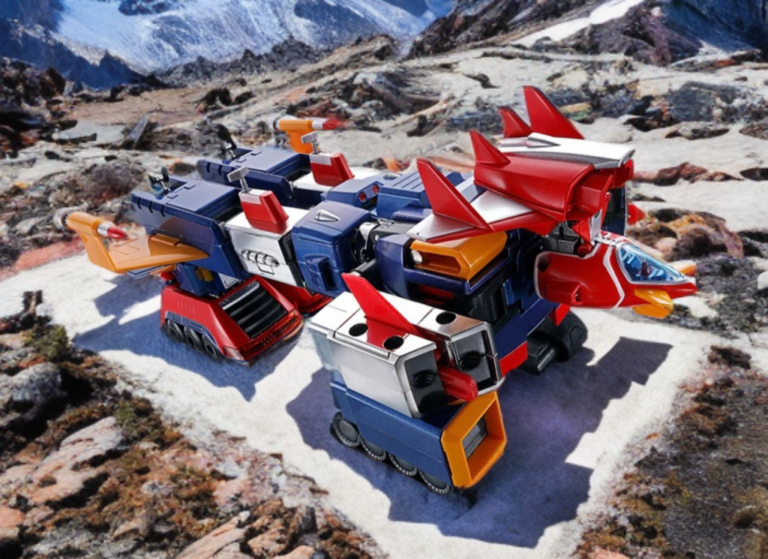
The anime’s narrative—five young pilots uniting their vehicles in electromagnetic harmony to defend Earth against imperial tyranny—mirrors the figure’s own design philosophy. Just as the on-screen Voltes V demands precise teamwork for its “volt-in” combination, this collectible rewards patient handling with a seamless, satisfying transformation sequence. The five component vehicles lock together with reassuring clicks, their diecast construction providing that signature Chogokin heft that feels substantial in hand, evoking the weight of history itself.
What elevates this 50th Anniversary edition above its predecessors is the thoughtful application of chrome plating across key silver sections, from the forearms and chest accents to the thrusters and emblem details. This metallic sheen honors the “super alloy” roots of the Chogokin line, giving the figure a polished, almost luminous presence under display lighting that recalls the gleaming heroism of the anime’s key art. Where earlier versions like the original GX-31 leaned into a more matte, grounded look and the GX-31V (40th Anniversary) reinstated anime-accurate yellows with white panel linings, the GX-31SP opts for a bolder, celebratory flair: orange accents replace yellows in places, creating a vibrant contrast that feels fresh yet nostalgic.
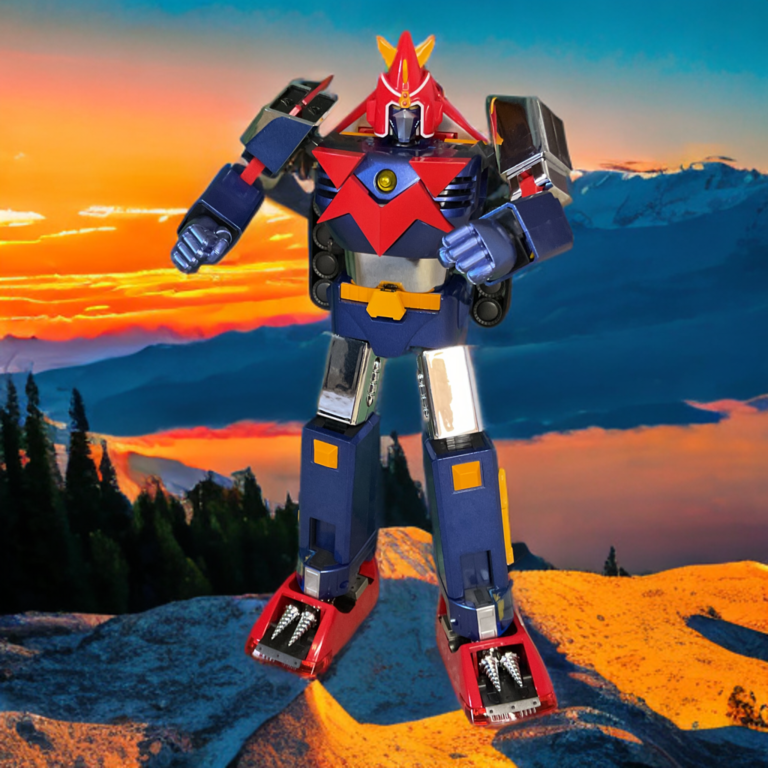
The result is a robot that looks ready to burst from the screen, its chrome elements catching light in ways that emphasize every sculpted panel line and mechanical joint.
Collectors who have followed the line’s evolution will appreciate the refinements. The mounting base for the optional hawk mechanism (a nod to supporting vehicles in the series) has been updated for better compatibility and stability, addressing minor gripes from prior releases. Articulation remains excellent—shoulders, elbows, hips, and ankles offer a wide range of dynamic poses, allowing recreations of iconic moves like the Tenkuu Ken (Sky Sword) swing or Super Electromagnetic Yo-Yo deployment. While some users have noted occasional minor issues with spring-loaded mechanisms (a common quirk in complex diecast figures), the overall build quality inspires confidence for both static display and light posing sessions.
Beyond the physical attributes, this figure invites reflection on Voltes V’s broader legacy. For longtime fans—particularly those in regions like the Philippines where the series became a cultural phenomenon amid real-world struggles for freedom—the GX-31SP serves as a tangible link to childhood memories of weekly episodes, bootleg tapes, and revolutionary spirit. The chrome finish and anniversary branding feel like a quiet acknowledgment of that journey: from 1977’s TV battles to 2023’s live-action Voltes V: Legacy revival and beyond. Newer admirers, perhaps drawn in by Super Robot Wars crossovers or the recent Philippine adaptation, discover a meticulously crafted piece that stands alone as an introduction to the Soul of Chogokin line’s commitment to quality.
Priced around 33,000 yen (roughly $220–$250 depending on market and taxes), it delivers strong value in an era of rising collectible costs. The premium materials, faithful sculpt, and thoughtful anniversary touches make it a worthwhile centerpiece for any super robot shelf. Display it combined in heroic stance, vehicles arrayed in launch formation, or posed mid-battle with the Sky Sword raised—each configuration reinforces why Voltes V endures: it’s about unity, resilience, and the electrifying thrill of coming together against impossible odds.
Ultimately, the GX-31SP isn’t just a toy or a statue—it’s a beacon of super robot heritage. It honors the ingenuity of the original Popy diecasts, the emotional depth of the 1977 anime, and the passion of collectors who have kept the legend alive for five decades. Whether you’re reliving the adrenaline of childhood invasions from Boazan or discovering the lore for the first time through modern releases, this figure stands ready to “volt in” once more, proving that some heroes never fade—they simply shine brighter with time. In a hobby full of fleeting trends, the Voltes V GX-31SP is a timeless tribute that continues to inspire awe, one electromagnetic spark at a time.


 English
  Deutsch
  Français
  Português do Brasil
  日本語
日本語  Español
  English (Australia)