

The Evolution of the Ultimate Slayer: Analyzing Alistair Smythe from the 1994 Series to the Comics
The Legacy of the Spider-Slayers
Alistair Smythe stands as one of the most compelling and tragic figures within the sprawling narrative of Spider-Man: The Animated Series, which ran from 1994 to 1998. Often referred to simply as Smythe, he is the primary architect behind the lethal Spider-Slayers. Voiced with a sophisticated, sharp-edged charm by Maxwell Caulfield, Alistair is portrayed not as a typical cackling villain, but as a brilliant, reluctant inventor trapped in a cycle of debt and vengeance. His life is defined by his service to Wilson Fisk, the Kingpin of Crime, a partnership fueled entirely by a burning desire to avenge a father he believes was taken from him by the wall-crawler.
The Brilliant Mind of Spencer Smythe
Spencer Smythe serves as the foundational catalyst for one of the most enduring rivalries in Spider-Man: The Animated Series. A robotics inventor of unparalleled genius, Spencer is portrayed not as a career criminal, but as a man pushed to the brink by desperation and profound family loyalty. Voiced with a dignified gravity by Edward Mulhare, his presence looms large over the first season and continues to haunt the narrative long after his initial disappearance. His story is one of a gifted scientist whose love for his son, Alistair, becomes the very lever that powerful villains use to manipulate him into a life of crime.
The Dual Tragedies: A History of Lab Explosions
In the narrative of the 1994 series, the downfall of the Smythe family is marked by two distinct and devastating laboratory accidents. While both involve robotics and high-stakes science, they serve different roles in the plot. The first accident provides the origin for Alistair’s physical condition, while the second—the infamous Oscorp blast—serves as the catalyst for the family’s descent into villainy.
The First Accident and Alistair’s Paralysis
Years before the main events of the show, Spencer worked in a private laboratory with Alistair acting as his devoted assistant. A sudden explosion, the exact cause of which remains a generic scientific mishap, tore through the facility. While Spencer emerged from the smoke completely unharmed, the structural failure caused heavy debris to pin Alistair’s legs. This event left the young man paralyzed from the waist down and reliant on a wheelchair. The weight of this incident defined Spencer’s later life; his subsequent desperate search for funding was driven by a crushing sense of guilt and a singular goal to build a hoverchair that could restore his son’s mobility.
The Destruction of the Black Widow
The more prominent explosion occurred during the Season 1 episode “The Spider Slayer.” After being hired by Norman Osborn to eliminate Spider-Man, Spencer deployed the Black Widow robot. The ensuing battle inside the Oscorp facility reached a fever pitch when Spider-Man knocked the machine into a vat of volatile chemicals. This triggered a chain reaction of smaller fires and structural failures. In a desperate bid to salvage the mission, Osborn activated a kamikaze Spider Seeker drone, which Spider-Man deflected into a cache of flammable materials. The resulting inferno quickly transformed the laboratory into a death trap.
Spencer’s Sacrifice and the Oscorp Blast
As the facility began to collapse, Alistair and Spencer attempted to flee. However, Norman Osborn manipulated the situation, pressuring Spencer to stay at the control console to ensure the mission’s success, promising that the hoverchair deal depended on it. Spencer, ever the devoted father, urged Alistair to evacuate while he stayed behind to man the systems. Moments later, the building was leveled by a massive explosion. To the outside world—and especially to a horrified Alistair—it appeared that Spencer had perished in the flames. This perceived death became the foundation of Alistair’s vendetta, as he held Spider-Man responsible for the loss of his father.
The Secret of Crime Central
The ultimate tragedy of the Oscorp explosion was revealed seasons later to be a calculated act of cruelty by the Kingpin. Spencer had actually survived the blast, albeit with severe injuries. Rather than allowing him to return to his son, Wilson Fisk’s recovery teams pulled him from the wreckage and placed him in cryogenic suspension within Crime Central. By hiding Spencer’s survival, the Kingpin was able to feed Alistair’s rage and exploit his genius for years. The revelation that the explosion didn’t kill his father, but rather served as the Kingpin’s opportunity to kidnap him, eventually broke Alistair’s spirit and forced his transformation into the Ultimate Slayer.
Engineering for the Kingpin
Following the disappearance of his father, Alistair enters a pragmatic, often tense alliance with the Kingpin. Operating out of Crime Central, he designs increasingly deadly machines like the Black Widow, the Tarantula, and the massive Scorpion Slayer models. These episodes, particularly the two-part Spider Slayer arc, showcase Alistair as a master of remote combat, often trading biting barbs with the Kingpin. He isn’t a fanatical follower; he is a man who sees Fisk’s resources as a means to an end. This relationship is pushed to its breaking point during the “Sins of the Fathers” arc in the third season. After Alistair fails to prevent the arrest of the Kingpin’s son, Richard Fisk, the crime lord’s patience finally evaporates.
The Ultimate Turning Point: “The Ultimate Slayer”
The culmination of the Smythe family saga occurs in the third-season episode “The Ultimate Slayer” (originally aired October 5, 1996). Directed by Bob Richardson, this chapter serves as the definitive turning point for Alistair, shifting him from a calculated schemer into a tragic, monstrous figure. While the episode advances the complex romantic triangle between Peter Parker, Mary Jane, and Harry Osborn, its primary weight lies in the brutal resolution of Alistair’s forced service to the Kingpin.
Betrayal and Forced Mutation
The episode begins with Alistair in a state of desperation. Fearing he is no longer useful to the Kingpin, he attempts to contact Spider-Man to trade information for his freedom. However, the Kingpin discovers this disloyalty. In a move of chilling cruelty, Fisk decides to replace Alistair with the scientist Herbert Landon. Rather than simply discarding Smythe, Landon subjects him to a horrifying procedure involving a mix of genetic restructuring and cybernetic enhancement.
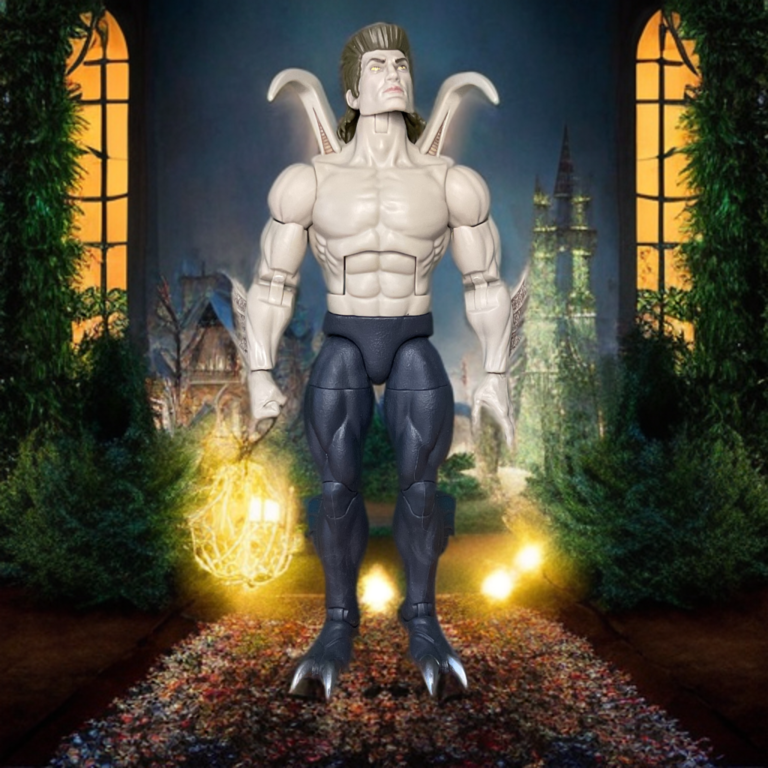
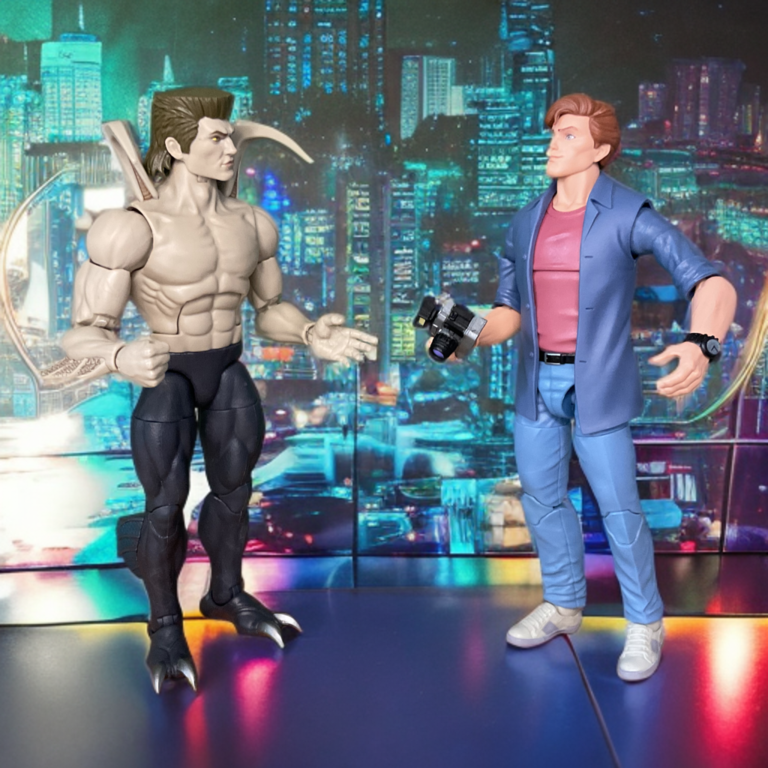
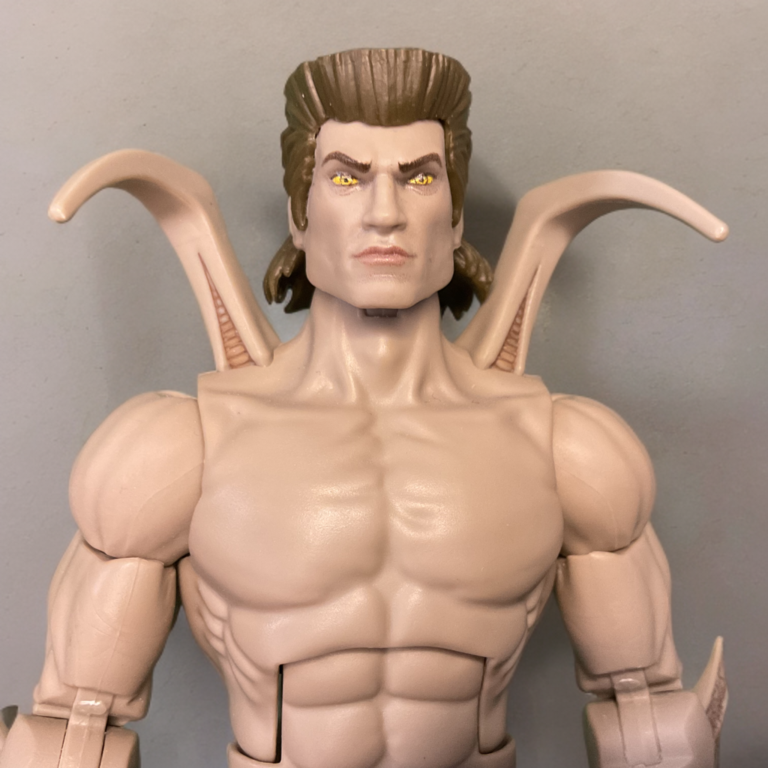
Alistair emerges from the process as the Ultimate Spider-Slayer—a muscular, towering cyborg with organic energy weapons protruding from his shoulders. This transformation effectively strips Alistair of his humanity and free will, turning him into the very thing his father once built: a programmed weapon. In a moment of biting irony, the Kingpin muses that Spencer Smythe loved robots, and now his son has finally become one.
Madame Web and the “Why” of the Enemy
During their first confrontation, the transformed Alistair easily overpowers Spider-Man with his new superhuman strength and laser tendrils. It is only through the intervention of the cryptic Madame Web that Spider-Man finds a way to win. She offers a riddle that changes the hero’s entire strategy: “It’s not how to defeat your enemies, it’s why. Why do they want to destroy you?” This advice prompts Spider-Man to look past the mechanical threat and address the deep-seated pain driving Alistair’s rage.
The Revelation of the Cryo-Chamber
The conflict reaches its peak at Crime Central, where Alistair—now acting on deep-seated memories—targets Norman Osborn for his perceived role in Spencer’s death. During the chaos, the Kingpin’s cold-blooded manipulation is finally laid bare. In a private moment with a kidnapped Norman, Fisk admits that Spencer survived the Oscorp explosion and has been kept in cryogenic stasis as a pawn to ensure Alistair’s loyalty.
Spider-Man, following Madame Web’s guidance, leads the rampaging Ultimate Slayer to the cryogenic chamber. The sight of his frozen father shatters Alistair’s mental programming. The realization that the Kingpin had been lying for years—using his grief to fuel his genius—turns Alistair’s fury away from Spider-Man and toward his true oppressor. In the ensuing battle, the Crime Central hideout begins to collapse, allowing Alistair to reclaim his father’s body and disappear into the shadows.
Legacy and Resolution
While the episode ends with personal shifts for Peter Parker—including Mary Jane breaking off her engagement to Harry—the most lasting impact is the birth of the cyborg Smythe. No longer a composed inventor in a hoverchair, Alistair becomes a rogue element in the city’s underworld. He shifts from being a primary antagonist to a tragic wild card, forever bound to the cryogenic tube that holds his father’s life in the balance. This episode remains a standout for its ability to tie together threads from the very first season, proving that in the world of Spider-Man, the most dangerous villains are often those born from betrayal and lost love.
TAS Alistair Smythe: Primary Motivations
| Attribute | TAS (1994 Series) | Marvel Comics | Key Difference |
| Agency | 3 | 9 | TAS is coerced; Comics is self-driven. |
| Madness | 4 | 9 | Comics Alistair is far more unhinged. |
| Sophistication | 8 | 6 | TAS version is a composed intellectual. |
| Family Loyalty | 10 | 3 | TAS loyalty is the core motivation. |
A Departure from the Source Material
This version of the character differs significantly from his print counterparts. In the source material, Alistair is often depicted as more physically unkempt and eventually chooses to become a cyborg after being defeated by J. Jonah Jameson. The animated show, however, presents a more composed and snarky intellectual whose motivations are rooted in family loyalty and a sense of duty rather than pure madness.
Shifting Allegiances and Later Arcs
In the later seasons, Alistair becomes a wild card in the criminal underworld. He shifts his focus toward finding a way to revive his father, briefly aligning himself with Silvermane. His story arc becomes one of survival and a search for redemption, as his cyborg body remains a permanent reminder of the manipulation he endured.
While he never fully abandons his antagonistic edge, his encounters with Spider-Man during the “Secret Wars” and “Spider-Wars” finales show a character who has evolved from a vengeful son into a tragic figure of lost humanity. By emphasizing his paralysis as an accident rather than a battle wound and highlighting the forced nature of his transformation, the series created a version of Smythe that remains a standout example of nuanced storytelling in 90s animation.
From Panel to Screen: The Evolution of the Ultimate Slayer
While the 1994 animated series is a faithful adaptation in spirit, the transformation of Alistair Smythe into the Ultimate Spider-Slayer features significant departures from the original Marvel Comics. Both versions explore the horror of a man becoming the very machine his family designed to destroy Spider-Man, but they differ fundamentally in terms of agency, motivation, and the nature of the “monster” itself.
Voluntary Evolution vs. Forced Mutation
The most striking difference lies in how Alistair becomes the Ultimate Slayer. In the comics, Alistair is the architect of his own transformation. Driven by a proactive obsession to succeed where his father failed, he willingly builds and dons a bio-organic carapace that interconnects with his spine. This “living suit” restores his ability to walk and grants him predatory physical advantages, such as bird-like talons and web-shooters. It is a choice born of a desperate, escalating madness.
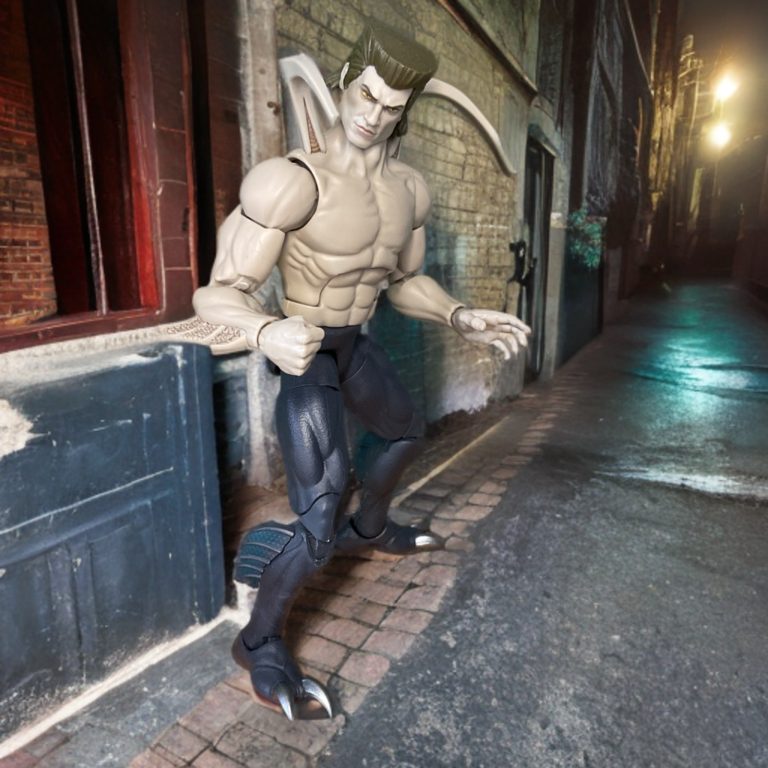
In contrast, the animated series presents a much more tragic scenario. Alistair does not choose the path of the cyborg; it is thrust upon him as a punishment. After his failed attempt to betray the Kingpin, he is strapped down and forcibly injected with a mutagenic formula by Herbert Landon. This turns the transformation from a “villainous upgrade” into a “scientific violation,” moving Alistair from a character of pure agency to a victim of criminal manipulation.
Inherited Grudges and Different Enablers
The roots of the Smythe vendetta vary wildly between media, shifting from a personal obsession to a corporate conspiracy. In the original source material, Spencer Smythe’s descent is fueled by the checkbook of J. Jonah Jameson rather than the shadow of the Kingpin. Most notably, the comic book Spencer does not perish in a dramatic explosion; instead, he suffers a grueling demise from radiation poisoning, a direct byproduct of the materials used in his own robotic creations. This agonizing end produces a comic version of Alistair who is significantly more unhinged—a man who watched his father waste away and blames Spider-Man for a slow, painful death.
The animated series replaces this slow-burning tragedy with high-stakes industrial sabotage. By introducing Norman Osborn and the Kingpin as the architects of Spencer’s fate, the show shifts the focus from a publisher’s grudge to a criminal empire’s manipulation. This pivot is essential for the “Cryo-Twist”: by keeping Spencer’s survival a secret, the Kingpin transforms Alistair’s grief into a renewable resource. While the comic Alistair is a proactive legacy villain fueled by his own inherited madness, the animated version remains a more sympathetic, reluctant genius whose loyalty is a commodity bought through elaborate lies.
Mechanical Brutes vs. Bio-Organic Predators
Visually and functionally, the “Ultimate” forms reflect the era of their creation. The comic version leans into a biomechanical, predatory aesthetic, featuring agile shoulder blades and sharp talons that allow for wall-crawling and high-speed combat. It feels like a “dark mirror” of Spider-Man’s own powers.
The animated version, designed to align with the mid-90s toy lines, is more of a “tech-monster.” It features a towering, muscular build with energy-blasting organic tendrils and a distinct, synthesized voice filter. It trades the comic’s predatory agility for raw, overwhelming brute strength, emphasizing the “experiment gone wrong” aspect of Herbert Landon’s science.
Themes of Revenge and Redemption
Ultimately, these two versions serve different thematic purposes. The comics offer a darker look at how inherited hatred can consume a person until they voluntarily shed their humanity. The animated series, however, uses Alistair to explore themes of betrayal and the search for family. By having Alistair break free of his programming once he sees his father in the cryo-chamber, the show provides a layer of nuance and potential redemption that the comics often lacked. For fans of the 90s series, Alistair remains a pitiable figure—a man who became a monster not by choice, but by the cruelty of the world he tried to navigate.
Character Profile Comparison: Alistair Smythe
Comparative analysis between the 1994 Series and Marvel Comics (Scale 1–10)
| Attribute | TAS (1994 Series) | Marvel Comics | Key Difference |
| Agency | 3 | 9 | TAS is coerced; Comics is self-driven. |
| Madness | 4 | 9 | Comics Alistair is far more unhinged. |
| Sophistication | 8 | 6 | TAS version is a composed intellectual. |
| Family Loyalty | 10 | 3 | TAS loyalty is the core motivation. |
Technical Field Guide: The Evolution of the Spider-Slayers
The Spider-Slayers are more than just robots; they are a recurring legacy of anti-Spider-Man weaponry that has evolved from simple mechanical hunters into sophisticated, biological hybrids. Across both the 1994 animated series and decades of Marvel Comics, these machines have served as a reflection of the Smythe family’s growing desperation and brilliance. While every model shares the goal of neutralizing the wall-crawler’s spider-sense and agility, the “Ultimate” form represents the final, personal escalation of this tech.
The Early Generations: Mechanical Drones
In the early chapters of the saga, the Slayers were primarily bulky, remote-controlled drones. In the animated series, the Black Widow model designed by Spencer Smythe set the standard—a massive, multi-legged tank with energy blasts and capture nets. It was powerful but lacked the agility to truly pin down a hero as mobile as Spider-Man.
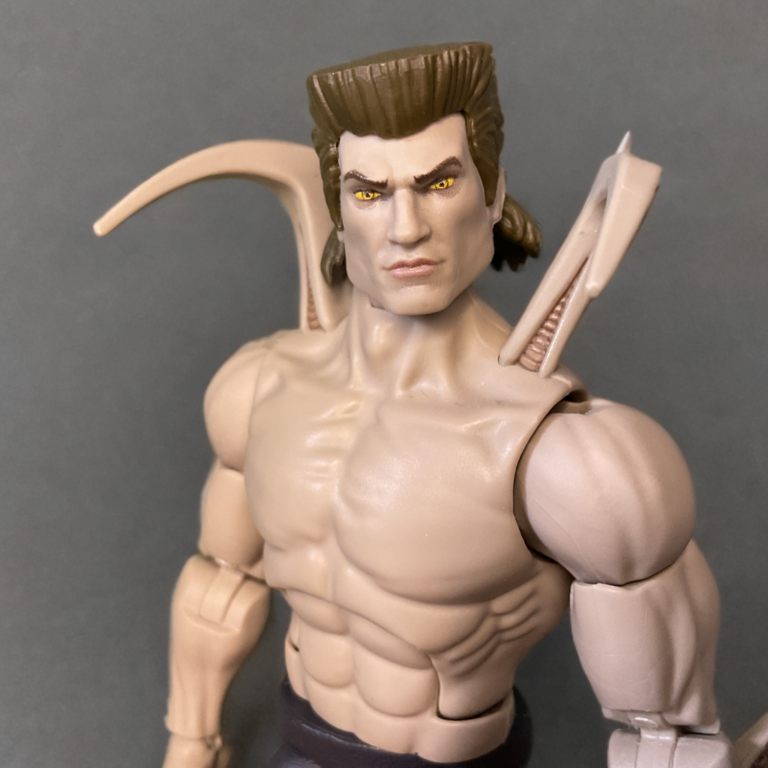
Alistair expanded on this foundation with more specialized units like the Tarantula and Scorpion Slayers. These models introduced animal-inspired weaponry, such as barbed tails and web-mimicking attacks. They even featured a “Mega-Slayer” configuration, where multiple units could fuse into a singular, more formidable android. These remained tools of proxy warfare—deadly, but ultimately limited by their programming and remote operation.
Technological Evolution of the Spider-Slayers
Complexity and Power Index (Scale 1–10)
| Generation | Tech Era | Power Index | Visual Representation |
| Mark I (Drone) | Mechanical | 2 | [■■ ] |
| Specialized Units | Advanced Robotics | 6 | [■■■■■■ ] |
| Ultimate Slayer | Bio-Cybernetic Hybrid | 10 | [■■■■■■■■■■] |
The Comic Book Pantheon: Marks I through VIII
The comic book history of the Slayers is even more expansive, stretching back to 1965. It began with the Mark I, a tank-like robot commissioned by J. Jonah Jameson. Over the decades, the Smythes iterated through dozens of designs. High-tier models like the Mark VIII or the Tri-Slayer introduced coordinated multi-unit attacks and advanced durability. Unlike the animated series, the comics often experimented with biological elements much earlier, sometimes using human pilots or kidnapped patients to provide the machines with a level of cunning that pure AI could not replicate.
The Ultimate Slayer: Man as the Machine
The Ultimate Spider-Slayer stands as the pinnacle of this evolution in every medium. This form represents the moment the inventor ceases to be the “man behind the curtain” and becomes the weapon itself. In the animated series, the Ultimate Slayer is a forced mutation—a towering, muscular cyborg with organic laser-shooting tendrils. It is a tragic, monstrous form that grants Alistair the ability to walk while simultaneously stripping him of his autonomy. Meanwhile, in the comics, the form is a bio-organic carapace or exoskeleton that Alistair willingly merges with. It is more predatory and agile than the animated version, featuring forearm blades and talons that allow him to fight Spider-Man hand-to-hand with terrifying efficiency.
The forced cybernetic violation of Alistair Smythe stands as a masterclass in tragic villainy, echoing a grand Marvel tradition where brilliant minds are horribly warped by corporate or criminal greed. This dark theme of scientific ambition turned monstrous is perfectly mirrored in the histories of other iconic Stan Lee and Jack Kirby creations; one need only look at the body-horror tragedy of George Tarleton’s transformation in The Complete M.O.D.O.K. Origin Guide, or the chilling disregard for human flesh seen in The Complete History of Arnim Zola: The Bio-Fanatic. When Alistair emerges from Landon’s lab as a towering tech-monster, he joins the ranks of these twisted, augmented entities—primed for the kind of raw, unbridled destruction usually reserved for the absolute grandest stages of Marvel lore, such as the catastrophic, god-tier brawls chronicled in the 9 Most Violent Thor Showdowns You Can’t Unsee.
Comparison: The Ultimate vs. The Drones
The jump from a standard Slayer to the Ultimate form is significant across several key areas, particularly regarding control, power, and motivation. While standard Slayers are impersonal drones, the Ultimate Slayer possesses human cunning and emotion, which makes its tactics far less predictable than a pre-programmed machine. In terms of power, the Ultimate form consistently overpowers Spider-Man in their initial encounters by relying on a blend of brute strength and energy-based weaponry that standard mechanical spiders lacked. Furthermore, standard Slayers often serve as tools for hire, whereas the Ultimate Slayer is the manifestation of a personal vendetta—a final act of revenge that proves when robots are no longer enough, the hunter must become the hunt.
A Legacy of Innovation
Whether it is the mechanical tank of the 1960s or the tragic cyborg of the 1990s, the Spider-Slayers represent the cost of obsession. For Spencer and Alistair Smythe, every upgrade brought them closer to their goal but further from their humanity. The 1994 series remains a fan favorite specifically for how it personalized this technology, turning a line of robots into a heartbreaking family saga that culminated in the most dangerous “Ultimate” hunter Spider-Man had ever faced.



 English
  Deutsch
  Français
  Português do Brasil
  日本語
日本語  Español
  English (Australia)